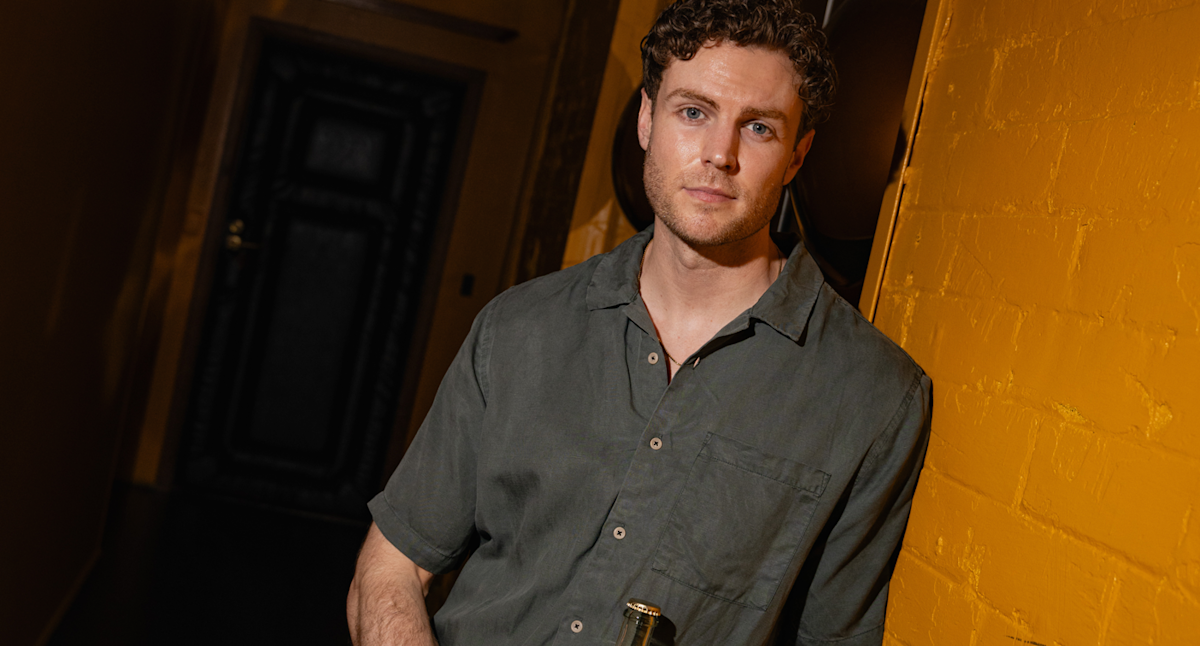
As the cost of living in Australia continues to rise, many are seeking additional income through side hustles. While some pursue these ventures out of passion, for others it is a necessity. For Tim Grimes, a hospitality worker from Sydney, it was the former. Tim recently took the ambitious step of launching his own non-alcoholic wine company, Bynomeans, which stemmed from his love for pairing drinks with meals.
Tim’s journey began while working at a high-end restaurant in Sydney, where he experimented with non-alcoholic beverages. Initially, he pondered how these drinks could be marketable, but launching a business seemed daunting for someone with no formal business background. His potential venture took a significant turn when a customer expressed an interest in investing, leaving their contact details on a napkin.
Reflecting on the evolution of his ideas, Tim remarked, “When I first came up with the drinks, I could see how I could sell them, but I couldn’t quite imagine actually doing it.” However, by August, he officially launched Bynomeans as a full-time operation, offering a range of botanical drinks reminiscent of various wine styles.
The increasing trend among Australians, especially younger demographics, to reduce their alcohol consumption has opened doors for non-alcoholic alternatives. Tim aims to leverage this cultural shift, although he acknowledges that the business is still in its formative stages. While sales of non-alcoholic beers have surged—growing nearly 20% annually and accounting for over 10% of all beer sales—Tim sees an opportunity for quality non-alcoholic wines.
A report by ANZ indicates that sales of alcohol-free beers could soon exceed those of traditional spirits in Australia. Additionally, research from Flinders University shows that Gen Z is nearly 20 times more likely to abstain from alcohol than Baby Boomers. According to Tim, the appeal of his product extends beyond abstainers—it caters to those opting for moderation.
Describing his drink, Tim says it’s crafted to be savoured with food, aiming to offer a complex alternative to traditional wine. Bynomeans is available in hospitality venues across Sydney, Melbourne, Brisbane, and even corporate offices, including Canva, and has recently expanded to direct online sales.
Interestingly, Tim’s investor has transitioned into a business partner, although neither had prior experience in the food and beverage industry. They identified a promising market potential, and Tim benefitted from support at the Sydney restaurant where he could experiment and gather customer feedback.
However, navigating the world of side hustles can be fraught with challenges. A specific case highlighted by the Fair Work Commission illustrates this; a Victorian employee was dismissed from Anteo Recruitment Group for running a side coaching business, which his employer argued distracted from his primary role. The ruling upheld the employer’s decision, underscoring potential risks for those balancing multiple roles.
A survey by HR platform Remote revealed that over 60% of Australian respondents engage in side hustles, often motivated by rising living expenses. Despite this growing trend, 87% reported dedicating only 10 hours or less a month to their side projects, predominantly on weekends and evenings, with nearly half keeping these endeavours hidden from their employers.
Further emphasizing this trend, research conducted by Westpac found that 27% of Australians were currently involved in side businesses, with another 28% considering starting one within the next year. Most side hustlers (67%) reported earning less than $500 monthly, while only one in five claimed to bring in over $1,000.
In summary, as Australians adapt to a changing economic landscape, side hustles are gaining popularity, demonstrating both the opportunities and challenges that come with entrepreneurial ventures. Tim Grimes’ experience exemplifies the potential for passion-driven projects to flourish, even amidst a culture increasingly leaning towards moderation in alcohol consumption.