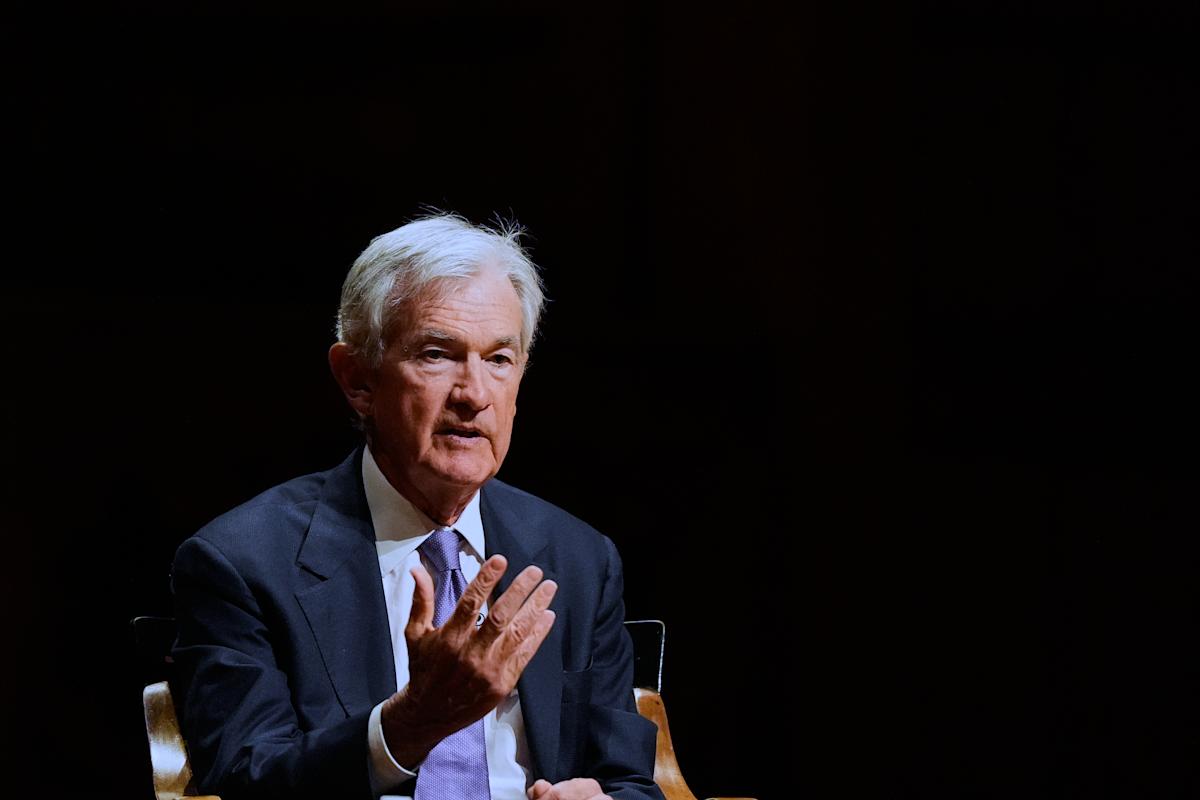
Federal Reserve Chair Expresses Confidence Amid Private Credit Market Concerns
At a recent event at Harvard University, Federal Reserve Chair Jerome Powell reassured attendees that there is currently no significant risk of contagion affecting private credit markets that could potentially threaten the broader financial system. While acknowledging the presence of investor anxiety, particularly following the cancellation of a merger involving private credit lender Blue Owl Capital, Powell conveyed that the situation is being closely monitored by the Federal Reserve.
Powell commented, “We’re looking for connections to the banking system and potential factors that might lead to contagion. Right now, we do not see those indicators.” He described the current state of the market as a correction, with some investors set to incur losses. However, he stressed that this correction does not appear to signal a larger systemic crisis.
Recent trends show a rise in redemption requests in private credit markets, spurred by apprehensions surrounding the impact of artificial intelligence on traditional software business models. This has raised concerns about the potential for increased defaults among companies that previously seemed stable, especially as many private credit lenders have substantial investments in software bonds.
In addition to addressing private credit markets, Powell provided insights on interest rates in relation to fluctuating oil prices resulting from geopolitical unrest in the Middle East. “No one knows how significant this impact will be; it is still too early to ascertain. That said, our policy is in a solid position to allow us to observe the situation as it unfolds,” he remarked.
Powell also reflected on the various inflationary shocks that have occurred over the past six years, including those related to the pandemic, tariffs, and ongoing oil price volatility. He estimated that tariffs may currently be contributing an additional 0.5% to 1% to inflation rates, predicting this will be a transient rather than an ongoing increase. Absent the effects of tariffs, Powell asserted that inflation would approximate closer to 2%.
The Federal Reserve’s preferred measure for inflation, the Personal Consumption Expenditures (PCE) index, sans volatile food and energy costs, currently registers around 3%.
In a separate commentary, John Williams, President of the New York Fed and vice chair of the Federal Open Market Committee, addressed the anticipated inflationary increases tied to rising oil prices in the forthcoming months. He expressed belief that these effects could moderate later in the year if oil prices decrease following the resolution of hostilities.
Williams also highlighted that the conflict could escalate inflation further due to rising intermediate costs and commodity prices, potentially hindering economic growth. However, he remains optimistic about the U.S. economic trajectory, forecasting a GDP growth rate of 2.5% for the year, driven by robust fiscal policies, encouraging financial conditions, and investments in artificial intelligence.
He predicted overall inflation would hover around 2.75% in 2023 before reverting to the Fed’s target of 2% the following year. Additionally, he anticipated a gradual decrease in the unemployment rate over the next two years in response to strong economic growth.
In Summary
Jerome Powell’s remarks indicate a cautious but stable outlook on the financial markets, particularly in relation to private credit and inflation. As the Federal Reserve adapts to fluctuating oil prices and ongoing economic changes, it maintains a steady approach to interest rates, aiming for balanced economic and job market conditions.