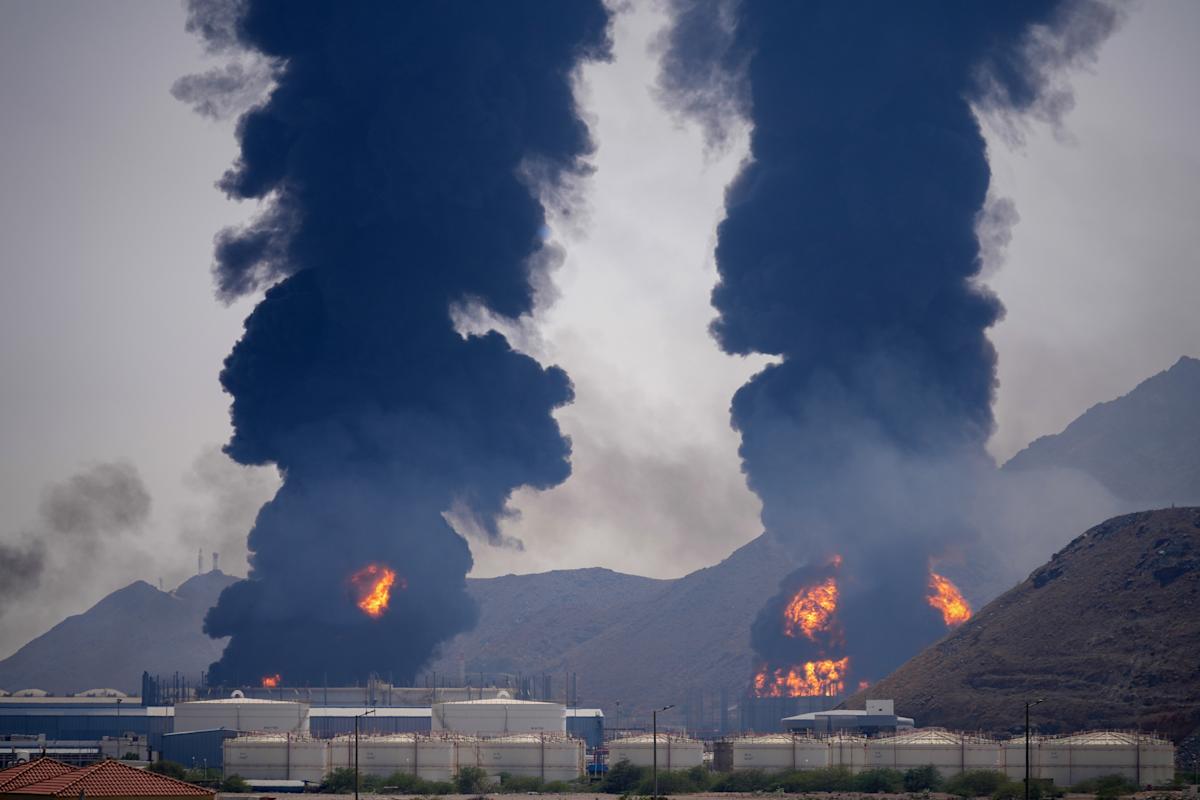
Oil Prices Rise Amid Escalating Tensions Over Iran Conflict
On Monday morning, global oil prices peaked as fears intensified that the conflict in Iran, now five weeks in, could escalate significantly, leading to tighter supplies in an already strained market. Brent crude futures rose by 3%, reaching approximately $108 per barrel, while US benchmark West Texas Intermediate (WTI) crude saw a similar increase, trading at about $102 per barrel.
The surge in oil prices was primarily driven by two critical factors related to the conflict. Firstly, the Houthi militia, an Iran-affiliated group in Yemen, has escalated threats to the Bab el-Mandeb Strait, a vital shipping route connecting Yemen and Djibouti. As the Strait of Hormuz remains effectively blocked due to Iranian militia activities, Saudi Arabia’s East-West Pipeline, which transports crude to the Port of Yanbu on the Red Sea, has assumed crucial importance. This pipeline is currently operating at full capacity, at 7 million barrels per day, leaving no room for increased supply.
The closure of the Bab el-Mandeb Strait would severely impact global oil supply, eliminating an additional 7 million barrels per day. This would compound losses in a market already grappling with a reduction of around 15 million barrels per day. Increased insurance costs for transit through the Strait are prompting shipowners to reconsider passage, leading to potential further supply disruptions.
Capital.com senior analyst Kyle Rodda noted the seriousness of the threat, suggesting that if the Houthis block this strategic point—sometimes referred to as the "Gate of Tears"—it could deepen the energy crisis even further.
The second factor contributing to the day’s price swings emerged from Washington. President Trump reiterated threats of severe retaliation against Iran’s domestic infrastructure, including its oil production capabilities, and announced a deployment of additional US troops to the Gulf region. In a post on Truth Social, Trump stated that the US is in discussions for a new agreement to conclude military operations in Iran but warned of drastic measures should negotiations falter, including the destruction of Iran’s energy infrastructure.
Despite the initial rise in oil prices, futures dipped shortly after the market opened, following comments from Treasury Secretary Scott Bessent, who suggested a future US effort to regain control over critical maritime passages, potentially invoking military escorts for vessels navigating through these straits.
Currently, US troop numbers in the Gulf region have surged to around 50,000. According to reports, this force includes the Army’s rapid-response 82nd Airborne Division. Furthermore, Trump is contemplating high-risk military operations aimed at extracting uranium from Iranian nuclear facilities—a move that analysts anticipate would provoke immediate and severe retaliation from Iran.
Iran’s government, on its part, has denied current negotiations with the US and has commenced charging substantial tolls for vessels wishing to pass through the strategically significant Strait of Hormuz. The ongoing tension raises concerns about a broader conflict involving the Gulf Cooperation Council (GCC), which could exacerbate the current situation and impact global oil supply.
JPMorgan Chase has warned that the ongoing situation presents increasing risks, with the possibility of escalation seeming more like a question of "when" rather than "if." As tensions mount, the oil market remains on edge, with stakeholders closely monitoring developments in this fraught geopolitical landscape.
For continuous updates on stock market movements and analyses, stay connected with financial news outlets.