Table of Contents
Delta Airlines Stays Strong Amidst Rising Fuel Costs
Despite a turbulent environment for the airline industry, Wall Street analysts remain optimistic about Delta Air Lines (DAL). A recent report from Bank of America (BofA) analyst Andrew Didora reveals that he’s lowered his earnings per share (EPS) projections for the entire sector, partly due to jet fuel prices nearly doubling since March, largely influenced by the ongoing conflict in Iran.
Analyst Insights
Didora highlighted two possible outcomes in the current climate of uncertainty. The first scenario predicts sustained high fuel prices, which may force airlines with weak margins to downsize or explore other options. Alternatively, an unexpected swift resolution to the conflict could lead to significant earnings recovery. Didora maintains a positive outlook, assuming that Delta, due to its strong margins and robust balance sheet, would emerge favourably from either scenario. He reaffirmed his "Buy" rating for Delta, citing its corporate clientele and solid cash flow performance as key advantages.
Similarly, Deutsche Bank’s Michael Linenberg has added Delta to his "fresh money" stock buy list. Linenberg underscored Delta’s diversified revenue streams—including its refinery operations, loyalty programmes, and robust international routes—as factors that position the airline well during periods of rising fuel costs.
Analyst Ratings and Market Position
According to Yahoo Finance, an impressive 25 out of 26 analysts covering Delta have rated the stock as a "Buy" or "Strong Buy," reflecting a high degree of market confidence. As the first airline set to announce its earnings on April 8, Delta’s results will provide valuable insights into how airlines are manoeuvring through this complex landscape of rising costs and fluctuating demand.
The Impact of Rising Jet Fuel Prices
Since late February, marked by the onset of the conflict in Iran, jet fuel prices have skyrocketed, leading to one of the most significant operating cost challenges the airline sector has faced in recent years. Prices surged from approximately $2.50 per gallon to around $4.50 to $4.60 per gallon, with global benchmarks following suit due to supply disruptions in the Strait of Hormuz and increased regional instability. Given that fuel constitutes up to 30% of overall airline expenses, this spike has dramatically affected operating margins.
In response, Delta and other airlines have acted decisively to safeguard their profitability. Measures taken include raising ticket prices, imposing fuel surcharges, increasing ancillary fees for services like baggage, and even reducing flight capacity. Airlines have signalled the potential for cancellations should fuel shortages persist.
Consumer Response and Market Resilience
Despite these higher costs, a variety of data sources indicate that consumers and business travellers continue to book flights without hesitation. Metrics, such as credit card spending on airline tickets and TSA throughput trends, suggest ongoing demand, although the sustainability of this trend remains uncertain amidst fluctuating economic conditions.
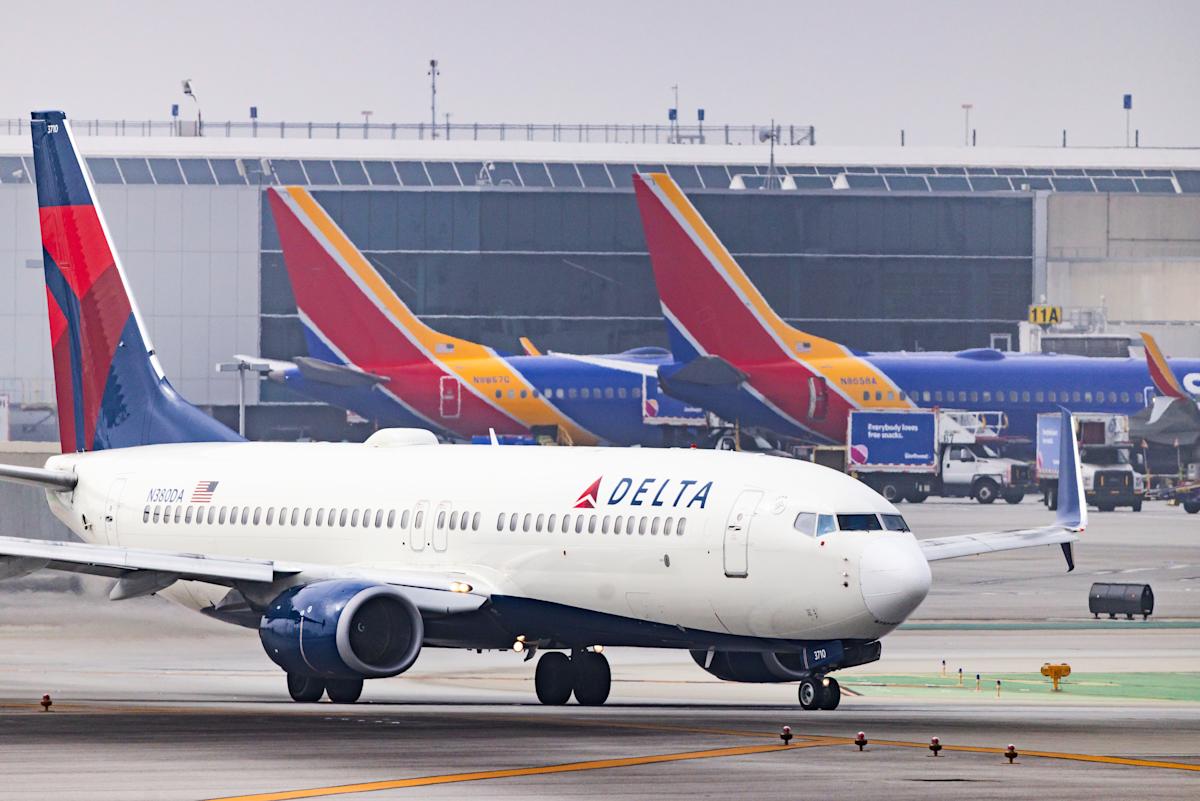
Delta’s performance contrasts with that of competitors such as United Airlines, JetBlue, and Southwest, whose shares have declined 17.8%, 21%, and 25%, respectively, since the onset of the conflict. In comparison, Delta’s stock has only fallen by 5.7%. Linenberg attributes Delta’s resilience to its focus on premium travel and loyalty programmes, which is supported by an anticipated $9 billion in remuneration from American Express this year. Furthermore, Delta’s emphasis on reducing debt positions it advantageously, with its adjusted net leverage at the lowest it has been since 2019.
Conclusion
While the airline industry grapples with rising fuel costs and unpredictable market conditions, analysts believe that Delta is well-equipped to navigate these challenges. With a strong operational model, diversified revenue streams, and a focus on premium customer loyalty, Delta remains an intriguing consideration for investors amid a complex economic backdrop. Upcoming earnings reports will likely shed further light on the airline’s strategies and performance as the situation evolves.
For those interested in broader financial analyses, staying tuned to developments within the airline sector and its implications for market dynamics may reveal more about the potential for recovery as fuel prices stabilise.