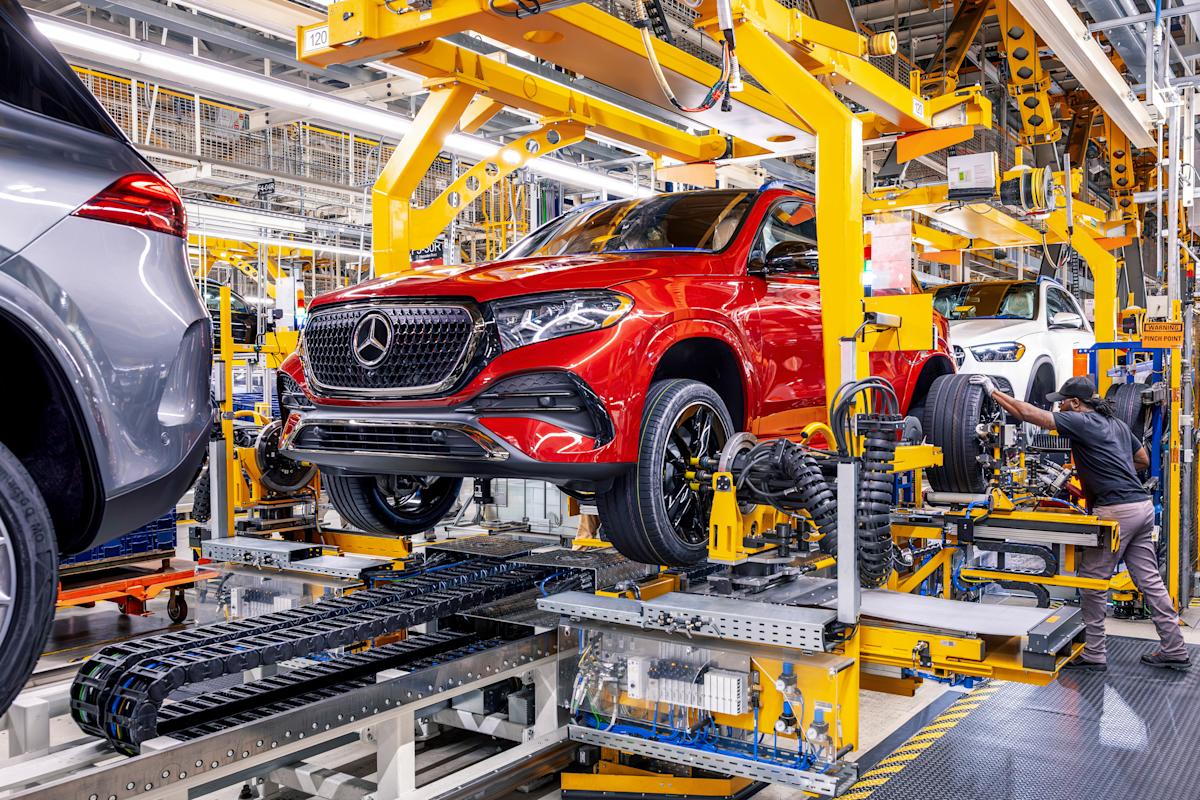
Mercedes-Benz recently unveiled the redesigned 2027 GLE and GLS SUVs at its assembly plant in Tuscaloosa, Alabama. This location has been instrumental in the production of the brand’s SUVs for the past 30 years and marked a significant milestone with the launch of its 5-millionth SUV, a testament to its long-standing operations in the U.S.
Alongside this milestone, Stuttgart-based Mercedes plans to invest $4 billion into the Tuscaloosa facility by 2030 as part of a more extensive $7 billion investment strategy across the U.S. This substantial financial commitment underscores the significance of the Alabama site within the company’s operations, especially as it navigates a challenging tariff environment.
Mercedes-Benz USA CEO Adam Chamberlain reported that the GLE has emerged as the brand’s best-selling model for the past three years, achieving a record year in 2025. He indicated a positive trend in sales for 2026, with a year-to-date increase of about 30%, albeit over only two months. This growth indicates robust and stable demand despite facing industry-specific challenges, including shifting tariffs that have affected cost structures across the automotive landscape.
With approximately 60% of the output from the Tuscaloosa plant destined for international markets, this facility stands as one of the largest automotive exporters in the U.S. Notably, vehicles produced here that are sold domestically are exempt from certain tariffs. Mercedes’ competitor, BMW, employs a similar strategy at its South Carolina plant, catering to local preferences while managing global exports.
Utilising non-unionised labour enables Mercedes and other foreign automakers a lower cost base in the U.S., although efforts from the United Auto Workers (UAW) to unionise these plants remain ongoing.
The GLE and GLS SUV launches kick off what Mercedes describes as its most extensive product rollout in history, with over 30 new vehicle models planned over the next two years. The company aims to elevate its annual U.S. retail sales to 400,000 units by 2030, representing a 30% increase from the 303,000 passenger cars sold domestically in the previous year.
Chamberlain emphasised a strategy of organic and sustainable growth, highlighting a solid partnership with dealers over the next five years. The influx of new and refreshed models, including advancements in technology, is expected to stimulate sales and market presence considerably.
However, questions arise regarding whether a brand synonymous with luxury can maintain its prestigious image while aiming for such high-volume sales. Concerns linger about external pressures, such as tariffs and shifts in the luxury market, potentially complicating these aspirational figures.
In the past year, despite a notable U.S. manufacturing footprint, Mercedes faced a decline in operating profit, hampered by $1.2 billion in tariff costs. This contributed to a staggering 57% reduction compared to previous profit levels, suggesting vulnerabilities inherent in their business model.
Mercedes remains optimistic that catering to higher-end customers will shield the brand from economic upheavals such as rising fuel prices, which could impact consumer purchasing power. Chamberlain acknowledged a degree of resilience among premium buyers but remained cautious about external factors affecting demand.
Pricing details for the new GLE and GLS models will be announced closer to their showroom launch later this year. Last year’s GLE commenced at around A$62,000, while the prior-gen GLS started at approximately A$90,000.
Overall, as Mercedes-Benz steers through these challenging economic waters, its commitment to product innovation and local production highlights an unwavering confidence in the U.S. market’s potential. The coming years will reveal whether its ambitious sales targets can be met without compromising the luxury image that has been a cornerstone of the brand’s identity.