Table of Contents
Evaluating Australia’s Oil Self-Sufficiency amidst Global Turmoil
As hostilities escalate in the Middle East and disruptions through the critical Strait of Hormuz persist, Australia’s energy security has come into sharp focus. With approximately 90% of its refined fuels imported and a stark lack of strategic oil reserves, Australia faces potential future shortages if fuel supply chains are further compromised.
Current Oil Landscape
Australia’s oil dependency is alarming, with only about a month’s supply in its national fuel stockpile. Exploring whether Australia can become self-sufficient in oil involves scrutinising its natural reserves of oil, gas, and condensates.
Estimates on Australia’s oil reserves vary significantly. A 2022 report by BP noted proven reserves of approximately 2.45 billion barrels, while the US Energy Information Administration (EIA) estimated these at around 1.8 billion barrels for 2025. Notably, Australia’s oil and condensate production for 2024 was around 145 million barrels, starkly contrasting with an estimated consumption of about 420 million barrels.
Shale Oil Potential
In addition to these traditional reserves, Australia possesses vast amounts of shale oil—estimated at 403 billion barrels, with about 17.5 billion barrels considered technically recoverable. However, the extraction of shale oil is costly and complex, with a breakeven production cost of roughly AUD 108 per barrel, and generally located in remote, infrastructure-poor areas.
Refinery Capacity Challenges
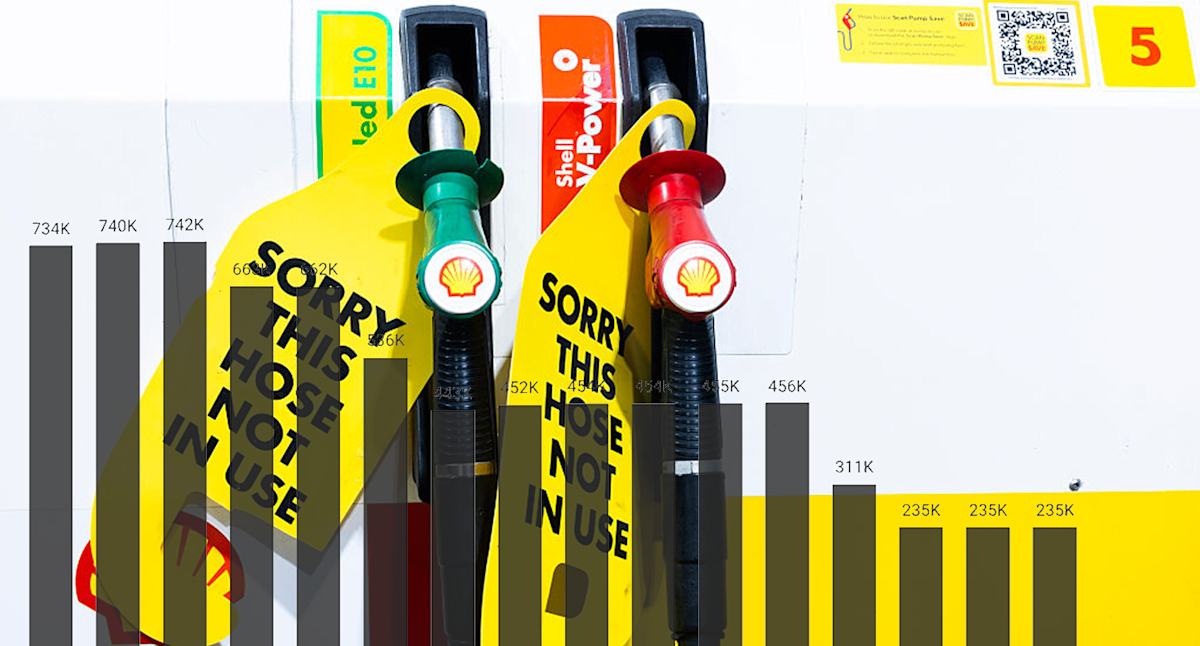
The viability of self-sufficiency hinges on refinery capacity. Currently, Australia’s refineries operate below their needed output, producing only 235,000 barrels per day, while the country requires about 1.14 million barrels. This has shifted dramatically from 2009 when total refinery capacity reached 734,000 barrels, covering 83% of total consumption.
As of now, with only two refineries operating at over 100% of their capacity, local production meets just over 20% of national demand. Given past strategies that prioritised cost over resilience, Australia’s energy situation appears precarious.
Policy Considerations and Future Steps
The choice between energy security and economic viability is pressing. Rebuilding refinery capacity to enhance domestic fuel production could cost billions, prompting questions about the feasibility of developing shale oil reserves.
Importantly, should Australia focus on achieving oil self-sufficiency via existing reserves, these would be depleted within a few decades. As energy markets evolve, a balanced approach may be necessary—one that not only fosters greater domestic refinery capacity but also establishes a robust reserve of oil.
This dual strategy could provide Australia with essential resilience against future shocks in energy markets, ensuring that it can withstand longer periods of disruption while addressing the challenges of reliance on imported fuels.
In conclusion, while self-sufficiency appears technically possible if tapped into, Australia’s energy future hinges on significant investments in both infrastructure and strategic reserves to secure its energy landscape against global uncertainties.