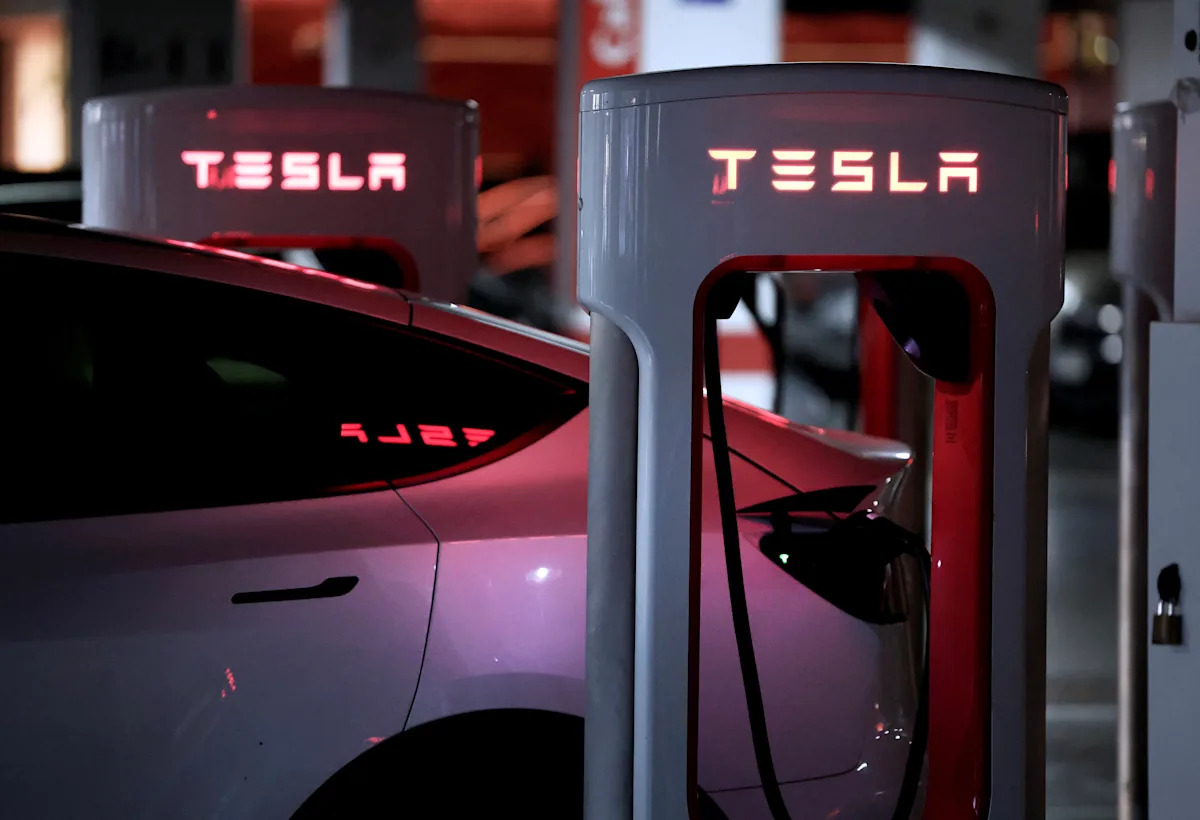
JPMorgan Predicts Significant Decline for Tesla Shares
JPMorgan Chase & Co. has expressed concerns regarding Tesla’s (TSLA) stock performance, suggesting a potential substantial decline. Analyst Ryan Brinkman noted that Tesla’s performance expectations have markedly deteriorated across various financial metrics leading up to 2030. Despite a recent surge of over 50% in Tesla’s stock and a 32% rise in analyst price targets, these developments signal a presumption of an imminent dramatic upswing in performance—an outlook which Brinkman views with skepticism.
Brinkman cautioned investors to approach these optimistic projections with caution, emphasising the risks associated with execution and the time value of money. He reiterated a ‘Sell’ rating for Tesla, projecting a price target of $145—a staggering decrease of about 60% from current market values.
Tesla’s shares have already dipped roughly 20% this year, making it the least performing stock in the so-called "Magnificent Seven" group of tech companies. This forecast stands in contrast to the broader market sentiment, where the average Wall Street price target for Tesla rests at $360, according to data from Yahoo Finance.
The warning from JPMorgan coincides with mounting worries about Tesla’s financial results. In the first quarter, the company achieved deliveries of 358,023 vehicles—a figure that fell short of analysts’ expectations ranging from 366,000 to 370,000 units. Though this marks a 6.3% year-on-year increase, the growth is largely attributed to a lower comparison base from the previous year, and it reveals a significant decline from the high of the fourth quarter of 2022.
Tesla is navigating a variety of challenges. The expiration of the US federal electric vehicle tax credit, initiated by the previous administration, has substantially hampered domestic demand for electric vehicles. Coupled with persistently elevated interest rates, financing for vehicle purchases is increasingly out of reach for many potential buyers.
Further complicating Tesla’s landscape is fierce competition from Chinese electric vehicle manufacturers like BYD and established automakers including Mercedes-Benz, General Motors, and Ford. Despite these competitive pressures, CEO Elon Musk is attempting to rekindle investor enthusiasm by promising that 2026 will herald significant new product launches.
Among these upcoming innovations is Tesla’s Cybercab, an autonomous vehicle devoid of traditional controls such as steering wheels and pedals. Initial production is set to commence this month, as it becomes central to Tesla’s forthcoming ridesharing service.
Additionally, Tesla is ramping up efforts to deploy its Optimus humanoid robot, intended to handle mundane tasks in its factories by the end of the year. Despite these technological advancements, Brinkman remains cautious. He indicated that although the risks associated with technology and execution appear to be less daunting than previously feared, ventures into high-volume, low-cost segments are fraught with significant challenges regarding demand, execution, and competitive dynamics.
Overall, while the hype around Tesla’s future innovations persists, the current financial landscape and market dynamics raise fundamental questions about the company’s trajectory and investor confidence in its stock performance moving forward.
Conclusion
Tesla stands at a crossroads, facing both significant opportunities and challenging headwinds. Investors are encouraged to approach the stock with caution, mindful of the risks that have emerged amidst a rapidly evolving market.