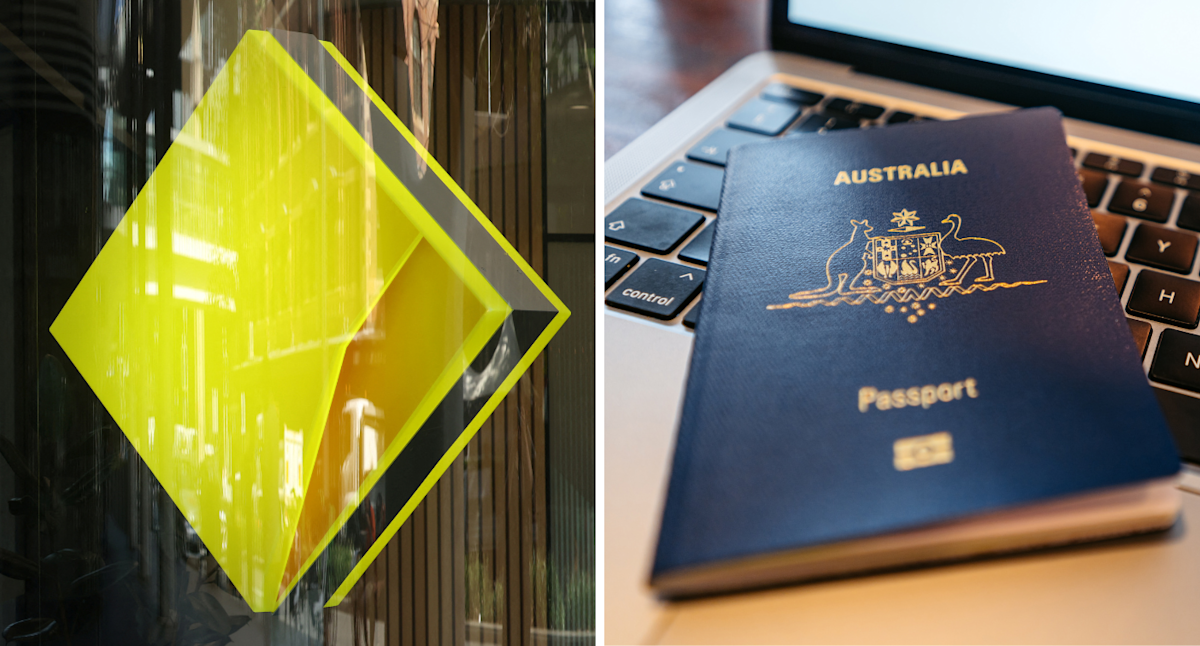
Commonwealth Bank Introduces Quick Identity Verification via ePassports
Customers of Commonwealth Bank (CBA) can now complete the onboarding process in under a minute by using their passports. This new method employs near-field communication (NFC) technology, allowing users to tap their passport against their phone for rapid identity verification.
Most Australians regularly use NFC technology, whether it’s tapping a card at the register or making payments through mobile devices or smartwatches. All Australian passports are equipped with embedded NFC chips that store the holder’s biometric data, including personal details and photographs.
Sascha Thiel, CBA’s general manager for customer identity and digital security, noted that since the feature’s rollout at the end of January, over 2,700 customers have leveraged this app capability.
“This method is a quick, safe and secure way to verify identity online," Thiel stated. Previously, customers had to submit two forms of identification, such as a passport and a driver’s licence, but now, scanning an ePassport suffices.
The process is seamless: the technology reads encrypted data directly from the ePassport, autofilling the application form and unlocking an encrypted government-issued biometric image stored in the chip. Customers are then asked to take a selfie, which is aligned with the passport image to ensure they are who they claim to be.
This approach to identity verification isn’t unique to CBA; several other banks have started requiring selfies during account creation to confirm customer identity. NAB, for instance, incorporated a similar requirement in September, enabling customers to scan their ID document and then match it with a live image of themselves, significantly cutting onboarding time by approximately 50%. NAB’s chief operating officer, Les Matheson, stated that this protects customers against fraud and reduces the risk of criminals opening fake accounts.
ANZ Plus also uses selfie verification when customers set up accounts or reset their PIN. Thiel explained that CBA’s new ePassport feature coupled with the selfie requirement aims to curb scams and "synthetic identity fraud," where criminals concoct fake identities using real and false information.
“Establishing strong identity verification from the start actively combats fraud and scams as it ensures a higher level of assurance regarding the customer’s authenticity,” she asserted.
Importantly, CBA does not retain the secured encrypted data accessed during verification. Australia was at the forefront of implementing ePassports back in 2005, and as of now, every Australian passport is an ePassport, with over 180 countries using NFC-enabled passports.
Thiel claims that CBA is a pioneer in not only Australia but also the Asia Pacific regarding the integration of ePassport technology in banking, despite only a few banks globally adopting similar measures. Nonetheless, she anticipates broader adoption in the future as technology becomes commonplace in financial contexts.
“This is technology we’re already using daily, and we’re now applying it in banking,” she noted.
Currently, this app feature is exclusive to customers in Australia, with plans to extend its availability to expatriates later this year, allowing those moving to Australia to benefit from this technology as well.