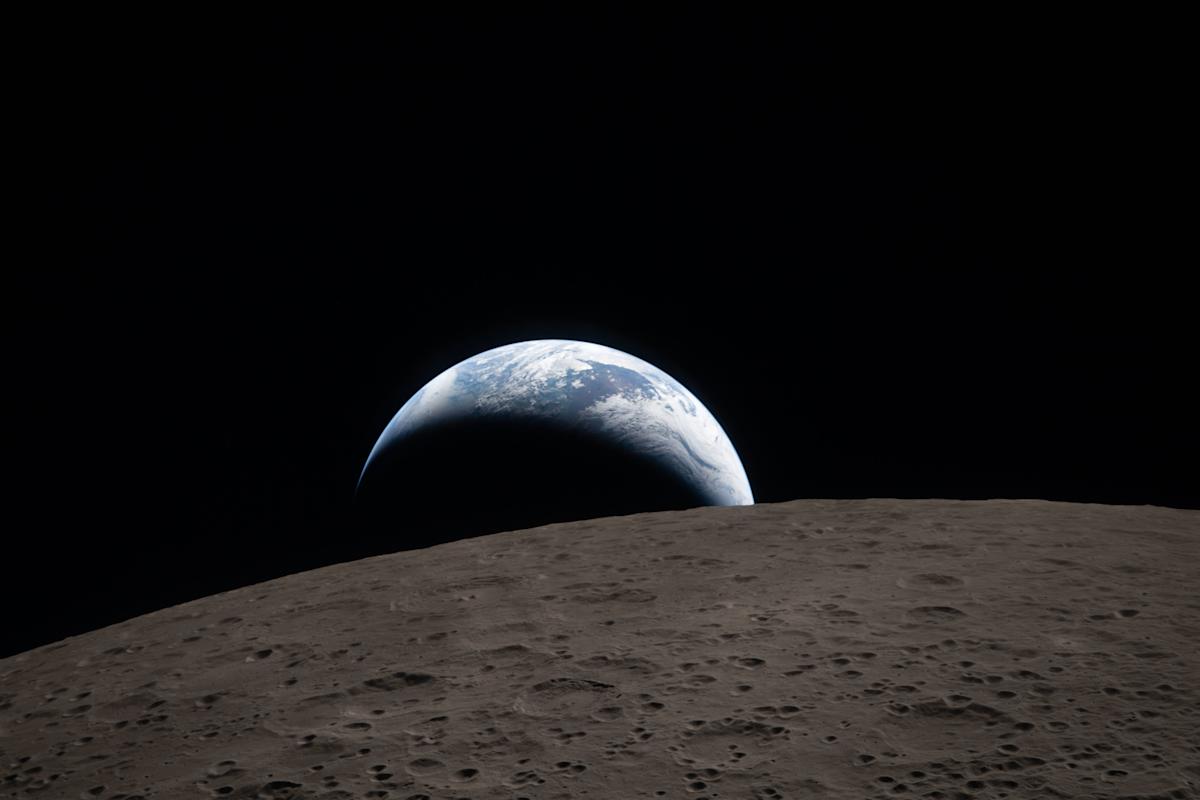
On Monday, the astronauts participating in NASA’s Artemis II mission achieved a significant milestone by travelling the furthest distance in space ever recorded by humans. During their fly-by of the moon, they covered an impressive 252,760 miles from Earth, breaking the previous record held by Apollo 13 in 1970.
The crew’s mission provided them with stunning close-up views of the lunar surface, including the far side of the moon, which has never been visible from Earth and remains unseen by humanity until now. This opportunity offered the astronauts a unique perspective on an area that has intrigued scientists and the public alike for generations.
The mission included a seven-hour lunar observation period, during which the crew experienced a 40-minute communication blackout while travelling on the moon’s dark side. This aspect of the journey exemplifies the challenges and wonders of space exploration.
Artemis II launched on April 1, coinciding with SpaceX’s reported confidential filing for an IPO with the SEC. While specific details of SpaceX’s offering remain forthcoming, industry experts speculate that it could be valued at up to $75 billion. A successful mission from NASA could significantly enhance SpaceX’s prospects and boost the broader space industry.
After completing their lunar manoeuver, the Orion capsule is set to make a U-turn and head back to Earth, with a planned splashdown in the Pacific Ocean this Friday.
The images captured during the fly-by have mesmerised space enthusiasts. Among them are views of the Earth setting behind the moon and shots of various lunar features, including the heavily cratered terrain of the South Pole-Aitken basin.
NASA’s Artemis program signifies a new era in lunar exploration, aiming to establish a sustainable human presence on the moon and paving the way for future manned missions to Mars.
In summary, Artemis II marks a pivotal step in enhancing our understanding of lunar geography and rekindling global interest in space exploration, while potentially impacting the future landscape of commercial space ventures.