The Rise of Kit Homes in Australia: A Trend Towards Affordable Housing
In an era where housing affordability remains a pressing issue in Australia, kit homes are emerging as a sought-after alternative, offering a quicker and more cost-effective method for families to secure their dream residences. Unlike the outdated perceptions of unremarkable fibro construction, modern kit homes come with a range of customisable architectural designs that appeal to a variety of tastes.
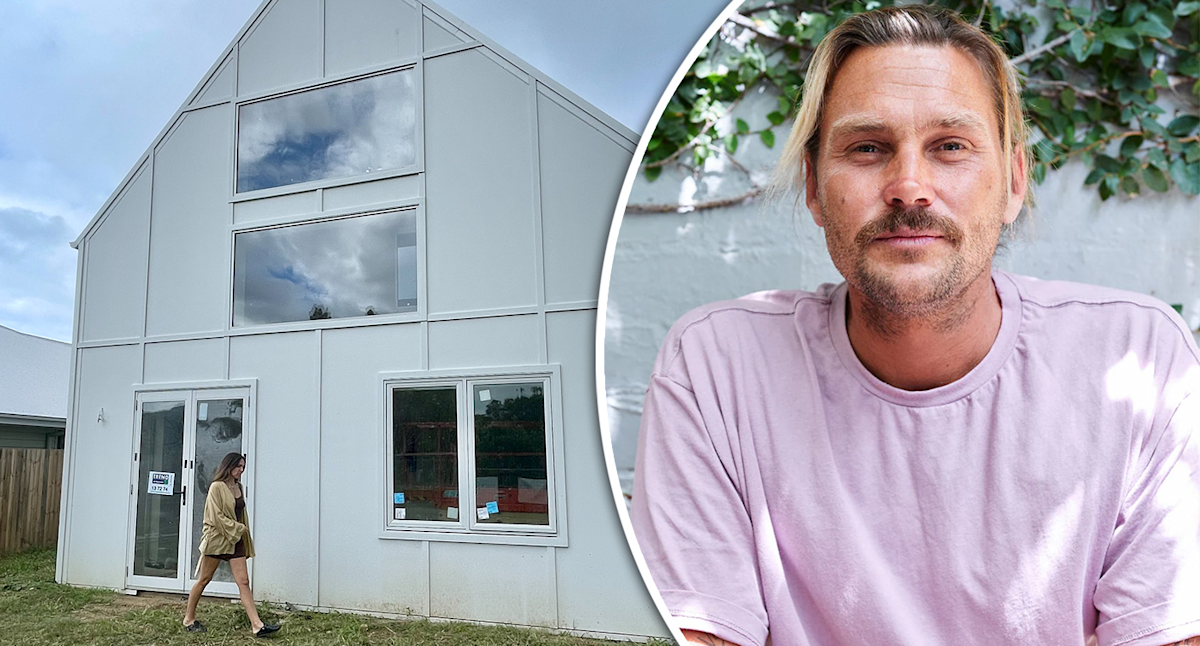
Byron Bay resident Cherie Ava is one such homeowner embracing this new trend. Together with her husband, they are constructing a three-bedroom prefabricated kit home that they’ve tailored to meet the specific needs of their family of five. Cherie asserts that by opting for a kit home from Shed House, they have saved approximately $60,000 compared to a traditional build with a volume builder, estimating costs at $60,000 less for similar dimensions.
“We were able to design the internal layout of our home, incorporating unique features like crystals in the concrete slab to create an energetic grid,” she remarked in an interview. This level of personalisation is often unavailable in standard volume builds, she noted.
The couple purchased a 430 square metre plot in Byron Bay after relocating from Victoria and fell in love with Shed House’s barn-style design. Prices for kit homes from Shed House range from $52,000 for smaller units to $175,000 for larger, four-bedroom options, although these figures exclude assembly costs.
Cherie’s construction journey began in October, and with a streamlined process compared to previous homes they’ve built, they anticipate moving in shortly. “With previous builds, the timelines stretched to eight months, but this process has been significantly faster despite some delays over the festive season,” she added.
A kit home consists of prefabricated elements, such as framing, which are pre-cut and assembled on-site. This method significantly reduces construction time, financial outlay, and materials wastage. These homes can be assembled either by “owner builders” or registered contractors.
The recent surge in interest in such housing is evident across Australia, with more companies entering the kit home market. Rhys Uhlich, founder of Shed House, reported a staggering 340% increase in enquiries this past January compared to the same month the previous year. He attributes the appeal not only to the aesthetic of the barn-shed style but also to the "Mercado set aspect" which gives customers more control over their builds.
Uhlich shared, “The speed of assembly is a major factor attracting owner-builders. Our kit homes come pre-cut and pre-punched, allowing for simple bolt-together assembly.” His motivation for creating Shed House stemmed from his own experience building a shed for his family upon their return from the US, where he faced financial constraints that made other building options unpalatable.
After years of lagging behind, the prefabricated home market in Australia is projected for significant growth. Currently, it accounts for only 8% of new homes built, but estimates from Mordor Intelligence indicate it could grow by roughly 7% annually, reaching a valuation of $18 billion by 2030. Prefabricated homes offer a viable partial solution to Australia’s ongoing housing crisis, with construction times often shortened to around 12 weeks, compared to a typical year or more for conventional builds in areas like New South Wales.
As the demand continues to rise, kit homes seem poised to redefine the Australian housing landscape, offering families a practical path to homeownership in a challenging market.