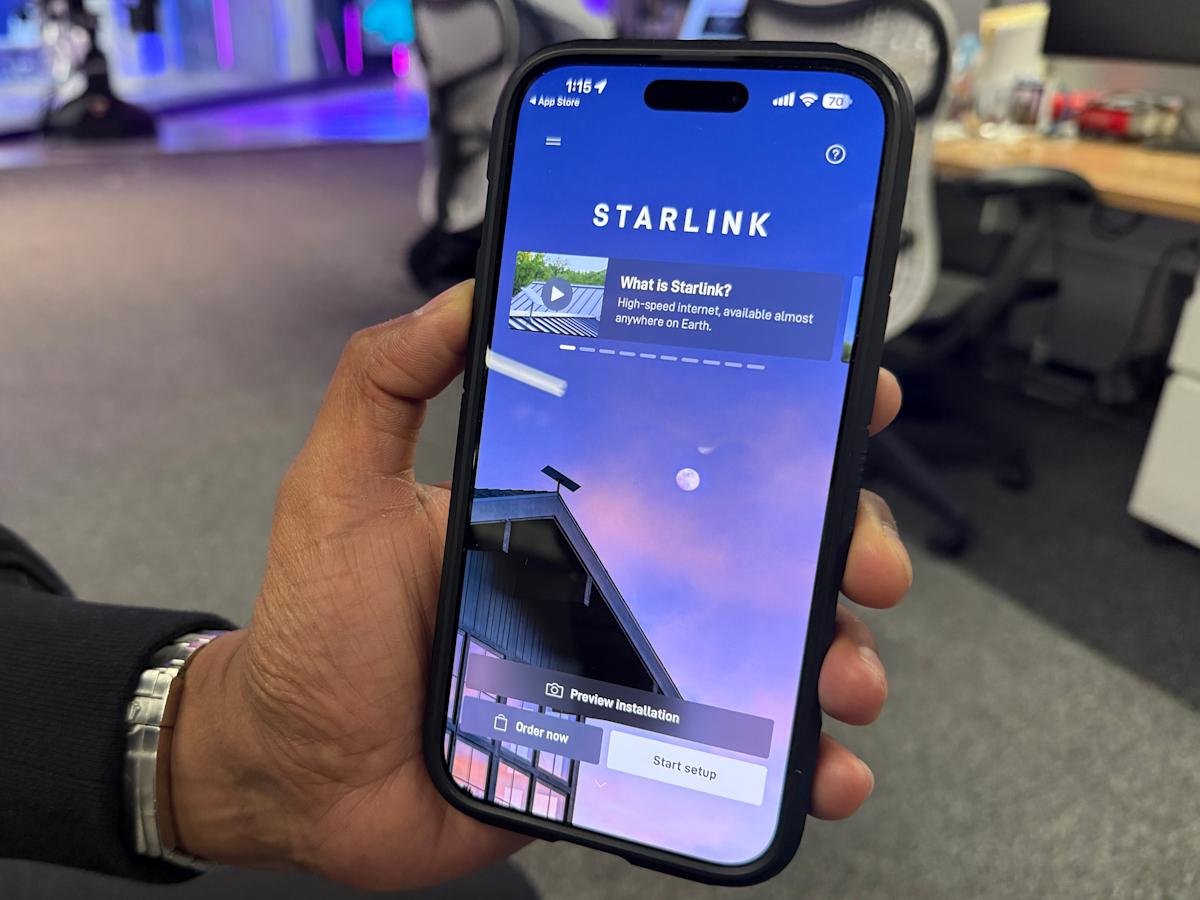
When conversations arise regarding the anticipated SpaceX IPO, expected as early as summer, the spotlight predominantly shines on Starlink, the company’s satellite internet service. Originally a mere engineering endeavour, Starlink has now evolved into a significant revenue generator, propelling SpaceX to become the world’s most valuable private enterprise.
Despite a recent report indicating SpaceX incurred a substantial $5 billion loss last year — largely attributed to hefty investments in AI — the firm’s rocket launch operations and Starlink service collectively generated about $6 billion in earnings before interest, taxes, depreciation, and amortisation (EBITDA). The evolving narrative around Starlink is pivotal, as it not only underpins SpaceX’s financial future but also positions it as a monumental offering with an estimated valuation of $2 trillion.
Starlink is a revolutionary satellite broadband service operating globally, catering to over 9 million customers across residential, governmental, and business sectors. The service stands out as a low-latency internet solution, leveraging a constellation of thousands of low Earth orbit (LEO) satellites, situated between 340 to 750 miles above the Earth. This proximity allows for significantly reduced signal travel distances, resulting in lower latency comparable to standard wired broadband.
With a substantial satellite constellation comprising more than 9,600 operational satellites — about two-thirds of the 14,300 active payload satellites worldwide — SpaceX demonstrates unparalleled capability in satellite deployment. It continues to expand this constellation at an impressive pace, launching around 70 satellites weekly.
Starlink’s motto of “scale” is echoed in its production approach; building satellites as part of an industrial manufacturing process rather than a traditional aerospace production line. This efficiency extends to customer service, with the company aiming to produce approximately 15,000 Starlink kits daily, thereby optimising manufacturing and enhancing overall yield.
Starlink’s service portfolio has broadened significantly, covering three key areas: commercial connectivity (which includes residential, business, maritime, and aviation), Starshield (a government-focused offering for secure communications), and a direct-to-cell service designed to provide coverage to conventional LTE cell phones. This expansion is designed to build upon the subscriber base, which has grown considerably — an increase of 4.6 million subscribers within the past year alone.
Innovative partnerships are also being forged, such as the recent collaboration with US Mobile, offering competitive bundled deals for Starlink services. This partnership highlights the strategic initiative by Starlink to enhance market penetration without directly undermining existing carriers, thus presenting an opportunity for revenue growth across mobile networks.
From a financial perspective, Starlink is projected to generate approximately $10.6 billion in revenue in 2025, accounting for about 67% of SpaceX’s overall income. The projected EBITDA of $5.8 billion demonstrates a robust margin of 54%, indicating that Starlink’s business model is more akin to a software provider rather than traditional tech hardware.
Starlink’s subscriber growth trajectory is promising, reaching over 9 million subscribers in 155 countries and reflecting significant momentum. Analysts speculate that upcoming innovations, such as the partnership with US Mobile, may further augment subscriber growth.
In the context of an IPO, the combination of consistent subscription revenues, improving profit margins, and a strategic advantage provided by SpaceX’s cost-effective launch capabilities will likely make Starlink a strong prospect for investors. PitchBook encapsulates this sentiment, suggesting that Starlink not only generates internal demand but also justifies substantial capital investments. As such, a potential SpaceX IPO would essentially serve as an IPO for Starlink, providing an avenue to invest in a rapidly advancing satellite internet enterprise supported by the world’s premier launch service.