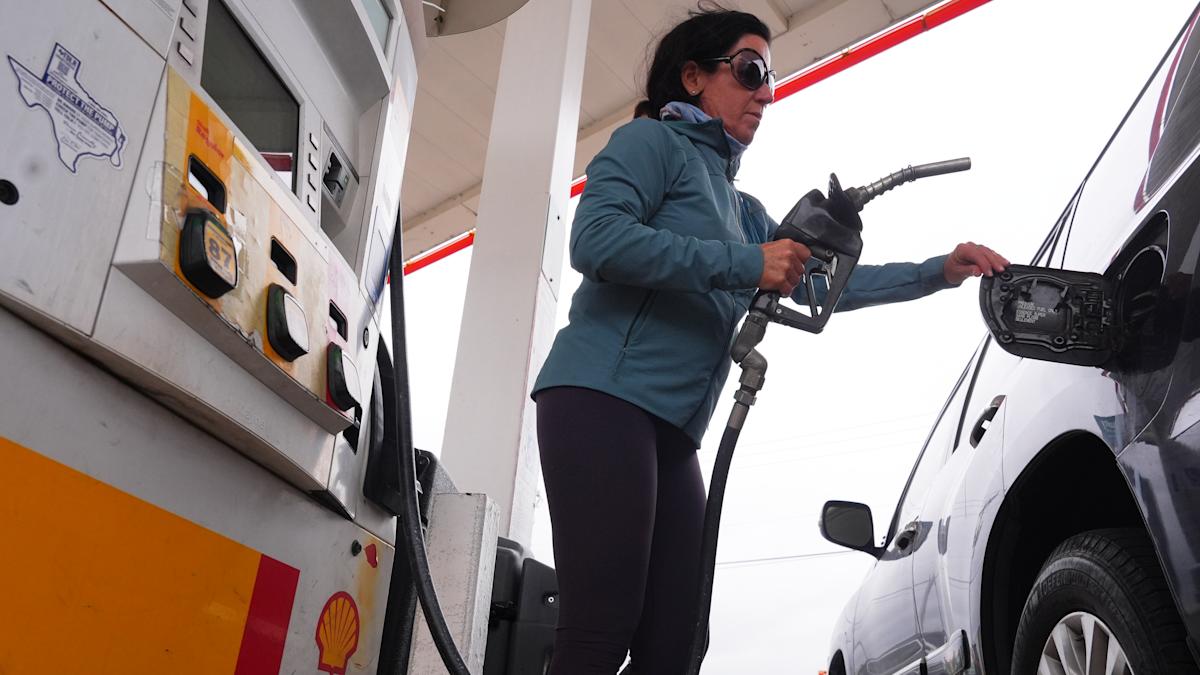
Consumer Resilience Amidst Rising Gas Prices: Insights from Jamie Dimon and Market Trends
Jamie Dimon, CEO of JPMorgan Chase, recently discussed the state of consumer spending, noting that despite the ongoing rise in gas prices—currently averaging $4.07 per gallon—employment remains strong. In a recent media call with Yahoo Finance, Dimon highlighted that while for lower-income individuals the impact of gas prices is more pronounced, many still have jobs that enable them to meet these costs. He asserted that jobs are the primary driver of consumer spending, and the low unemployment rate indicates that many people are effectively managing higher costs by seeking extra income through gig jobs or reducing discretionary spending.
In March, the US economy experienced a surprising uptick, adding 178,000 jobs, which helped boost the unemployment rate down to 4.3%. However, concerns linger regarding whether this consumer resilience can endure, especially amid escalating tensions between the US and Iran.
The landscape for consumer spending appears to be mixed. Recent geopolitical developments have led to volatility in oil prices. Initially, prices surged, touching close to $120 per barrel amidst conflicts in the Middle East. However, last week witnessed a significant drop, with West Texas Intermediate (WTI) crude prices settling around $92 per barrel, continuing a downward trend this week.
GasBuddy reports a static average gasoline price over the last week, remaining at $4.07 per gallon. Industry experts, however, warn that potential full blockade actions in the Strait of Hormuz could exacerbate global supply issues, leading to further increases in oil and gasoline prices in the coming weeks.
Consumer sentiment is showing signs of distress, reflected in the University of Michigan’s Consumer Sentiment Index, which plummeted to 47.6 in early April—its lowest since the survey’s inception in 1952. Respondents attributed their pessimism mainly to the ongoing Iran conflict and rising gas expenses.
This sentiment shift has inevitable repercussions across various sectors. Constellation Brands, the US brewer of popular beers like Modelo and Corona, recently retracted its fiscal 2028 outlook, citing weaker consumer demand as shoppers adapt to escalating prices across many goods.
As the economic situation evolves, the resilience of consumers remains a critical factor to watch, particularly in relation to employment and overall spending trends amidst fluctuating energy costs.
In summary, while the job market appears robust in supporting consumer spending, external pressures from geopolitical events and price inflation may present real challenges in the near future. The ongoing situation is reflective of how interconnected the global economy is, showing that shifts in one region can ripple across industries and influence consumer behaviour substantially.