Table of Contents
Consumer Resilience Amid Rising Gas Prices: A Mixed Outlook
In a recent conversation with Yahoo Finance, JPMorgan Chase CEO Jamie Dimon attributed ongoing consumer resilience to employment levels, even as gas prices hover around $4 per gallon. Dimon noted, "If you look at gas, it’s literally a rather small component of consumer spend. Lower-income individuals might feel a pinch, but they still have jobs and wages." He suggested that when faced with financial pressors, consumers often seek additional income through gig work or adjust their spending by cutting back on travel.
This optimism appears reflected in the US economy’s surprising addition of 178,000 jobs in March, coupled with a decrease in the unemployment rate to 4.3%. However, ongoing geopolitical tensions, particularly the US-Iran conflict, pose a looming threat to sustained consumer spending. The economic backdrop remains precarious, with rising gas prices and broader concerns about inflation.
Recent Developments in Oil Prices
The oil market has seen considerable volatility recently, with prices experiencing significant fluctuations in response to geopolitical events. After reaching a peak near $120 per barrel due to escalated military actions in the region, prices fell sharply last week. Currently, West Texas Intermediate (WTI) crude oil is trading around $92 per barrel.
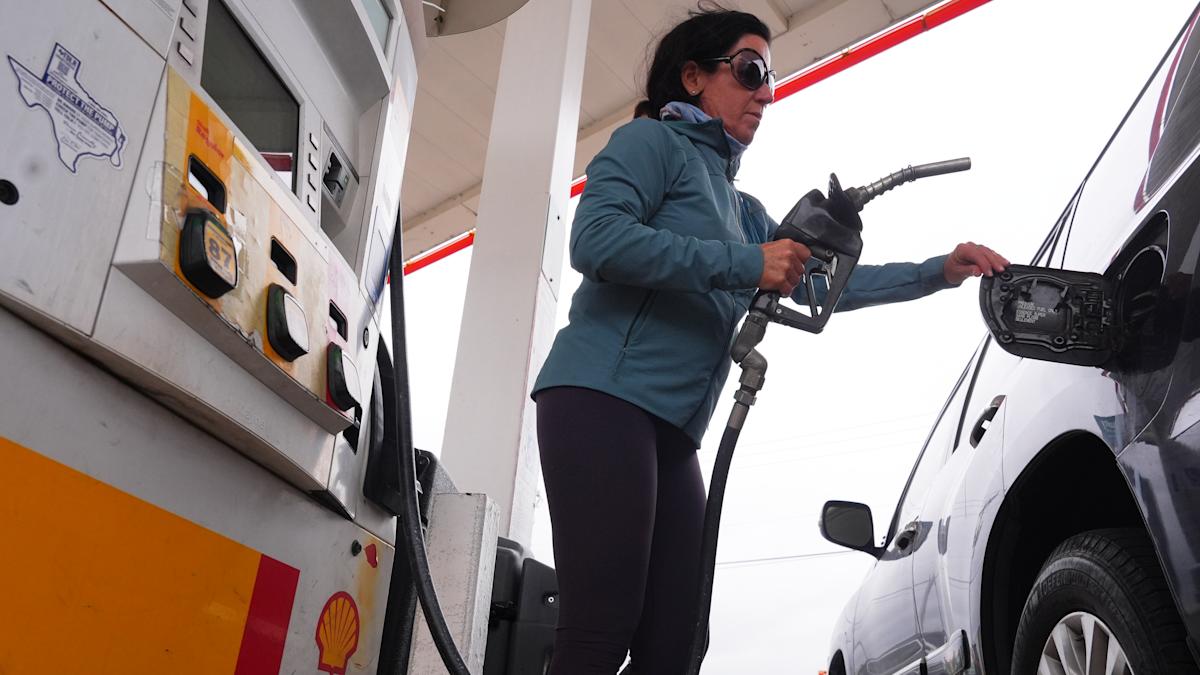
According to GasBuddy’s latest data, the average price for gasoline across the US remains steady at $4.07 per gallon. Nevertheless, Patrick De Haan, head of petroleum analysis at GasBuddy, warned about the potential for further increases: “The move toward a full blockade of the Strait of Hormuz is compounding global supply concerns. As a result, gasoline prices are likely to jump again this week."
Consumer Sentiment and Spending Habits
Despite currently manageable fuel prices, cracks in consumer confidence are becoming evident. The University of Michigan’s Consumer Sentiment Index plummeted to an unprecedented low of 47.6 in early April, down from 53.3 in March, marking the lowest level since its inception in 1952. Respondents specifically cited the Iran conflict and surging gas prices as key contributors to their growing pessimism.
The impact of these economic strains on consumer behaviour is already visible. Notably, Constellation Brands, renowned for its production of Modelo and Corona beers, recently retracted its fiscal 2028 forecast. The company cited declining demand as consumers grapple with high prices across various sectors.
Conclusion
While employment levels provide a semblance of stability for consumers facing rising gas prices, the uncertainty stemming from geopolitical tensions and their potential economic ramifications cannot be ignored. The resilience observed in consumer spending might be put to the test in the coming months, as fluctuations in gas prices and consumer sentiment hint at a complex economic landscape ahead.
As the situation unfolds, it will be crucial for businesses and policymakers to monitor these trends closely, especially in light of the implications for inflation and consumer behaviour.