ASML Shares Decline Amidst Stronger Long-Term Sales Outlook Driven by AI Demand
On Wednesday, ASML (ASML) stock experienced a decline of up to 6%, primarily due to a reduction in the share of net system sales attributed to its China segment. Despite this setback, the company’s management expressed optimism, highlighting robust sales momentum and adjusting the full-year sales forecast upwards, bolstered by increasing expenditure in artificial intelligence (AI).
CEO Christophe Fouquet stated, "Demand for chips is outpacing supply. In response, our customers are accelerating their capacity expansion plans for 2026 and beyond." This comment was made during the company’s recent quarterly earnings release.
ASML has revised its net sales projection for 2026 to between €36 billion and €40 billion (approximately A$61.37 billion to A$67.75 billion), a significant increase from the earlier forecast of A$61.06 billion to A$66.50 billion. However, the improved forecast is somewhat tempered by second quarter guidance, which is estimated at A$15.21 billion to A$16.03 billion, slightly shy of Wall Street’s expectations of around A$16.07 billion as per Bloomberg data.
A notable factor impacting ASML’s performance is the decline in its China segment, affected by export restrictions on some advanced machinery. The company’s net system sales to China accounted for only 19% in the first quarter of 2026, a marked decline from 36% in the preceding quarter.
Despite the dip on Wednesday, ASML shares have risen by 35% year-to-date, demonstrating strong momentum within the semiconductor sector, which has played a crucial role in driving broader market recovery in recent weeks.
Semiconductors have become a pivotal factor for the stock market’s rebound, with the S&P 500 index recovering all losses incurred since the onset of the Iran conflict, nearing its record highs. The Philadelphia Semiconductor Index (SOX) closed at a new record on Tuesday following its most substantial eight-day rally since 2002, as advised by BTIG strategist Jonathan Krinsky, who remarked that "semis continue to shrug off any issues." While he expressed caution about chasing these stocks at current levels, he acknowledged the necessity of respecting the prevailing trend and momentum.
Attention is now shifting towards Taiwan Semiconductor Manufacturing Company (TSM), which is set to announce its quarterly earnings on Thursday before the market opens. In its previous announcement, TSM reported a remarkable 35% year-on-year revenue growth, reaching a record 1.134 trillion New Taiwan dollars (about A$35.6 billion), exceeding its previous high-end guidance.
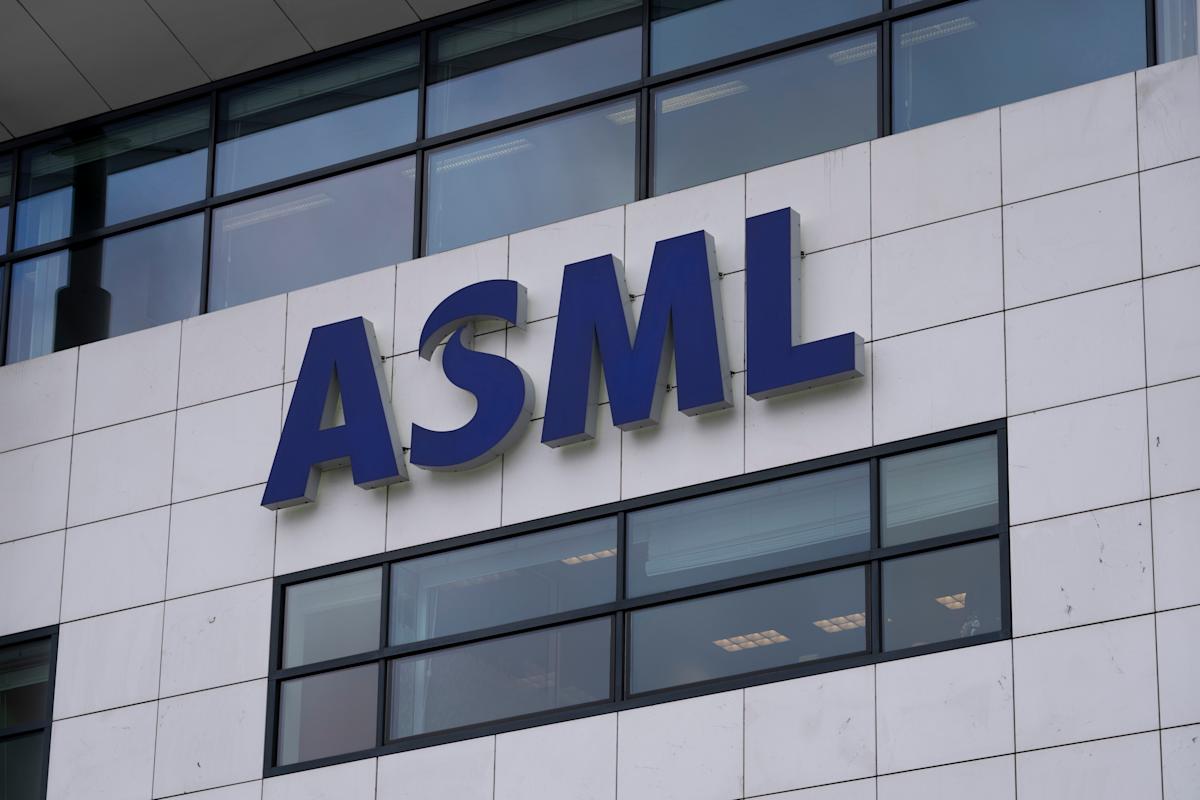
ASML’s headquarters, located in Veldhoven, Netherlands, illustrates its central role in the semiconductor industry, particularly amid geopolitical challenges that underscore its importance in technological supply chains. As global demand for chips escalates, ASML’s strategic positioning appears poised to leverage new growth opportunities, despite facing hurdles in specific geographical segments.
Summary:
ASML’s stock fell by 6% largely due to a decrease in sales from China, yet the company raised its full-year sales forecast to €36-€40 billion, driven by rising chip demand. While quarterly guidance slightly missed analysts’ expectations, ASML shares have surged 35% year-to-date. The semiconductor sector remains robust in the current market, and attention is now on TSM’s upcoming earnings release, which promises potential positive developments amid strong demand for chips.