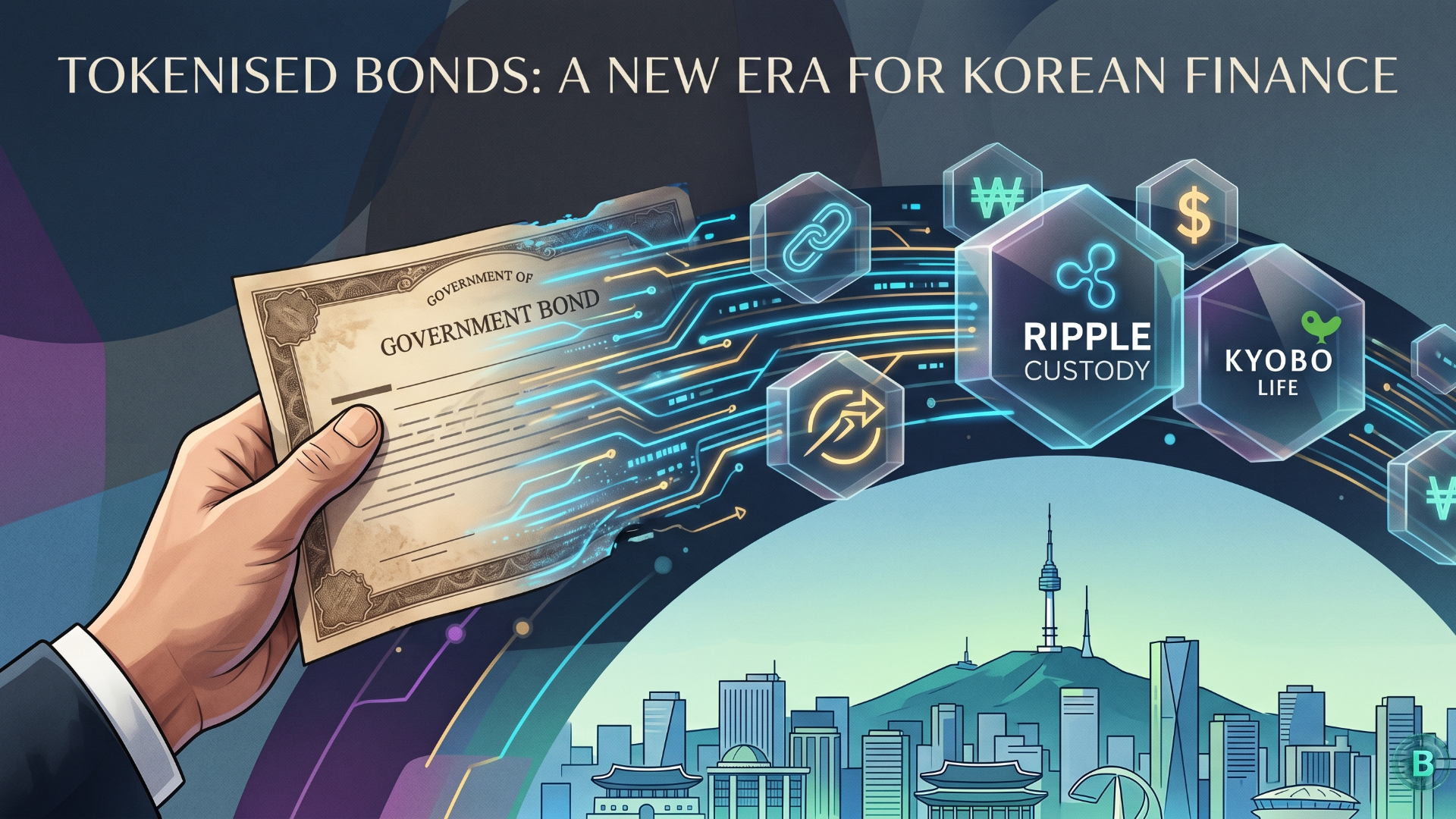
Ripple has joined forces with Kyobo Life Insurance to trial blockchain-enabled settlement for tokenised government bonds within South Korea’s financial framework. This partnership signifies a notable advancement in the adoption of institutional blockchain, as it seeks to revolutionise the traditional bond settlement process.
The initiative aims to streamline the traditional multi-step processes that have historically required up to two days for settlement through a network of intermediaries. By leveraging on-chain execution, the partnership aspires to facilitate near real-time settlements, thereby enhancing efficiency and minimising counterparty risks. Consequently, transactions will benefit from improved capital utilisation.
This pilot marks South Korea’s inaugural use of blockchain for government bond settlements. It offers Ripple a concrete institutional application that extends beyond its usual focus on payment solutions. In tandem with processing transactions, both Ripple and Kyobo Life will investigate the broader technical and regulatory implications of tokenised treasury settlements within the South Korean financial landscape.
This move is timely, as South Korea’s regulatory bodies are in the process of establishing a formal framework for tokenised securities, which is expected to be set in motion by February 2027, pending further regulatory developments. These reforms aim to ensure that tokenised assets can enter the market via regulated channels, thereby safeguarding investor interests and enhancing oversight mechanisms.
In addition to the bond settlement project, Kyobo Life is also considering extending blockchain applications to include systems based on stablecoins. This could integrate with liquidity management and treasury functions, laying the groundwork for an expansive adoption of digital asset infrastructure. The partnership with Ripple establishes a custodian role, serving as a crucial stepping stone before delving into broader tokenisation and on-chain settlement capabilities.
This collaboration reflects ongoing changes in the South Korean financial landscape, positioning tokenised assets as integral to its evolving infrastructure. With a focus on efficiency and security, the project could potentially reshape how government bonds are managed and traded in the future.
As the landscape for digital assets continues to grow, partnerships like these highlight the potential for blockchain technology to transform traditional finance, paving the way for increased participation and innovation within the sector.