US Economy Faces Uncertainty Amid Middle East Conflict, Warns Federal Reserve President
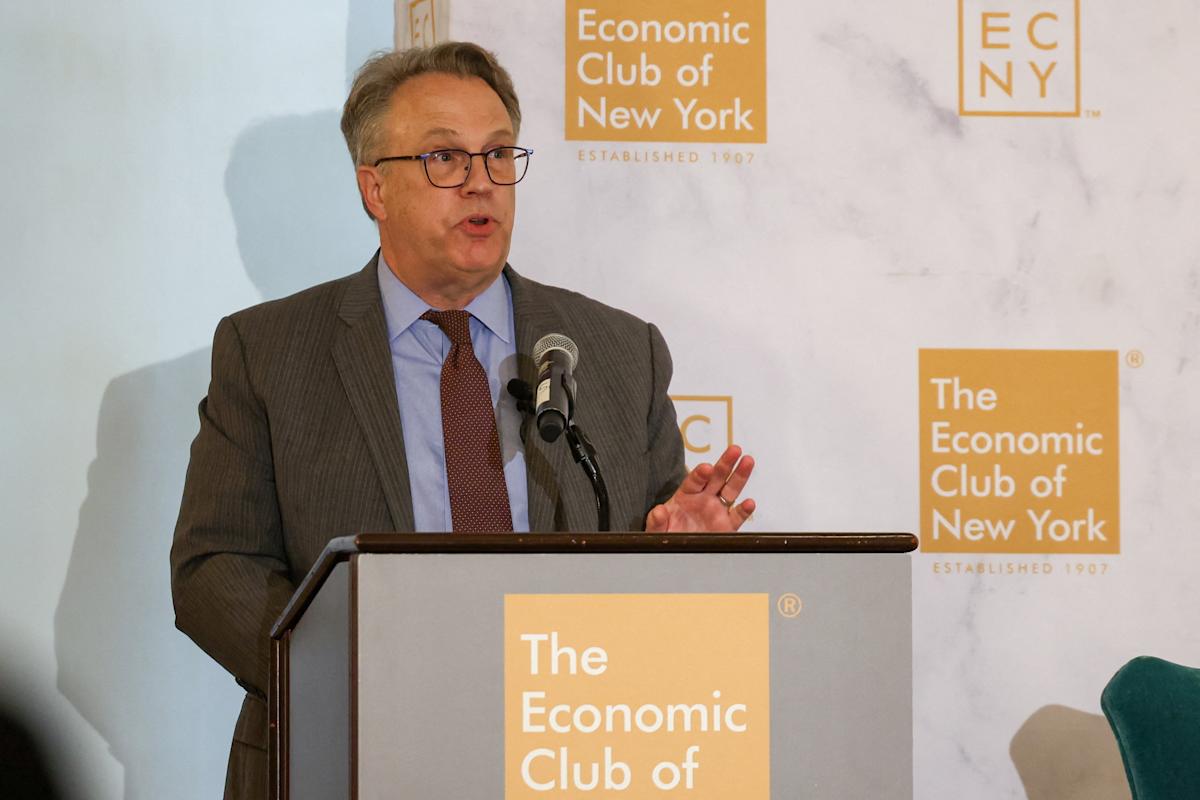
The President of the New York Federal Reserve, John Williams, recently cautioned that ongoing conflicts in the Middle East present "substantial risks" to the US economy, hinting that the central bank is likely to maintain current interest rates. During a speech in New York, Williams articulated concerns that the war might trigger significant supply shocks, leading to increased inflation as commodity prices rise. This, in turn, could drive up the cost of inputs for businesses and adversely affect economic growth.
Williams noted signs of these effects already manifesting. While broad-based supply-chain bottlenecks are not yet evident, there are noticeable disruptions in energy supply and related goods. He pointed out that escalated energy costs are affecting not just fuel prices but are also contributing to rising costs in airfare, groceries, fertilisers, and other consumer products.
In light of these developments, Williams raised his inflation forecast for 2023 to a range of 2.75% to 3%, up from a previous estimate of 2.75% made in March. However, he anticipates that inflation will revert to the Federal Reserve’s target of 2% next year as the impacts of energy prices and tariffs diminish.
While observing the inflation landscape, Williams remarked that he has not identified any significant second-round effects from tariffs affecting the broader economy. He expects the inflationary impact of current tariffs to decrease over the coming quarters, which should ultimately help reduce “core” inflation—this measure excludes the more volatile food and energy prices—providing a clearer long-term perspective on price trends. He estimates that tariffs have contributed between half and three-quarters of a percentage point to inflation as of February.
Moreover, Williams expressed optimism that if energy supply disruptions resolve quickly, energy prices could drop, partially reversing the current inflation effects later this year. Importantly, he highlighted that both medium- and long-term inflation expectations have remained stable. He emphasised the significance of "well-anchored expectations," stating that they are crucial in maintaining price stability during times of unexpected shocks or extreme uncertainty.
Williams concluded that the current monetary policy framework is well-suited to balance the risks associated with achieving both maximum employment and price stability.
As events unfold, the Federal Reserve’s careful monitoring of geopolitical tensions and inflationary pressures will be instrumental in shaping the country’s economic landscape. For further updates, follow financial journalist Jennifer Schonberger, who covers a range of economic topics, including insights from the Federal Reserve.
Please note: This summary is intended for informative purposes and reflects the state of the economy as discussed by Federal Reserve President John Williams.