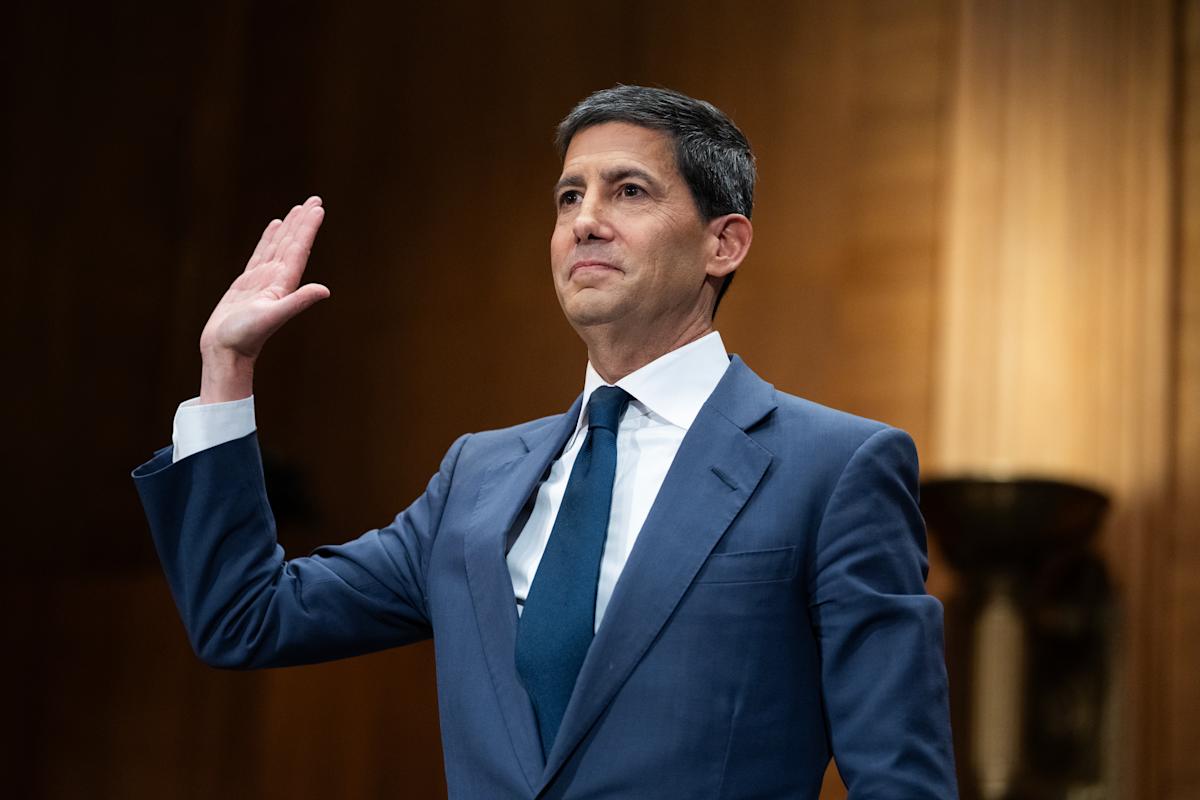
On Wednesday, the Senate Banking Committee voted along party lines to advance Kevin Warsh’s nomination as the next chairman of the Federal Reserve, sending it to the full Senate for consideration. Notably, GOP Senator Thom Tillis played a pivotal role in supporting Warsh’s nomination, particularly after the Justice Department ceased its criminal inquiry into current Fed Chair Jerome Powell. Tillis had previously stalled the nomination until this investigation was resolved.
During discussions, Jeanine Pirro, the US Attorney for the District of Columbia, indicated that the case would be referred to the Fed’s Inspector General, with a note that a criminal investigation could be reinitiated if deemed necessary. However, Tillis expressed confidence that the inquiry had been fully closed.
With the investigation now off the table, hopes are high that Warsh could be confirmed by the end of Powell’s term on May 15. However, every Democrat on the banking committee opposed Warsh’s nomination, with many boycotting the hearing and voting against it via proxy. Senator Elizabeth Warren, who departed the chamber after voicing her opposition, labelled Warsh as “President Trump’s sock puppet” and reiterated concerns regarding the unresolved status of the investigation into Powell.
Warren also asserted that present conditions create “uniquely dangerous circumstances” for approving any nomination for Fed chair. Warsh’s candidacy has been exceptionally controversial due in part to ongoing discussions about the independence of the central bank. Trump has openly criticised Powell in the past for not lowering interest rates sufficiently during his second term and has expressed a desire for a successor who aligns with his views on monetary policy.
Despite Trump’s influence, Warsh stated during his confirmation hearing that he was never asked to commit to specific interest rate decisions. He emphasised the importance of the Fed’s independence in setting rates while also maintaining that presidential opinions on monetary policy do not inherently threaten that independence.
Warsh has been critical of previous Federal Reserve actions, noting that the US economy is still facing challenges stemming from a pandemic-induced inflation spike. He has called for a reevaluation of the Fed’s policies, including suggestions for a “regime change,” measures to reduce the central bank’s balance sheet, and a new approach to inflation management.
Furthermore, Warsh proposed that Fed members should reduce public comments, limit forward guidance, and refrain from signalling actions concerning interest rates prior to meetings. He did not commit to maintaining the practice established by Powell of holding a press conference after every policy meeting, which is closely monitored by market investors.
Warsh’s background includes previous service at the Federal Reserve as a governor from 2006 to 2011, appointed by President George W. Bush. He served as a liaison to Wall Street under former Fed Chair Ben Bernanke during the tumultuous period of the 2008 financial crisis. Prior to his tenure at the Fed, Warsh worked closely with the Bush administration on economic policy and was involved in mergers and acquisitions at Morgan Stanley. He holds a public policy degree from Stanford and a law degree from Harvard.
As the full Senate prepares to deliberate on his nomination, the implications of Warsh’s potential chairmanship could be significant for the Fed’s future direction amid the evolving economic landscape.