Table of Contents
Arm Unveils its First Production Data Centre Processor
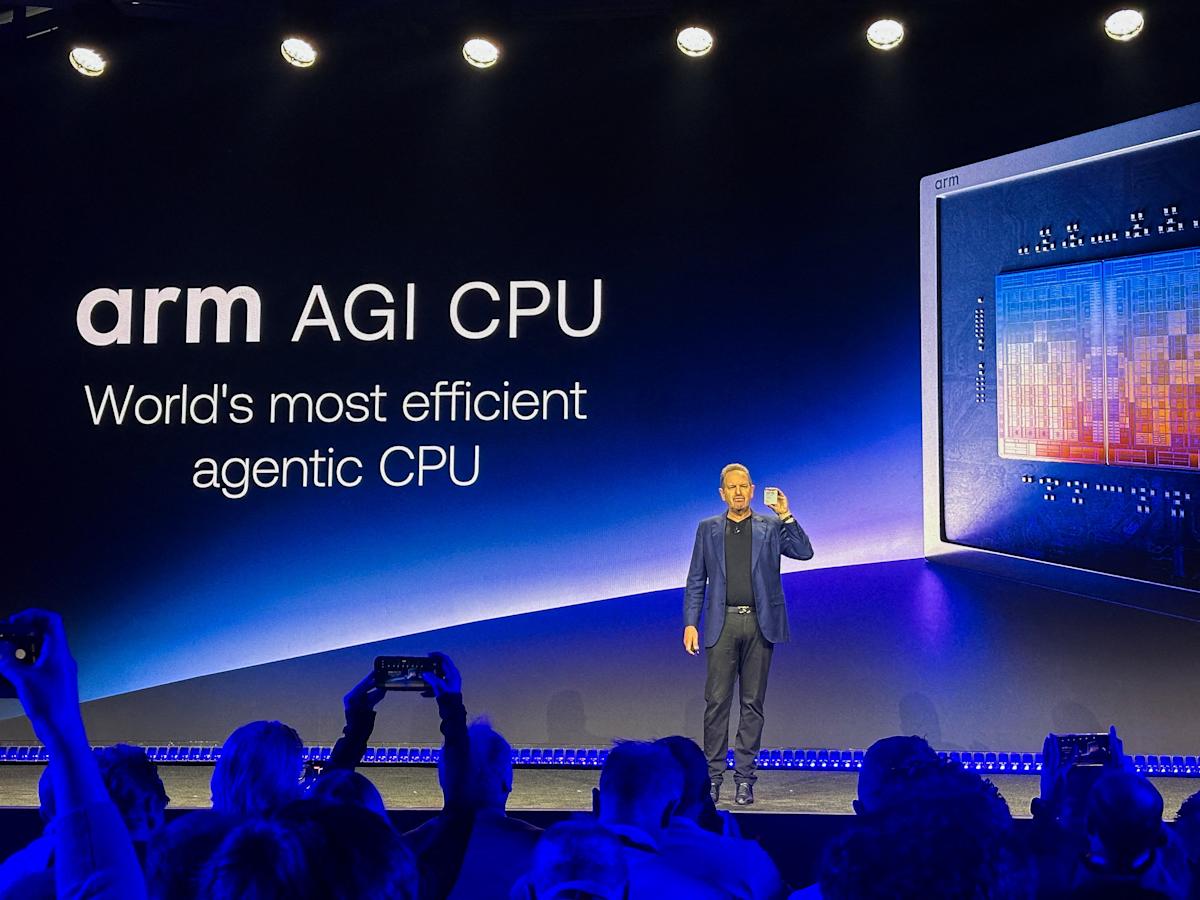
Arm Holdings is significantly broadening its technological footprint with the launch of its inaugural production data centre processor, the Arm AGI CPU (central processing unit). This move marks a pivotal evolution for a company that has long served as a backbone in processor development across a wide spectrum of devices, from smartphones to cloud computing solutions.
Traditionally, Arm has focused on licensing its intellectual property, allowing other firms, such as Nvidia, to create custom chips using Arm’s architecture. Nvidia, for instance, incorporates Arm technology into its Grace and Vera CPUs. However, the shift towards artificial intelligence (AI) and the increasing relevance of CPUs in executing AI tasks present a prime opportunity for Arm to innovate and bring its own processing power to market.
The Shift Towards CPUs in AI
Until now, graphics processing units (GPUs) have dominated the data centre sector, primarily due to their effectiveness in training and running AI models. Yet, as the demand matures and AI applications pivot towards agentic functionalities—AI systems that autonomously complete tasks—there is an increasing necessity for potent CPUs.
Arm’s introduction of the AGI CPU is not just a standalone chip but also includes a new server rack designed to optimally deploy these processors on a large scale. In comparison to traditional x86-based processors, notably those from Intel and AMD, Arm claims its AGI CPU offers twice the performance efficiency per rack, highlighting its potential to disrupt the current market.

Arm Holdings CEO Rene Haas presenting the AGI CPU during an event in San Francisco, 24 March 2026. (Reuters/Max A. Cherney)
Collaborations and Market Dynamics
The development of the AGI CPU has been executed in partnership with Meta, which plans to integrate the new chips alongside its customised solutions within its data centres. Beyond Meta, Arm is collaborating with several significant players in the tech industry including Cerebras, Cloudflare, F5, OpenAI, Positron, Rebellions, SAP, and SK Telecom. These partnerships are set to harness the AGI CPU for various AI applications, particularly those that require more autonomous interactions.
Following the announcement, Arm’s stock experienced fluctuations, dropping initially before rebounding in after-hours trading, while competitors Intel and AMD remained stable.
Competitive Landscape in CPU Demand
This year has seen intensifying competition in the CPU market, especially with recent announcements from both Meta and Nvidia regarding expanded partnerships for deploying larger-scale server infrastructures. Nvidia recently disclosed plans for the widest rollout of its Grace CPU-powered servers to date, while AMD also revealed its partnership with Meta for servers hosting its Venice and next-gen Verano chips.
Intel has echoed these sentiments, with CEO Lip-Bu Tan indicating in a recent earnings call that AI is becoming a predominant factor driving CPU demand. Tan remarked, "The continuing proliferation and diversification of AI workloads is placing significant capacity constraints on both traditional and new hardware infrastructures, reinforcing the essential role CPUs will play in the era of AI."
Furthermore, at Nvidia’s recent GTC event, CEO Jensen Huang highlighted the Vera CPU, underscoring its critical role in supporting agentic AI applications alongside the introduction of server racks for deployment.
The Future of CPUs and GPUs
It’s essential to note that the surge in CPU interest does not indicate the diminishing relevance of GPUs; they remain integral for running complex AI models and are expected to coexist with CPUs as essential components in the data centre landscape for the foreseeable future.
As Arm ventures into this competitive arena, the success of its AGI CPU will depend on its ability to leverage strategic partnerships and meet the evolving demands of the AI industry while delivering on its promise of enhanced performance and efficiency.