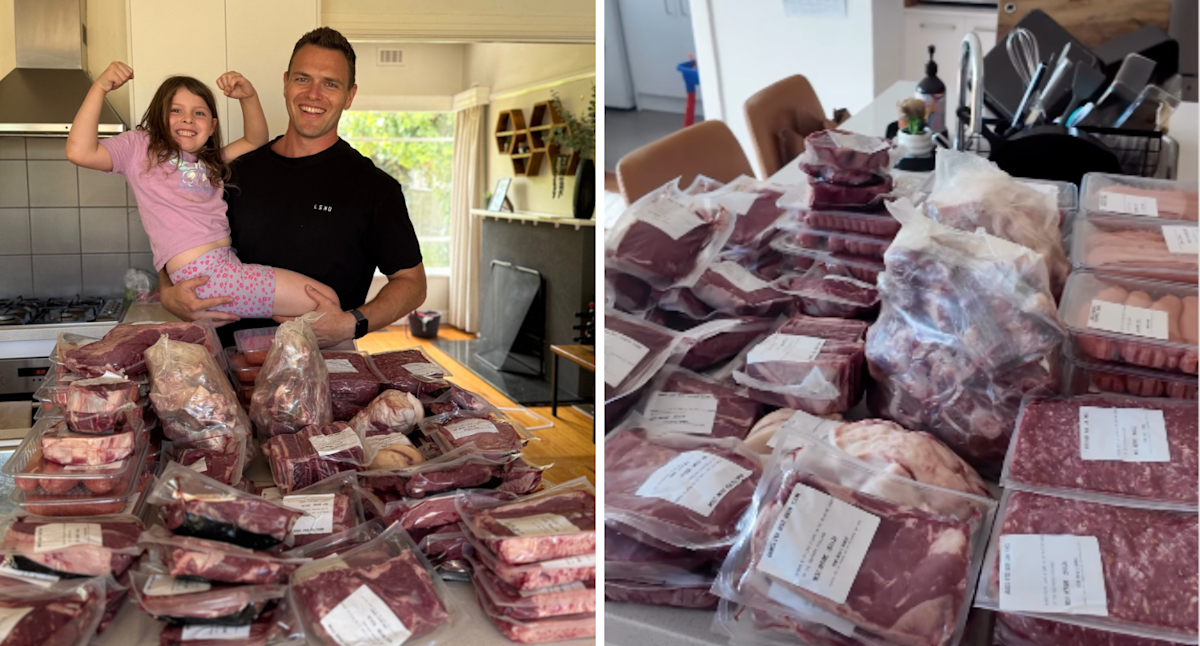
Aussie Dads Cut Costs and Enjoy Quality Meat with Bulk Purchases: The Rise of Direct Farm Meat Buying
In a bid to both enhance their dining experiences and reduce grocery expenses, two Melbourne fathers, Ben Borg and Matt Hall, have taken the unconventional step of purchasing meat directly from farmers. This trend is gaining traction amongst consumers eager to bypass supermarkets and buy high-quality meat in bulk.
Borg, a nutritionist and gym owner, explained that he had grown dissatisfied with the higher prices of butcher-quality meat compared to supermarket options from Coles and Woolworths. After discussing the idea of jointly purchasing half a cow, Hall, who has experience with bulk meat buying from his country upbringing, was quickly on board. The growing families of both men sought not only superior quality but also economic viability.
“Grocery bills are increasing, and the standard of food matters a lot,” Hall stated, emphasising the financial and quality advantages of buying straight from farms. He was especially keen on the prospect of supporting local businesses while eliminating middlemen from the equation.
The friends sourced their first bulk meat from Farmstead Meats, a paddock-to-plate company co-founded by butcher Jeff Renfrew and farmer Andrew Johnson. Renfrew observed a significant demand for direct farm meat sales, with his business experiencing a remarkable 200% growth in revenue month-on-month. He noted that more Australians are becoming conscious of the origins of their food, and many are disillusioned by the quality and pricing of mass-produced options.
Data from the Australian Bureau of Statistics highlighted a 13% increase in beef and lamb prices compared to the previous year. This rise has been influenced by robust international demand for Australian red meat, overshadowing the lower inflation rate of 3.7% affecting the general economy.
Farmstead Meats’ pricing model is particularly appealing; a bulk order of half a cow – approximately 100 kilograms of meat – is available for $1,699, presenting a stark contrast to prices at major supermarkets where similar cuts of grass-fed meat can cost around $2,500. This bulk purchase can yield significant savings of around $800 for consumers.
Borg’s calculations demonstrated that even the cheapest cuts at supermarkets would still position him hundreds of dollars in savings by opting for Farmstead’s offerings. He reported an “instantly different” quality when tasting the farm-sourced meat, which also included a variety of cuts and additional items such as bones and tallow that are often absent from supermarket offerings.
Historically, Hall spent up to $350 weekly on groceries for his family of five. However, with access to bulk meat, that figure has dropped to between $280 and $300. After enjoying their first half cow bought in January, both families have recently made another similar investment as their supply ran out.
The collaboration not only halves the upfront expense but has also fostered camaraderie, allowing the friends to share the experience. Borg remarked on the enjoyment they had in dividing the meat, illustrating how sharing meals and social gatherings has become integral to their routine.
The collective approach to bulk purchasing has resonated with numerous families, evoking a sense of community around food sourcing.
In summary, as families like Borg and Hall seek both quality and cost savings, there is a marked shift towards direct purchasing from farms. This trend signifies a growing movement among Australian consumers who value food integrity and are willing to explore alternative avenues for their meat supply. With the potential for community-driven savings and better quality meat, the future of direct farm purchases appears promising.