Table of Contents
Rising Popularity of Kit Homes Among Australians
Kit homes are emerging as a key alternative for Australians seeking affordable and efficient housing solutions. Historically associated with basic fibro homes, the contemporary kit home market now offers a diverse range of customisable and architecturally appealing designs.
Case Study: Cherie Ava’s Prefab Home
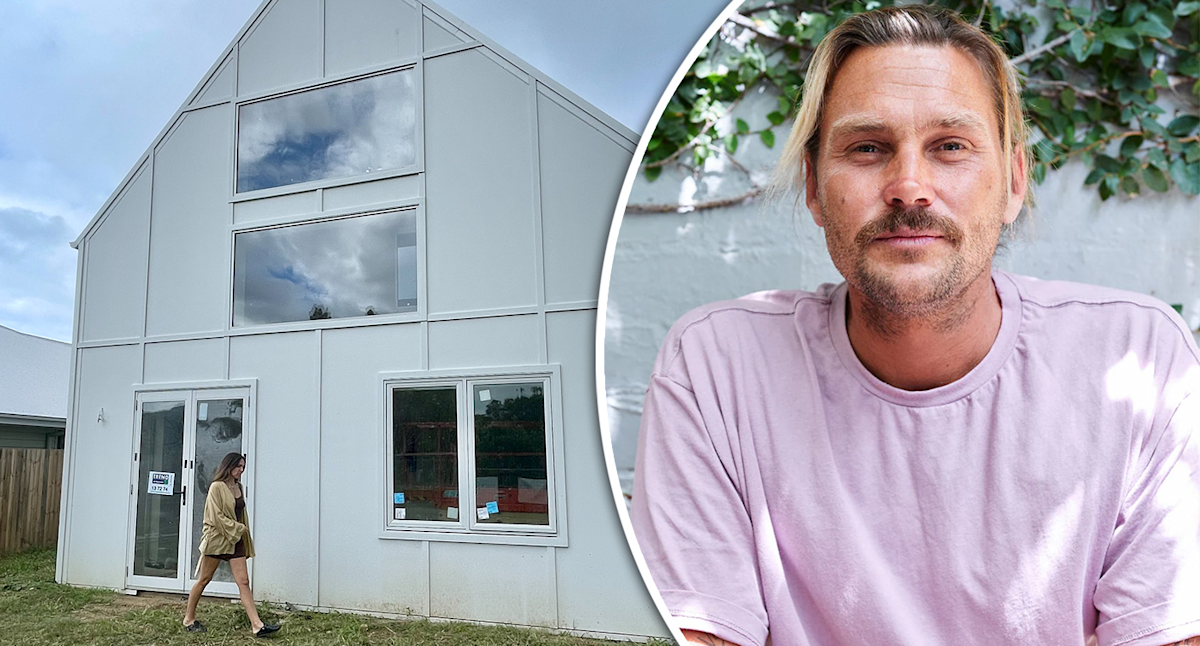
In Byron Bay, hairdresser Cherie Ava is constructing a prefabricated kit home for her family of five. By choosing this route, Ava and her husband have been able to tailor their three-bedroom residence and estimate savings of approximately $60,000 compared to traditional volume builders.
Ava shared her unique approach to the home design: “I designed the internals to suit our family perfectly. I incorporated quirky elements, like crystals in the slab for an energetic grid, and opted for a low EMF setup by placing the power box on the fence instead of the house.” Such personal touches, she notes, are often restricted in projects with standard builders.
After relocating from Victoria, the couple purchased a 430-square-metre block in Byron Bay and opted for a kit from Shed House, attracted by its barn-style design. Prices for these kit homes vary, with Shed House offering options from $52,000 for a basic 58-square-metre model to $175,000 for a larger, four-bedroom dwelling. It’s worth noting that these figures cover the kit only and not the assembly costs.
Construction for Ava’s new home began in October, and she anticipates a much swifter completion compared to her previous builds, which often took about eight months. “Given the current shortages of trades and materials, this kit home method should significantly reduce that timeframe,” she added.
Understanding Kit Homes
A kit home is a type of prefabricated structure where key components, like framing, are pre-cut and fabricated before being delivered for on-site assembly. This method not only accelerates the construction process but also minimises wastes. Owners can choose to build the home themselves or hire registered builders, as Ava chose to do.
The demand for kit homes is evidently on the rise, signalling a growing interest in alternative housing solutions in Australia.
Shed House’s Surge in Demand
Shed House’s founder, Rhys Uhlich, reports a staggering 340% increase in inquiries in January compared to the previous year, indicating a booming interest in this housing option across Australia. Many customers are drawn to the aesthetic appeal of barn-style homes and the DIY nature of the kits, helping to attract owner-builders.
“This model is designed for quick assembly—components arrive pre-cut and ready to bolt together,” Uhlich explained. His motivation for establishing Shed House stemmed from the necessity of creating a cost-effective housing solution for his own family after returning from the US.
His own experience led him to seek an inspiring alternative to traditional volume builds, which he found uninspiring. “I didn’t want a modular home due to size limitations, which ultimately drove us to explore this innovative building approach that allows for loft spaces and open living.”
A Potential Solution for Housing Shortages
Prefabricated homes are increasingly being viewed as potential solutions to Australia’s housing crisis. These homes can typically be constructed in approximately 12 weeks—considerably shorter than the year-plus timeframe of traditional builds in New South Wales. Currently, prefabricated homes comprise only 8% of construction in Australia, according to prefabAUS, signalling ample room for growth in this sector.
Market analysis from Mordor Intelligence forecasts that Australia’s prefabricated building market will expand by roughly 7% annually, reaching an estimated $18 billion by 2030. As interest in alternative housing methods continues to rise, kit homes might play a significant role in addressing both affordability and speed of construction.
This summary highlights the growing trend of kit homes in Australia, examples of customisation by homeowners like Cherie Ava, and the market potential identified by businesses like Shed House in a time of increasing housing demand.