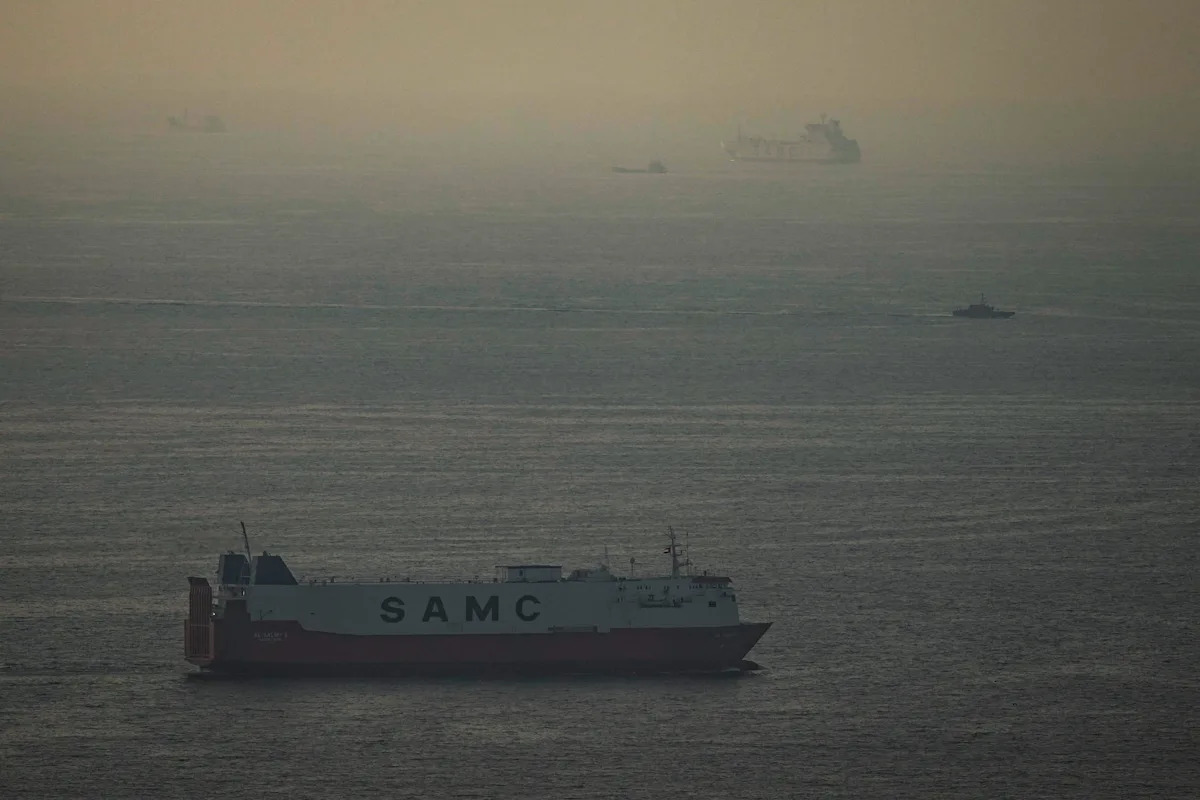
The Iranian government is considering implementing a fee of $1 per barrel for oil tankers that pass through the strategically important Strait of Hormuz, requiring payment in cryptocurrency, according to a report from the Financial Times. This new demand was articulated by Hamid Hosseini, spokesperson for Iran’s Oil, Gas and Petrochemical Products Exporters’ Union. Tankers navigating this route typically transport between 500,000 and 2 million barrels of crude oil.
Shipowners wishing to cross the strait must provide Iran with detailed information about their cargo via email. The Iranian authorities will then set a toll for safe passage, indicating that ships without cargo could pass for free. Following reports of this new policy, prices for major cryptocurrencies experienced noticeable surges. Bitcoin (BTC-USD) rose by 5% to trade just above $71,700, while Ethereum (ETH-USD) and Solana (SOL-USD) saw increases of 8% and 7%, respectively.
Concerns regarding safety in the Strait have escalated, as recent radio communications warn that vessels attempting to navigate the area without permission could face destruction. Iran has a history of using aggressive tactics against tankers in the Persian Gulf to discourage shipping activities.
The backdrop to these developments includes ongoing geopolitical tensions affecting global oil supply chains. Furthermore, on a related note, former President Donald Trump has stated that a ceasefire agreement with Iran hinges on Iran granting complete control over the strait, a vital artery for crude oil transportation. Despite the negotiations, maritime expert Arsenio Longo noted that traffic through the strait had yet to significantly increase following the announcement of the ceasefire.
Whispers of a selective reopening of routes exist, but many in the shipping industry remain doubtful about the stability of the situation, suggesting that while sentiment may shift, actual shipping activities and insurance behaviours may take longer to adapt.
In summary, as Iran plans to impose a toll for oil transit through the Strait of Hormuz to be paid in cryptocurrency, the potential financial implications for global markets, particularly in the crypto space, are significant. The geopolitical implications of Iran asserting its authority over this critical shipping lane could reshape dynamics in oil transport and trade.