D-Wave Quantum: Making Waves in Quantum Computing
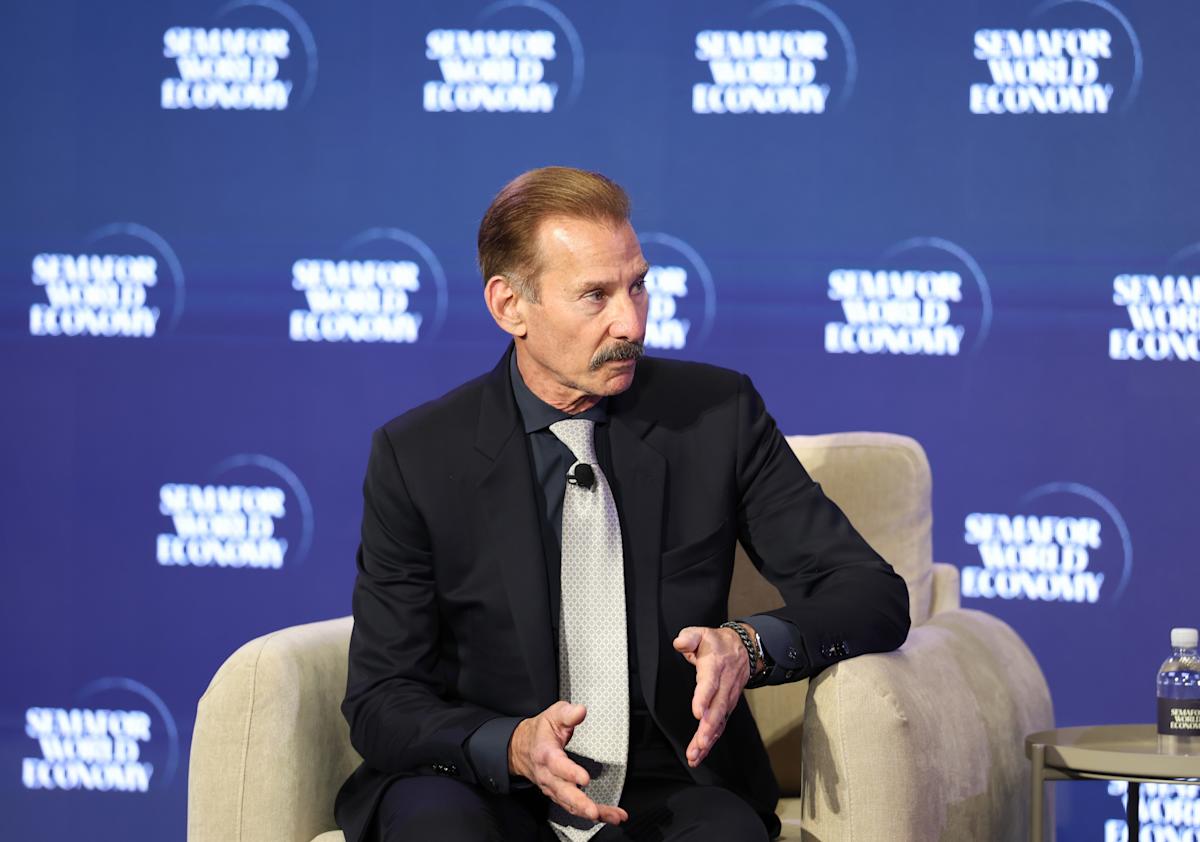
In a recent discussion at the Semafor World Economic Summit, Alan Baratz, CEO of D-Wave Quantum, asserted that his company has achieved significant milestones reminiscent of the hype around OpenAI’s ChatGPT launch in 2022. Baratz emphasized that D-Wave’s quantum computers have already tackled problems intractable for classical systems, marking a significant achievement in the field.
Baratz attributed this success to quantum annealing, a process optimised to identify the most efficient solution from an overwhelming number of possibilities. While classical computers face limitations, D-Wave’s technology is already in operation, addressing challenges across various sectors including workforce scheduling, cellular network optimisation, and pharmaceutical logistics. Notably, companies like Volkswagen and Lockheed Martin, the latter being the first to purchase a commercial quantum computer in 2011, are integrating quantum solutions into their processes.
Since its inception, D-Wave has been active in forming partnerships and securing contracts, including a recent $20 million deal with Florida Atlantic University and collaborations with Anduril Industries and Davidson Technologies focused on U.S. air and missile defence.
Despite these advancements, a notable divide persists within the quantum computing industry. Baratz pointed out that while D-Wave’s annealing technology is operational, the race for gate-model systems—comprehensive quantum computers capable of performing a wide array of tasks—is ongoing. He acknowledges that the industry is still several years away from achieving this goal, attributing the delay to technological hurdles and significant engineering work that remains.
Energy Efficient Quantum Solutions
The pressure on the AI sector to improve energy efficiency is mounting; as the demand for computing power for large language models escalates, the energy consumption of traditional data centres, particularly those dependent on large Nvidia GPU clusters, is becoming a major bottleneck. D-Wave’s systems present a promising alternative, with the potential to resolve complex issues using a mere 10 kilowatts—far less than what conventional data centres require.
Despite D-Wave’s confidence in its technology, the market seems cautious. Nevertheless, the company has piqued Wall Street’s interest, with its stock experiencing a remarkable rise of over 22% recently, reflecting a 200% increase over the past year as investors begin to recognise the potential of D-Wave’s commercial strategy.
In response to the growing competition, Nvidia has recently introduced “Ising”, a suite of open-source quantum AI models aimed at error correction, indicating its ambitions to become a leading player in the quantum computing space. Nvidia CEO Jensen Huang highlighted the necessity of AI in making quantum computing viable, signalling a commitment to dominate the software landscape of this emerging technology.
For Baratz, the dream of scaling quantum computing to include gate-model systems remains a challenge that could take five to seven years to fulfil. He points out that effectively managing error correction and scaling up the number of qubits are critical steps in moving towards a more universal quantum computing framework capable of tackling larger and more complex problems.
As the landscape of quantum computing continues to evolve, D-Wave Quantum stands at the forefront, displaying both promise and challenges ahead in the quest for a sustainable and efficient future in computing.