Table of Contents
US Stock Futures Decline Amid Fragile US-Iran Truce
US stock futures experienced a notable decline on Thursday, retracting from a significant rally that had been propelled by the announcement of a truce between the US and Iran. The fragile nature of this ceasefire has raised concerns, leading to a downturn in market confidence.
Market Performance
Dow Jones Industrial Average futures (YM=F) fell by approximately 0.4% after the blue-chip index had soared over 1,300 points on Wednesday, driven by optimism around the potential reopening of the critical Strait of Hormuz. Similarly, futures for the S&P 500 (ES=F) and Nasdaq 100 (NQ=F) also saw a decline of 0.4%.
Tensions Erupt Over Ceasefire Details
The temporary cessation of hostilities, which was expected to last two weeks, appears to be at risk as the US and Iran disagree on the terms. Central to the truce is the reopening of the Strait of Hormuz, a crucial corridor for global oil shipments that has remained closed for weeks due to ongoing conflict. While President Trump indicated there would be a "complete" lifting of the blockade imposed by Iran, Tehran has responded by stating that maritime passage would only proceed with coordination from its armed forces.
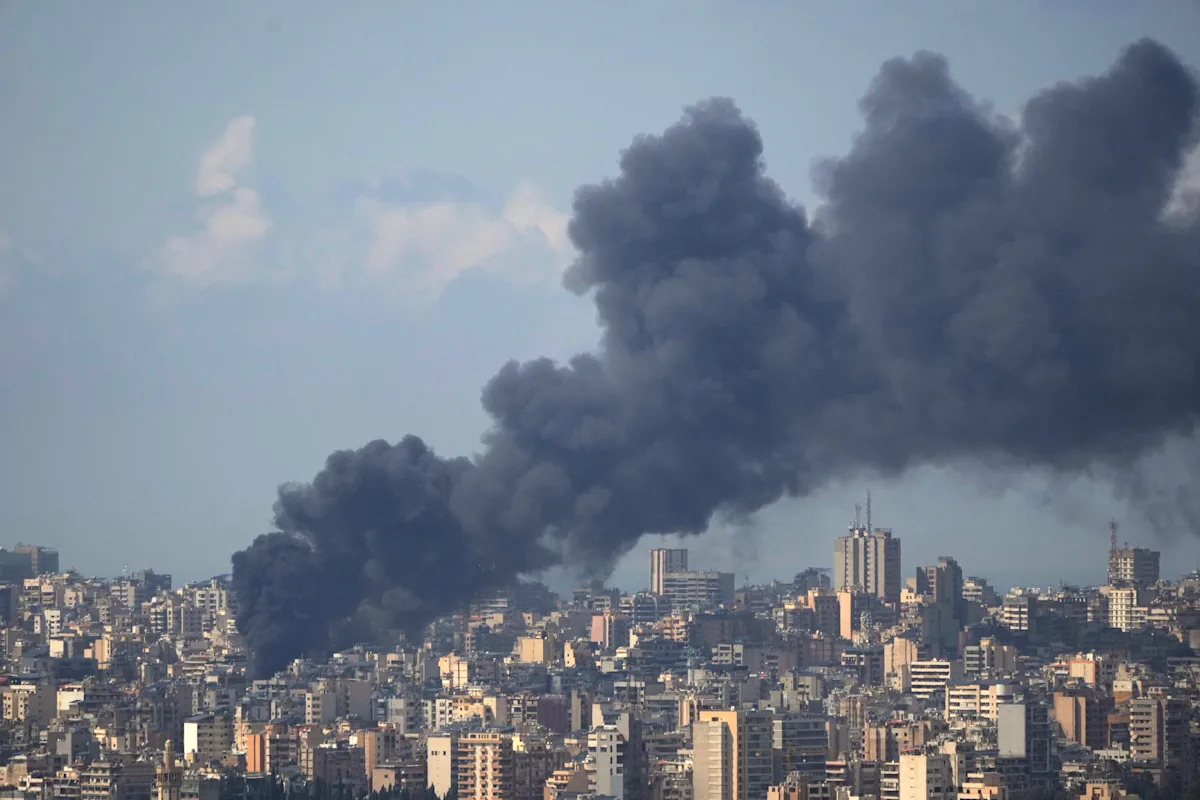
In a further complicating development, Iran has accused Israel, a US ally, of conducting extensive military strikes on Lebanon, which they claim violates the newly forged agreement. This escalation has halted tanker movements through the Strait of Hormuz, casting doubt on the direct US-Iran discussions planned for the upcoming weekend.
Oil Prices React to Market Fragility
As concerns over supply disruptions recommenced, oil prices rebounded significantly following their largest single-day drop since April 2020. International benchmark Brent crude (BZ=F) and United States West Texas Intermediate (CL=F) futures both stabilised around the $97 per barrel mark, reflecting increased market apprehension.
Economic Data on the Horizon
On Thursday, investors looked ahead to critical economic data that could shed light on the implications of recent war-induced spikes in oil prices on US inflation. The personal consumption expenditures (PCE) price index for February, a key measure favoured by the Federal Reserve, is expected to be released, accompanied by an update on weekly jobless claims that will provide insights into the condition of the labour market.
Conclusion
The interplay between geopolitical tensions, particularly the US-Iran situation and its implications for global markets, continues to be a key focus for investors. Market volatility reflects the uncertainty surrounding the potential for a sustained ceasefire and its impact on critical economic indicators, especially in the oil sector. As developments unfold, traders will be keenly monitoring both the response to US-Iran discussions and the release of significant economic data.
This summary captures the essence of current market sentiments and geopolitical developments impacting the financial landscape.