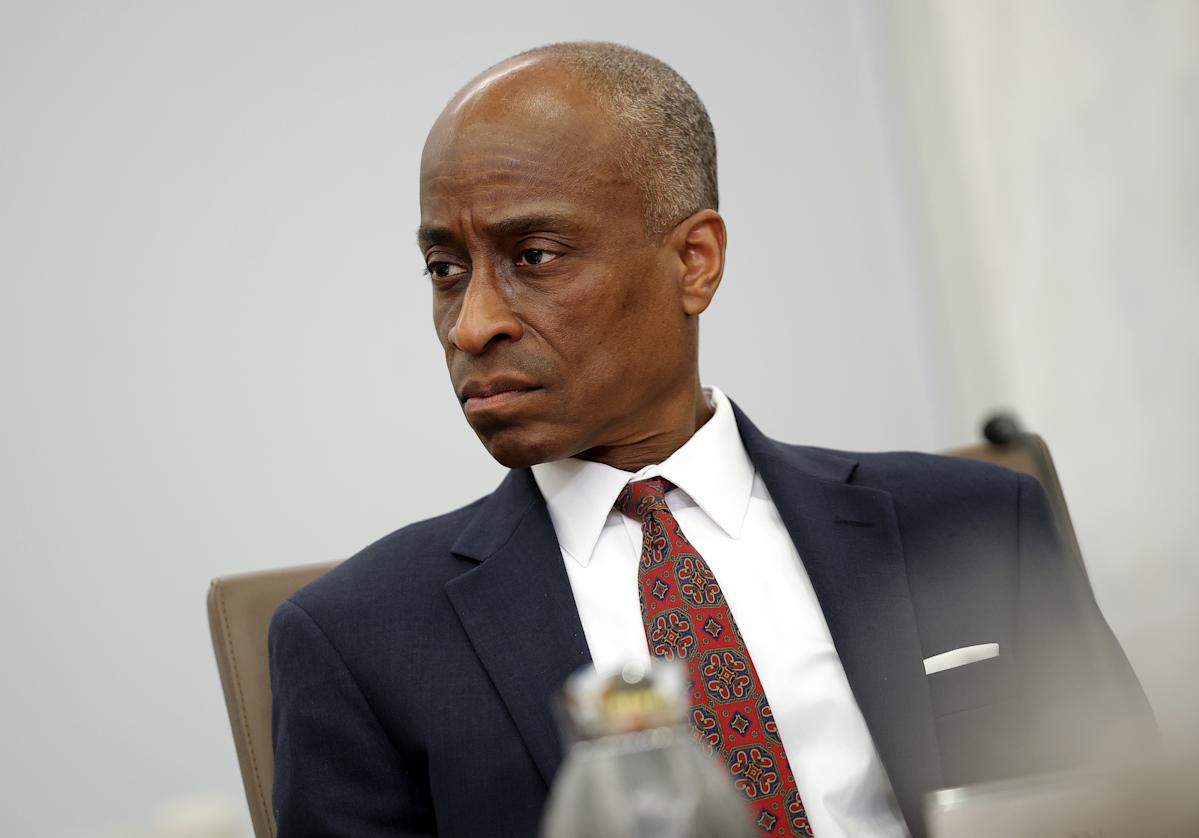
In a recent address in Dallas, Philip Jefferson, the Vice Chair of Supervision at the Federal Reserve, highlighted the potential ramifications of the ongoing conflict in Iran on inflation and the broader economy. Jefferson expressed concerns that the situation is expected to lead to an uptick in inflationary pressures in the short term, particularly due to rising energy costs associated with the Middle East conflict.
Jefferson remarked, “At least in the short term, I expect overall inflation to move higher, reflecting a rise in energy prices stemming from the conflict in the Middle East.” He further noted that the Federal Reserve’s current policy stance is adequately positioned to address various economic scenarios as they unfold.
Monitoring the situation closely, Jefferson indicated that while it is premature to determine the precise economic impact, the duration of elevated energy prices will be crucial. He stated that minor disruptions are unlikely to yield significant economic consequences beyond a quarter or two. However, prolonged high oil prices might have serious implications for households and overall economic activity.
He acknowledged that although the increase in oil prices thus far should have limited immediate effect on inflation, consumers are already feeling the pinch from rising petrol prices. Jefferson is vigilant about the potential for these increased costs to permeate through the broader economy, affecting various price levels.
The consequences of sustained high energy prices could force families, especially those reliant on oil and gas for their daily commutes and home heating, to reassess their spending habits. This could result in reduced discretionary expenses and a tendency for households to incur higher debt levels.
Jefferson also acknowledged the current complexities surrounding tariff policies and their impact on the economic landscape, complicating the Fed’s efforts to manage inflation while striving to maintain maximum employment.
Before tensions escalated in Iran, inflation had remained consistently above the Federal Reserve’s target rate of 2%, a trend attributed to tariffs and stagnant service sector inflation, excluding housing. Yet, areas of strong productivity growth and regulatory easing could counterbalance these inflationary pressures.
Jefferson assessed the job market as being “roughly in balance,” but expressed concern about potential downward risks. He expects the unemployment rate to hover around 4.4% throughout the year, with subdued job creation overall. He is closely observing job creation trends to gauge the labour market’s health effectively.
Despite these challenges, Jefferson suggested the economy may grow at a comparable or slightly higher rate than last year, though he cautioned that uncertainty remains elevated. He noted, “Uncertainty about the economy is elevated, and the rise in energy prices and the conflict in the Middle East add to that uncertainty.” He believes the Federal Reserve’s current policy position allows for careful assessment of forthcoming economic developments.
In a related discourse in Washington D.C., Federal Reserve governor Michael Barr echoed Jefferson’s concerns about the economic ramifications of recent shocks, particularly from oil price spikes and tariffs. Barr suggested that if the conflict in Iran concludes swiftly, any adverse effects on inflation and the economy could be minimal. Conversely, a prolonged situation could significantly impact both.
Barr highlighted that inflation has consistently exceeded the Federal Reserve’s target over the last five years and expressed concern that a continued increase in oil prices might inflate long-term expectations for inflation. He stated, “Given the considerable uncertainty about the potential effects of developments in the Middle East on our economy… it makes sense to take some time to assess conditions.”
Both officials underscore the delicate balance the Federal Reserve must maintain amidst increasing uncertainties stemming from geopolitical tensions and internal economic factors. With rising energy prices as a backdrop, their approach is poised to respond flexibly to evolving market conditions.
In summary, the Federal Reserve remains attentive to the implications of international conflicts on domestic economic performance, particularly regarding inflation and employment dynamics. Their current policy framework is designed to adapt to the unfolding situation, aiming to stabilise the economic environment while keeping a watchful eye on inflationary trends and consumer spending behaviours.