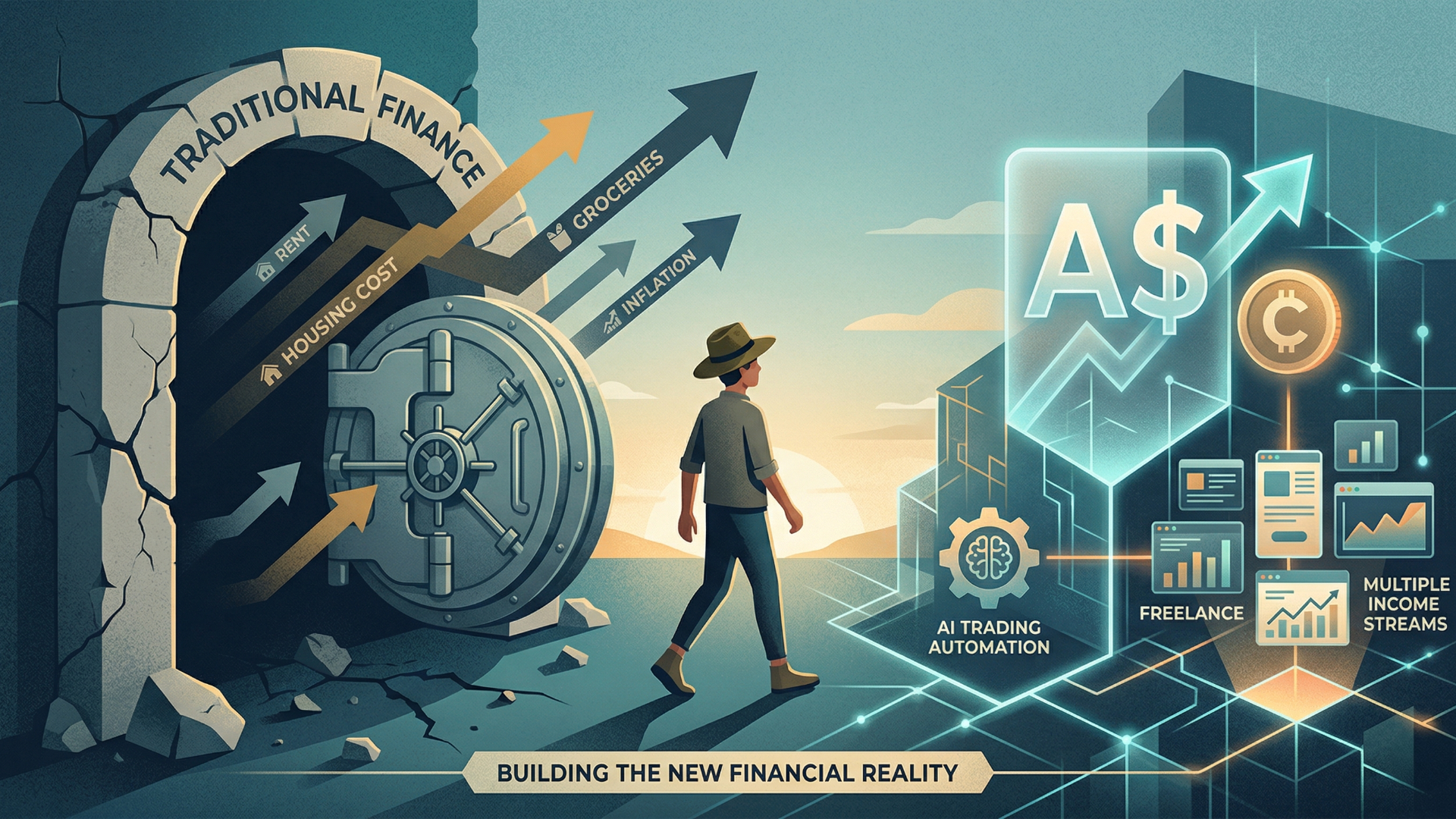
The Changing Face of Finance for Young Australians
In recent years, the cost of living in Australia, particularly for individuals under 30, has increased significantly, with rising rents in major cities like Sydney and Melbourne far outstripping wage growth. As young Australians face the realities of financial pressures, they are compelled to adapt, creating financial lives that differ markedly from those of previous generations.
Adapting to Economic Pressures
The current economic landscape has motivated young people to pursue multiple income streams rather than rely solely on full-time employment. Only 38% of Gen Z Australians hold a full-time job, a figure lower than the global average of 45%. Instead of cutting back on spending in response to rising living costs, many are opting to work harder and look for side gigs or freelance opportunities.
With salaries no longer sufficient to cover basic living expenses, young Australians are creating their own financial paths. They’re utilising digital platforms and freelance work opportunities—options that the prior generation did not typically consider or have access to.
Distrust in Traditional Banking
A significant cause for concern among younger Australians is their declining trust in traditional banks. Only 14% of Gen Z express a high level of trust in banks, a stark contrast to the 29% of Millennials. Given the backdrop of the 2008 financial crisis and witnessing banks thrive economically while regular Australians struggled, scepticism towards traditional banking institutions is understandable.
Furthermore, as this generation entered the workforce during the pandemic, they encountered assurances of economic recovery that often did not materialise. Many feel that superficial changes like app redesigns or fee-free accounts do not address their genuine financial concerns, including managing irregular incomes or the realities of a housing market that feels inaccessible.
The Rise of Digital Finance
Traditional banking models, designed for individuals with stable jobs and predictable income, are ill-equipped to support the diverse income situations of today’s young adults. Consequently, there’s been a notable shift towards cryptocurrencies, with over 31% of Australians holding digital assets—a percentage climbing to over 50% among Gen Z and Millennials. Enhancements in technology and the ability to move money seamlessly have made digital finance more appealing than conventional banking.
Australia stands out globally for its high rate of cryptocurrency engagement, with young Australians leading the charge. This shift is not merely a trend; it indicates a deeper transformation in how financial transactions are conducted in an increasingly digitised world.
Embracing AI in Financial Decisions
Contrary to perceptions of this generation being ill-equipped for financial decision-making, data shows that they actively leverage artificial intelligence in their trading strategies. A study of over 780,000 Gen Z trading accounts revealed that two-thirds have engaged AI-driven tools, especially during market volatility. This generation’s ability to integrate technology into their trading practices reflects a shift from traditional advisors to algorithm-based decision-making, enabling young Australians to take control of their financial futures.
The Future of Traditional Finance
While there are risks associated with speculative investing practices prevalent among younger individuals, the shift towards alternative financial methods seems irreversible. Australian banks and regulatory bodies may find themselves grappling with this transition for years, deliberating the implications while a new financial ecosystem takes shape.
Young Australians are rapidly evolving their financial capabilities without relying on traditional institutions. Banks must now adapt and understand their role in this new landscape—failing to do so may result in their insignificance in the future of finance. What is happening in Australia is not isolated; it serves as a indicative model for the global financial revolution.
In summary, as economic pressures mount, young Australians demonstrate resilience and innovation, reshaping finance in a way that is uniquely theirs. The landscape may be shifting rapidly, but these young individuals are determined to forge a path that aligns with their realities and aspirations.