Table of Contents
The Changing Financial Landscape for Young Australians
In Australia, the financial security of a full-time salary is dwindling, particularly affecting those under 30. The cost of living has surged, with rental prices in Sydney and Melbourne outpacing wage growth for years. Consequently, the aspirations of many young individuals to save for home deposits seem increasingly elusive.
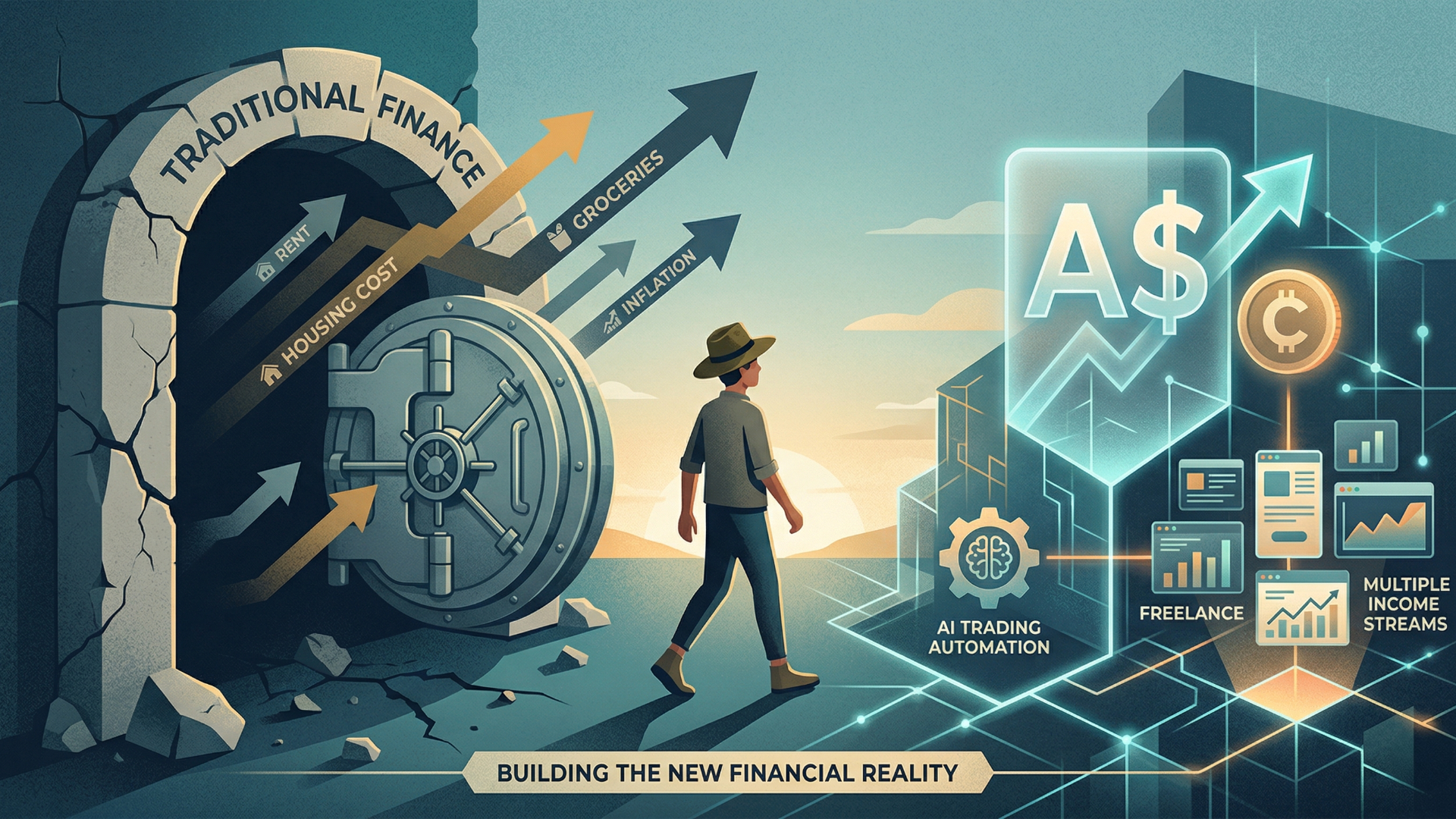
Faced with these challenges, young Australians are adapting and reshaping their financial futures in ways that starkly differ from their parents’. They are forging new paths in a rapidly changing economic environment, leading to the most significant generational shift away from traditional financial institutions seen in developed countries.
Adapting to Stay Afloat
Deloitte reports that only 38% of Gen Z Australians maintain a full-time job—substantially less than the global average of 45%. Surveys highlight a notable trend towards pursuing multiple income sources, with many young professionals diversifying through side hustles.
With the rising cost of living, younger Australians tend to prioritise increasing their income over cutting expenses, as a single salary no longer suffices to meet basic needs. Many are leveraging freelance opportunities and digital platforms to supplement their income in ways their predecessors could not have imagined.
Distrust in Traditional Banking
A mere 14% of Gen Z express significant trust in conventional banks, which is less than half the trust level of Millennials. This reluctance is understandable given their upbringing during the 2008 financial crisis, witnessing banks thrive while ordinary families struggled financially. Entering the workforce amidst a global pandemic, this generation has been asked to remain patient while expenses continue to rise.
Banks have attempted to innovate with more user-friendly applications and fee-free youth accounts, yet these efforts fall short of addressing the real financial concerns of young Australians, who often face unpredictable incomes with little hope of entering the property market.
The Rise of Digital Finance
The traditional banking framework caters to those with stable employment and predictable income streams, which no longer represents the reality for many. As a result, disillusioned youth are turning increasingly to alternative financial solutions, including cryptocurrencies. With over 31% of Australians investing in digital assets—reaching more than 50% among young people—this shift signals a profound change in financial engagement.
Australia leads developed nations in crypto-related web traffic, highlighting the demand for financial systems that provide flexibility and accessibility outside conventional banks.
Embracing AI in Financial Decisions
Contrary to negative perceptions of their financial capabilities, young traders show a remarkable adaptation to technology. A study of over 780,000 Gen Z trading accounts indicated that two-thirds employed AI tools within 90 days to optimise their trading strategies, especially during volatile market conditions. This savvy use of technology has allowed them to make more rational, less emotional decisions, resulting in fewer panic-selling occurrences.
While older generations relied on financial advisors and textbooks, Gen Z has become fluent in utilising sophisticated trading tools which were previously available only to affluent clients.
The Implications for Traditional Finance
Despite these advances, the shift towards speculative investing poses real risks. Many decisions among younger investors may start with viral TikTok videos rather than grounded research, a significant concern for financial stability.
Nonetheless, traditional financial institutions face an imperative reckoning. With one of the highest rates of cryptocurrency adoption globally, banks and regulators must decide how to integrate into this evolving financial ecosystem. Ignoring these trends could leave legacy finance with diminishing relevance as young Australians continue to carve their own financial destinies.
Australia’s experience is not an isolated event but a potential reflection of global shifts in finance. What’s unfolding today could represent a larger, ongoing transformation in financial engagement across generations.