A Year of Tariffs: Reflections on Economic Policy and Market Responses
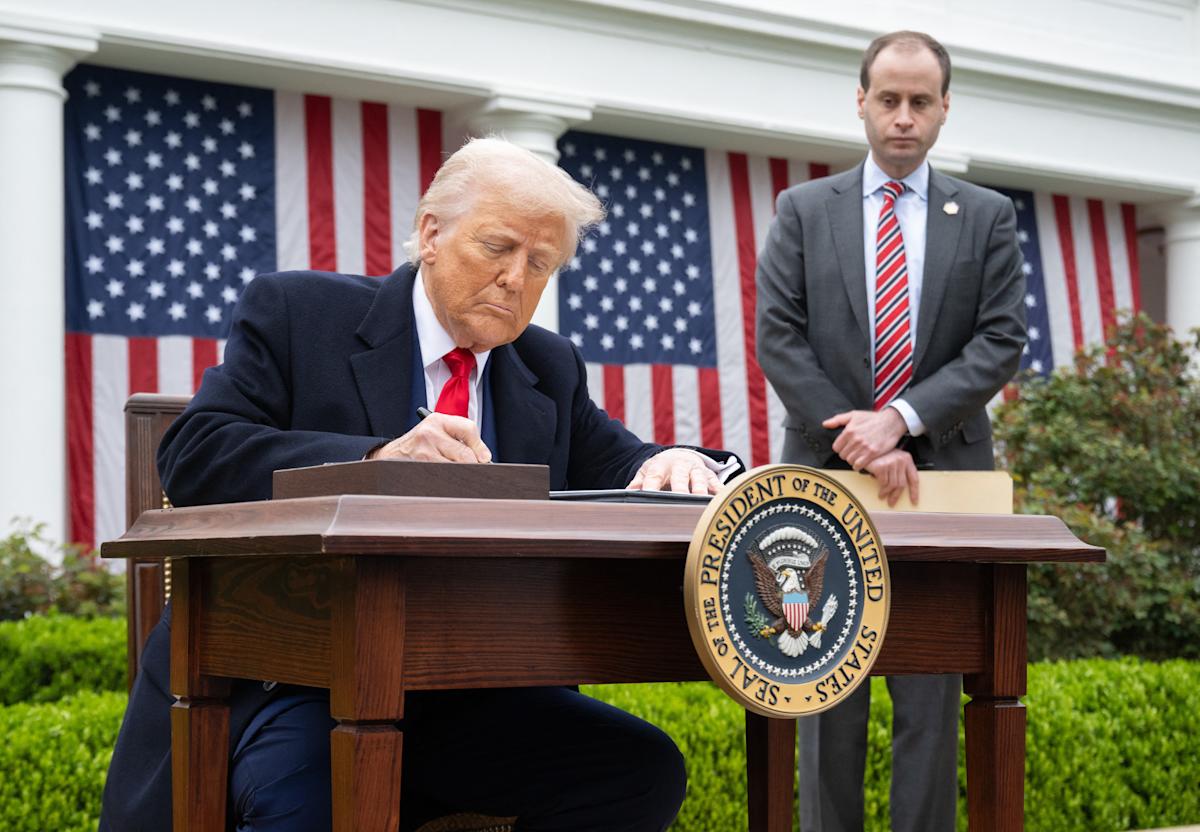
Twelve months ago, President Trump instituted extensive tariffs affecting over 100 nations, including both allies and adversaries, marking a significant departure from the established global trade framework. This move was presented by the White House as a necessary response to an "economic emergency," aiming to rejuvenate American manufacturing and rectify what was perceived as an unfair trading system—essentially promoting an "America first" agenda.
From a macroeconomic perspective, the impact of these tariffs is starkly visible in market trends. A review of five-year stock market data reveals a tumultuous period, one that many policy analysts critique as limited in success, especially when aligning outcomes with the administration’s objectives of job creation, trade surpluses, and moderate inflation.
The economic landscape has transformed significantly over the past year, influenced by new trade agreements, the Supreme Court’s rulings, and international events such as the conflict in Iran. Notably, the average effective tariff rate has surged to 11.0%, the highest since 1943, according to the Yale Budget Lab. This was further complicated by President Trump reintroducing a 10% global tariff following a Supreme Court decision that limited the use of his emergency powers for imposing tariffs unilaterally.
Recent figures from the Commerce Department highlighted a nearly 5% increase in the US trade deficit in February, rising to $57.3 billion from $54.5 billion the previous month. Despite fluctuating trade figures over the past year, the current deficit resembles that seen in early April 2025.
The unpredictability of last year’s trade policies caused considerable volatility, coinciding with a significant plummet in the Dow and S&P 500, reminiscent of the market turmoil that accompanied the onset of the COVID pandemic. However, a marked change occurred when President Trump backed down from imposing some of the most severe tariffs, resulting in a robust market rally as optimism over a potential easing of trade tensions grew.
Where legislative efforts and public sentiment seemed ineffectual in reigning in the president’s protectionist stance, the markets sent a powerful signal. Trillions in stock market losses and rising Treasury yields played a role in encouraging a policy shift from the White House.
As the weeks progressed, market optimism surged on the back of prospective trade deals and hints at negotiations with China. Enthusiasm for artificial intelligence and strong corporate earnings overshadowed the lingering challenges of the previous year, propelling the S&P to new highs.
The events surrounding “Liberation Day” underscored a phenomenon known as TACO trade—"Trump Always Chickens Out"—demonstrating its relevance in shaping US economic policy and investment strategies. Nevertheless, the ongoing situation with Iran illustrates the constraints of such a model; unlike trade disputes, the trajectory of international conflicts is less predictable.
Current economic conditions remain influenced by tariff-induced inflation, which the Federal Reserve acknowledges. Chair Jerome Powell recently indicated slow but steady progress in controlling inflation linked to tariffs. However, the continued instability in the Middle East could complicate these efforts, fostering discussions around interest rate hikes rather than cuts if inflationary pressures escalate.
The narrative surrounding globalisation is far from over, as American manufacturing continues to face pronounced job losses. The shift in trade dynamics, coupled with policy decisions that alienate traditional partners, has led many nations to deepen their ties with China, illustrating a more interconnected and reactive global trading environment.
Looking ahead, critical questions arise regarding the Fed’s ability to disentangle tariff-related inflation from the fresh challenges posed by rising oil prices. The chaotic phase following the tariff imposition serves as a pertinent case study for future market behaviours in response to geopolitical conflicts.
In conclusion, as the US stands on the cusp of a new high-tariff era, the implications for the economy and global commerce are yet to be fully realised. Observers are left to ponder the outcomes of these policies, the resilience of the markets, and the broader effects on international relations.
For insights and updates on the evolving economic landscape, readers are encouraged to stay informed through reputable financial news sources.