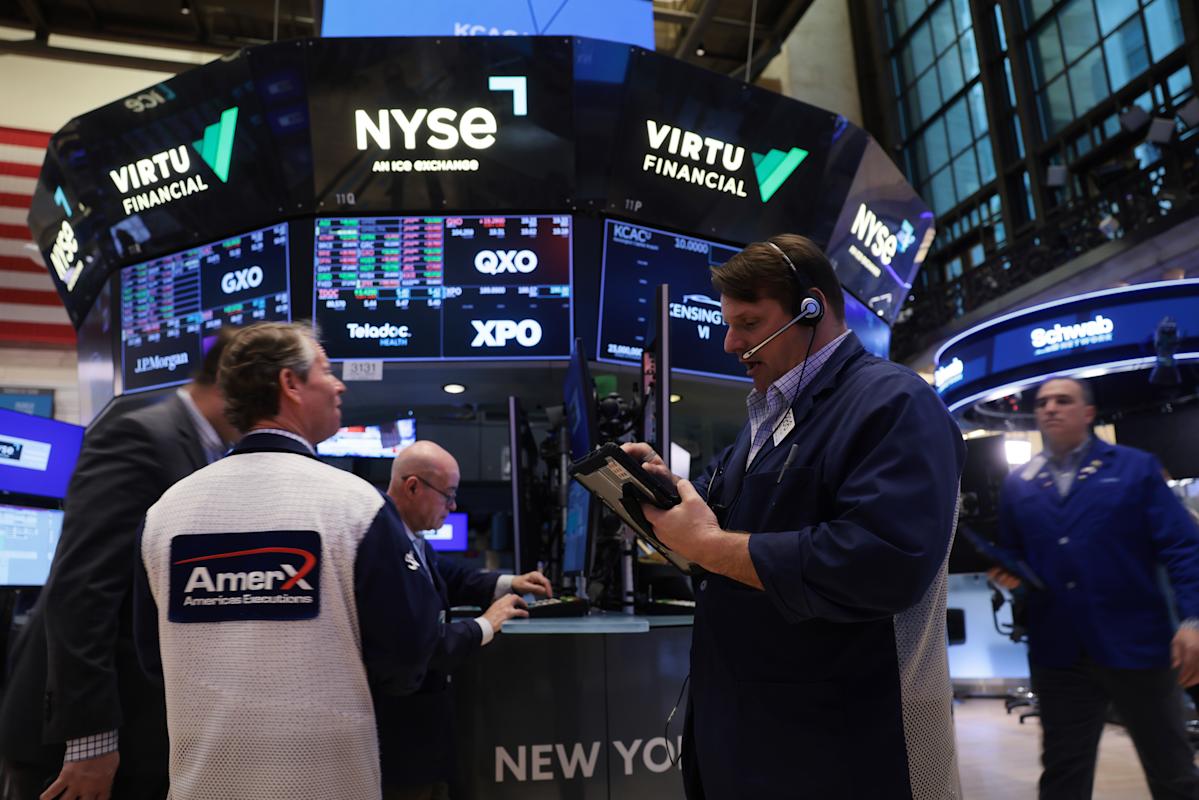
As the new year began, stocks surged, buoyed by advancements in artificial intelligence (AI), a stabilising trading environment, and optimism surrounding potential interest rate cuts. By late January, the S&P 500 had reached an all-time high. However, as the first quarter of 2026 draws to a close, the outlook has considerably soured.
At present, the stock market is exhibiting signs of distress, with the S&P 500 (^GSPC) down over 7% year-to-date and the Nasdaq (^IXIC) experiencing a correction. The VIX (^VIX), often referred to as Wall Street’s “fear index”, has surged to its highest level in a year, surpassing the 30 threshold. Concurrently, bond yields (^TNX) are climbing, gold prices have plummeted $500 from their January peak, and Bitcoin (BTC-USD) is hovering just below $65,000. Notably, international stocks are lagging behind their U.S. counterparts once again, with the prospect of interest rate cuts dismissed; instead, a rate hike in 2026 appears increasingly plausible.
Geopolitical tensions have dominated recent headlines, yet this week’s events have had little impact on energy market predictions. Experts within the industry caution that the risks posed by ongoing conflicts may be underestimated by market participants.
For much of the past three years, stock market proponents had various supportive factors at their disposal—most notably in AI investment, earnings growth, and reduced interest rates. However, in 2026, these drivers have lost their efficacy, and new developments, such as the replacement of traditional software with AI agents and restrictions on private credit fund redemptions, have contributed to a growing list of market негативities.
Warren Buffett’s sayings resonate in every market condition. Amidst this bleak assessment, many may recall his well-known advice: “Be greedy when others are fearful.” On Thursday, Truist Wealth’s chief investment officer, Keith Lerner, echoed sentiments of cautious optimism in a note to clients, advocating for “measured cash deployment”—essentially advising investors not to shy away from the stock market amidst its current turmoil.
Apollo’s chief economist, Torsten Sløk, posits that the market’s response to the US-Iran conflict is exaggerated. He suggests that we are witnessing an overreaction to what he expects will be a short-lived period of market volatility, ultimately leading to long-term stability in oil markets, supply chains, and geopolitical dynamics. Sløk anticipates that inflation’s upward trajectory will be short-lived, interest rates will eventually decline, and that the positive economic momentum driven by AI will not be derailed by current conflicts.
In conclusion, while the stock market grapples with significant challenges, there are voices advocating for strategic investment and maintaining a long-term perspective. As the landscape continues to evolve, investors are encouraged to navigate these turbulent waters with caution yet consideration for potential opportunities.