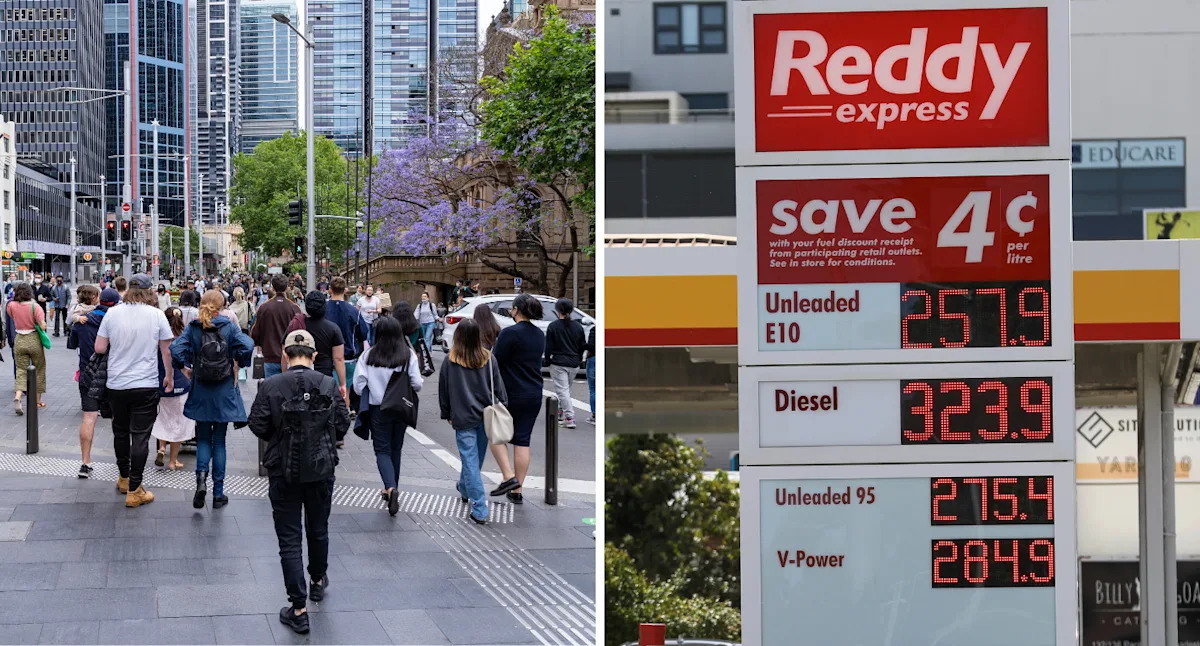
Tens of Thousands of Council Workers Seek Emergency Work Reforms Amid Rising Petrol Prices

The United Services Union alerts that workers are facing difficulties commuting due to skyrocketing petrol prices. (Source: Getty)
In a bold response to escalating fuel costs driven by ongoing global instability, tens of thousands of council workers across New South Wales (NSW) are advocating for significant work reforms. These proposals include emergency work-from-home rights, a four-day work week, and a substantial 50% increase in fuel subsidies.
The United Services Union (USU) is set to file an application with the NSW Industrial Relations Commission today, seeking a new temporary award for employees during what they term a "fuel crisis event." This initiative will impact more than 55,000 council workers statewide who are grappling with the increasing burden of high petrol prices, which have recently been exacerbated by the conflict in Iran.
The proposed award would be activated when the price of unleaded petrol exceeds AUD 2.00 per litre, assessed based on retail prices provided by the Australian Institute of Petroleum. This temporary measure is anticipated to last for a year.
Recently, USU’s head of legal, Daniel Papps, communicated with all 128 councils across NSW, urging them to facilitate remote work for employees whose roles permit such arrangements. For roles that necessitate physical presence, he proposed considering the implementation of a four-day work week.
Papps lamented the lack of improvement in the geopolitical situation, noting, "We have seen no change in the situation in the Middle East, and now we are intensifying our advocacy to safeguard our members from the impact of this crisis." He further emphasised the need to conserve fuel for essential workers, including tradies, truck drivers, and groundskeepers.
Despite the recent declaration of a two-week ceasefire between the United States and Iran, Papps acknowledged that the repercussions of this conflict could linger, necessitating immediate action.
The proposed model allows for administrative staff, accountants, and engineers—roles suitable for remote work—to operate from home, thereby reducing the overall fuel demand. Employees unable to shift to remote work would have the option of a four-day work week, allowing them to extend working hours to compensate for the absence of a daily commute.
As part of the union’s request, the current fuel subsidy, which is set at AUD 0.83 per kilometre, would be raised to AUD 1.25 per kilometre. This adjustment is vital as a survey conducted by the union revealed that 40% of council workers are incurring an additional AUD 50 weekly on fuel, with 20% spending over AUD 100 extra weekly. Alarmingly, 70% of respondents noted that their current allowances fall short of their increased expenses, leading 10% to contemplate leaving the sector altogether due to rising fuel costs.
In some rural areas, workers are required to travel between 100km to 120km daily, underlining the urgency for these proposed changes.
The outcome of the USU’s petition and negotiations with local councils will be closely monitored as the impact of fuel costs continues to reshape the working landscape for numerous individuals within the public sector. The push for reforms not only seeks to alleviate financial strain but aims to ensure a more flexible working environment amid challenging economic conditions.
With emergency measures in place, the hope is to provide relief for affected workers while addressing the broader implications of fluctuating petrol prices on daily commutes and operational efficiency within local councils across NSW.