Efforts to resolve the ongoing 41-day shutdown of the Department of Homeland Security (DHS), which has caused significant disruptions in air travel across the United States, faced a bipartisan breakthrough in the Senate on Friday. However, this progress was swiftly rejected by the House, perpetuating a state of uncertainty around potential compromises to end the stalemate.
The Senate’s proposal aimed to fund the Transportation Security Administration (TSA) and other DHS divisions but notably excluded funding for Immigration and Customs Enforcement (ICE) and Customs and Border Protection (CBP), which are at the core of the current impasse. House Speaker Mike Johnson dismissed the Senate’s plans as “a joke” and indicated that the House would pursue a different bill to secure full DHS funding until May 22.
Senate Majority Leader Chuck Schumer quickly countered Johnson’s proposal, labelling it as “dead on arrival.” In a further twist, former President Trump expressed support for the House’s approach, suggesting the Senate’s plan was inappropriate due to its lack of ICE funding.
As the Senate adjourned for the weekend, it could not deliberate on any new proposals until Monday. Meanwhile, President Trump took measures to ensure that TSA employees are paid despite the ongoing fiscal freeze, issuing an executive order instructing the Secretary of Homeland Security to ensure compensation for TSA personnel.
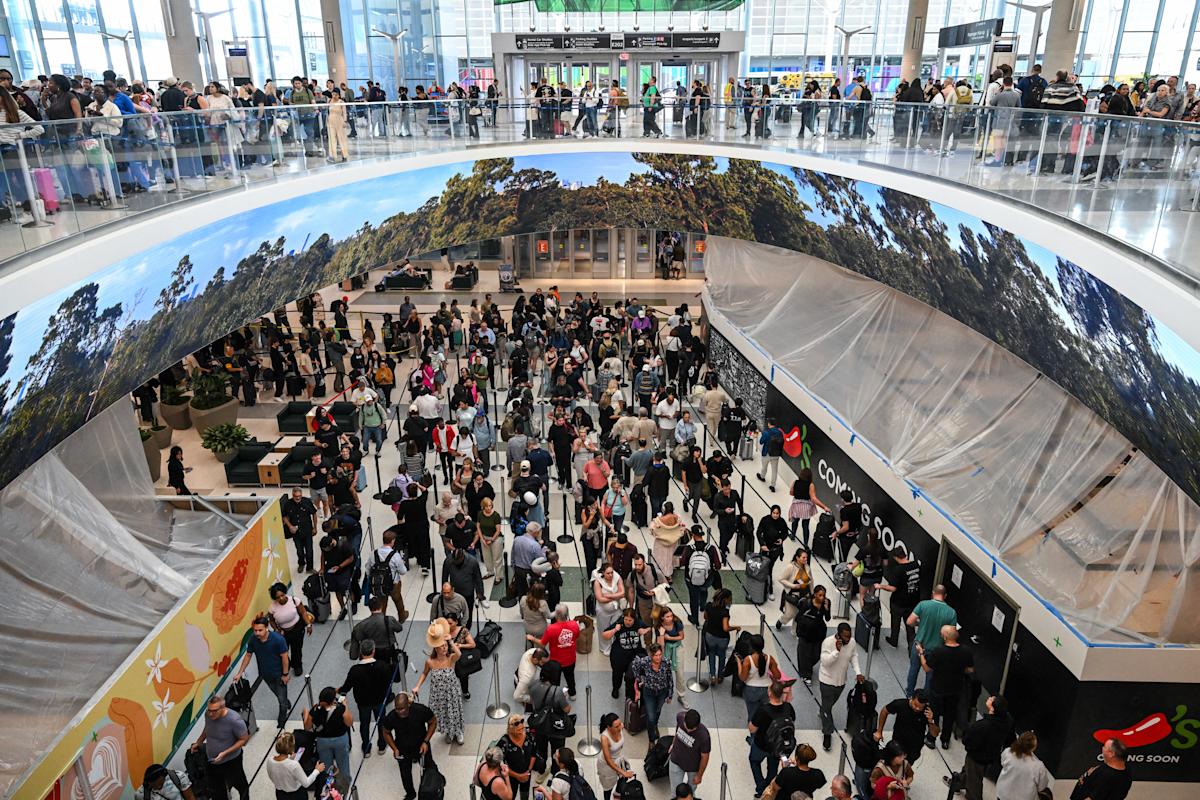
The prolonged shutdown has severely impacted TSA operations, leading to call-out rates exceeding 40% in some areas as staff seek alternative income sources amidst frozen wages. This worker shortage has resulted in lengthy security lines at airports nationwide, prompting concern about the long-term repercussions for air travel.
Moreover, TSA’s acting administrator Ha Nguyen McNeill disclosed that the shutdown has resulted in significant staff departures, with around 480 officers quitting during this period and over 1,500 employees leaving overall this fiscal year. The ramifications of this workforce reduction are expected to linger for months due to the lengthy onboarding process for new recruits.
Amidst these staffing challenges, McNeill raised alarms about a “perfect storm of staffing shortages” affecting the TSA—an issue that could escalate during the upcoming 2026 FIFA World Cup, which will intensify travel demands as fans and teams navigate around the U.S., Canada, and Mexico.
In summary, the gridlock between the Senate and House continues to create chaos in the air travel sector, exacerbated by the ongoing lack of funding for crucial agencies like the TSA and ICE. If unresolved, this situation could impact travel operations for many months to come, especially with major events like the FIFA World Cup on the horizon.