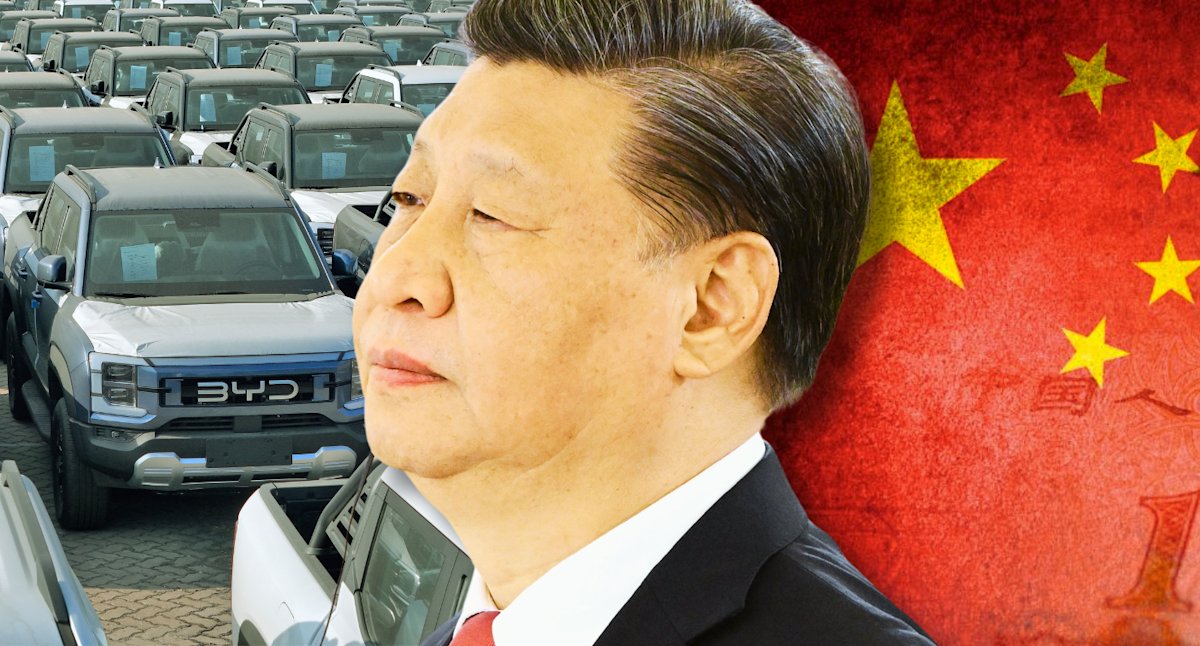
The Surge of Chinese Automobile Brands in Australia
The automotive landscape in Australia is undergoing a transformative shift, with Chinese car manufacturers like BYD and GWM emerging as dominant players. For the first time in history, cars from China have outperformed long-established brands like Mitsubishi and Nissan, marking a pivotal change in the local market.
Historically, Australian car brand loyalty was synonymous with names such as Ford, Holden, and Toyota. However, the recent decline in Toyota sales by a staggering 25% this year highlights the industry’s disruption. Holden has completely exited the market, and conventional European brands like Peugeot and Renault are witnessing their sales plummet as they’re overshadowed by lesser-known Chinese manufacturers such as Omoda Jaecoo and Geely.
This upheaval coincides with Australia’s increasing enthusiasm for electric vehicles (EVs). Over the past five years, China has strategically positioned itself as a leader in the EV sector, which, in hindsight, has proved to be a brilliant move. The legacy automakers from the West are facing a crisis akin to Kodak’s infamous downfall—failing to adapt to the rise of digital photography—now mirrored by their stalled approaches to electric mobility.
While companies like Ford and General Motors hesitated to fully embrace the EV revolution, others such as Volkswagen, BMW, and Hyundai are launching modest efforts to keep pace. Notably, Toyota has been relatively inactive in this electrification race, allowing BYD—backed by its innovative technologies and aggressive global ambitions—to thrive.
The implication of rising oil prices and geopolitical tensions, including strained relations and conflicts initiated under former U.S. President Donald Trump, has only accelerated this shift. In March alone, oil prices have surged, making electric vehicles an increasingly attractive alternative as consumers seek more cost-effective travel solutions.
In just the first two months of 2026, China exported a remarkable 670,000 electric vehicles, a figure nearly double that of the previous year. This growth trajectory shows no signs of slowing down, as production rates rebound. China benefits from a unique advantage: while it exports just under half of its production, it retains ample capacity to adjust its focus toward global markets.
The surge in electric vehicle adoption has created a parallel rise in lithium prices, a critical component for battery production, which has more than doubled since 2025. Though lower than its peak in 2022, the volatility in lithium pricing reveals the delicate balance in the supply chain, particularly concerning rare earth elements.
The strategic pivot of Chinese production capabilities has been deliberate, with the nation aiming to utilise industrial overcapacity achieved amidst a slowdown in its real estate sector. As China’s population declines, manufacturing goods for export becomes essential, positioning automobiles—not homes—as the key to economical growth.
This moment represents what could be seen as China’s industrial renaissance, reminiscent of the automotive boom in 1920s Detroit. The notion that China will falter as a “middle-income country” is rapidly being challenged. As the global automotive landscape continues to shift, it’s likely that consumers worldwide—especially in Australia—will find themselves behind the wheels of increasingly popular electric vehicles from brands like Geely.
Ultimately, this upheaval in the car market highlights broader economic, military, and political dynamics, suggesting that the future may not return to a state of stable equilibrium but rather lead to further disruptions and unexpected outcomes. As the Australian consumer navigates this landscape, the choices presented by Chinese manufacturers are not only changing preferences but potentially redefining the global automotive economy.