Chinese Cars Revolutionise Australia’s Automotive Market
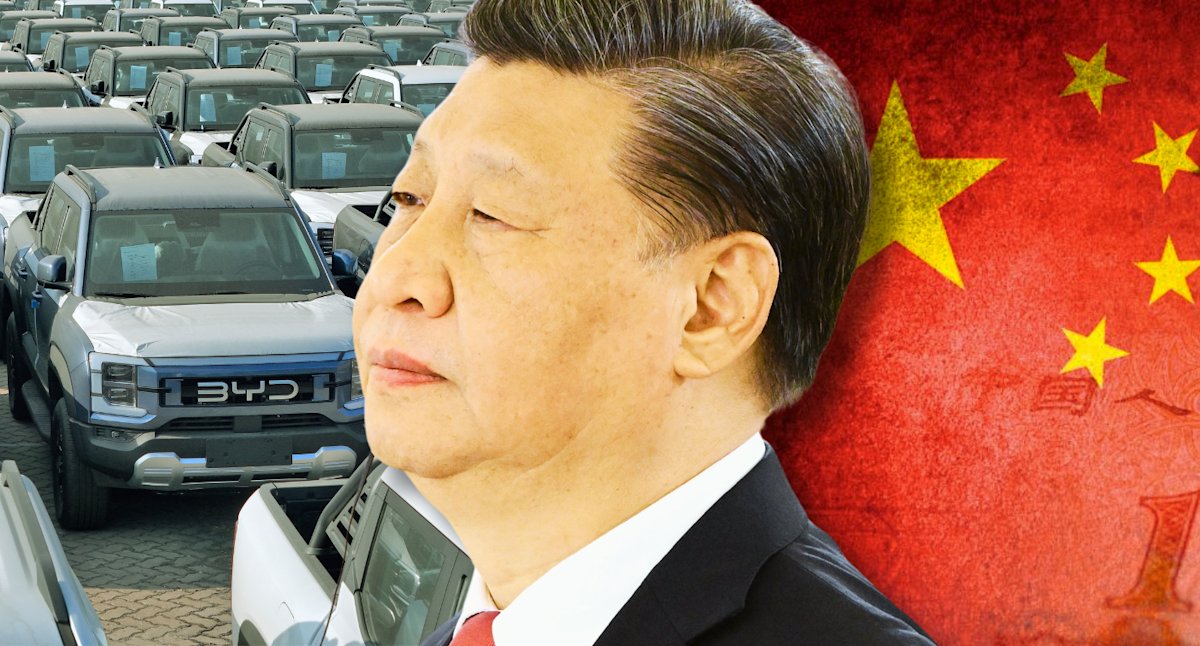
Recent trends have heralded a significant shift in the Australian automotive market, with Chinese car manufacturers such as BYD and GWM outpacing traditional brands like Mitsubishi and Nissan in sales. This development marks a notable change in consumer preferences, where vehicles produced in China have become the norm since early 2026.
For decades, the Australian car market has been dominated by well-established brands such as Ford, Holden, and Toyota. Yet, this stability has been shattered—Holden is no longer part of the landscape, and Toyota has reported a dramatic 25% decline in sales this year. In stark contrast, brands that were once relatively obscure to Australian buyers, including Omoda Jaecoo and Geely, now outsell renowned names such as Peugeot, Renault, and Skoda.
The increasing interest in electric vehicles (EVs) in Australia has further disrupted the market, pushing legacy brands to rethink their strategies. Over the last five years, China has strategically positioned itself to lead the EV sector, with this foresight proving to be a stroke of genius in retrospect.
The transformation can be likened to a “Kodak moment” for Western automakers—a term once reserved for Kodak, the film giant that underestimated digital photography’s rise. Major manufacturers like Ford and General Motors have struggled to adapt, while Toyota’s lack of significant innovation places it at risk of irrelevance. Meanwhile, BYD has aggressively expanded its global footprint.
The implications of geopolitical dynamics, especially under Donald Trump’s presidency, have sped up this automotive evolution. His controversial foreign policies, particularly in the Middle East, have accentuated economic fluctuations, including soaring oil prices. These shifts have forced a realignment in the global manufacturing narrative, placing China’s production capabilities at the forefront.
In the first two months of this year, China exported a remarkable 670,000 EVs—almost double the amount from the previous year—demonstrating its manufacturing prowess. The capacity for production is immense; China produces far more cars than it can sell domestically, allowing for significant adjustments in export strategies. With the Lunar New Year impacting production early in the year, output is expected to surge in March, further solidifying this growth.
Ford’s CEO, Jim Farley, has publicly acknowledged the manufacturing capabilities of Chinese companies, asserting that they have the potential to dominate the North American market. This pivot towards manufacturing was a deliberate strategy for China, aimed at capitalising on excess capacity after its real estate boom faltered. The shift towards making EVs is particularly strategic; with an ageing population, China needs to produce goods for export, and cars are a priority.
The rise of the lithium battery market has significantly impacted pricing in commodities, pushing lithium costs to over double what they were in 2025. However, despite fluctuations, the price remains lower than the peaks seen in 2022. The true challenge for battery production lies in sourcing rare earth elements like cobalt, rather than lithium itself.
Ironically, the geopolitical shifts initiated by Trump’s administration have empowered not only China but also their adversaries, such as Russia, amidst rising fuel costs. This state of affairs creates a complex environment that could lead to unforeseen consequences across economic, military, and political landscapes.
This scenario can be likened to "China’s Detroit moment." Unlike Detroit’s struggles in the 1980s, this moment is reminiscent of the 1920s when America built a robust economy around automotive innovation. With China poised for continued growth in this sector, it seems increasingly unlikely that it will fall into the trap of being a ‘middle-income country’.
As we move forward, it becomes evident that the landscape of the automotive industry is evolving rapidly, suggesting that we may soon find ourselves driving Chinese vehicles, like electric Geelys, into the future.
Understanding these shifts is crucial for both consumers and investors as they navigate the complexities of the emerging automotive world dominated by Chinese manufacturers.