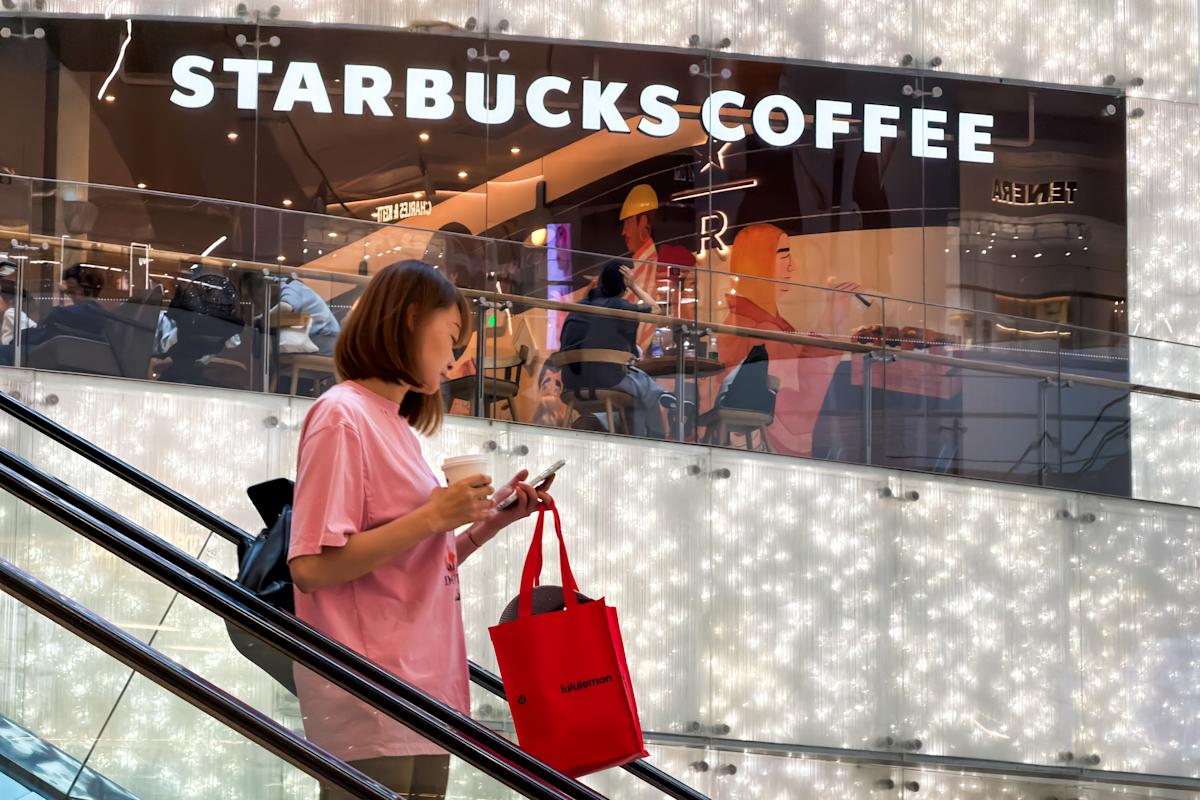
Starbucks (SBUX) has announced a trial application leveraging OpenAI’s ChatGPT platform, reflecting a strategic move towards enhanced product discovery in the competitive coffee market. Customers engaging with this innovative app can articulate their drink preferences—like “I’m craving an afternoon boost that isn’t too sweet”—or even upload images reflective of their current mood or context, such as the weather or their outfit. Based on these inputs, the ChatGPT chatbot will provide personalised drink suggestions.
Once customers have selected their preferred beverages, they will be able to customise their orders and decide on a pickup location directly within ChatGPT. Ultimately, the transaction will be completed through the traditional Starbucks app or website, maintaining a seamless experience between both platforms.
This initiative is part of a broader trend where OpenAI has collaborated with major brands to enhance shopping experiences. Examples include partnerships with retail giants Walmart and Target, which similarly utilised ChatGPT for customer engagement. However, OpenAI’s approach has evolved; after initially deploying a feature called Instant Checkout, which allowed in-app purchases, feedback indicated a need for more flexible checkout solutions. OpenAI has since pivoted towards concentrating on product discovery, tailoring options based on user specifications such as budget and preferences.
Walmart, for instance, has integrated its proprietary AI shopping assistant, Sparky, which permits customers direct access to their product range while retaining a familiar shopping experience. Daniel Danker, leading AI initiatives at Walmart, affirmed that this unified approach, whether inside Walmart’s app or ChatGPT, ensures customers enjoy the same personalised services, including variety, price competitiveness, and efficiency.
Similarly, Target has also embraced this digital transformation. By mid-November, Target rolled out a ChatGPT integration that allows users to tap into its assortment through prompts, with the final purchasing process navigating back to the Target app, preserving user engagement within a familiar environment.
Meanwhile, Starbucks is not solely relying on its ChatGPT integration to advance its operations. Under CEO Brian Niccol, the company has introduced another AI-driven feature: Green Dot Assist. This virtual assistant aids baristas by providing essential information on supply and customer service requests, while AI is also being harnessed for various operational aspects, including scheduling, demand forecasting, and optimising supply chains. Starbucks COO, Mike Grams, emphasised a vision where 90% of their U.S. coffeehouses would receive daily stock replenishments through AI, highlighting a commitment to operational efficiency.
Overall, Starbucks’s venture into the AI realm, particularly with the assistance of OpenAI’s technology, signifies a significant step towards modernising customer interactions and enhancing the overall buying experience, while simultaneously streamlining its own operations.
Brooke DiPalma is a reporter for Yahoo Finance. For ongoing insights into the retail and stock market narrative, readers are encouraged to stay tuned for further developments in this space.