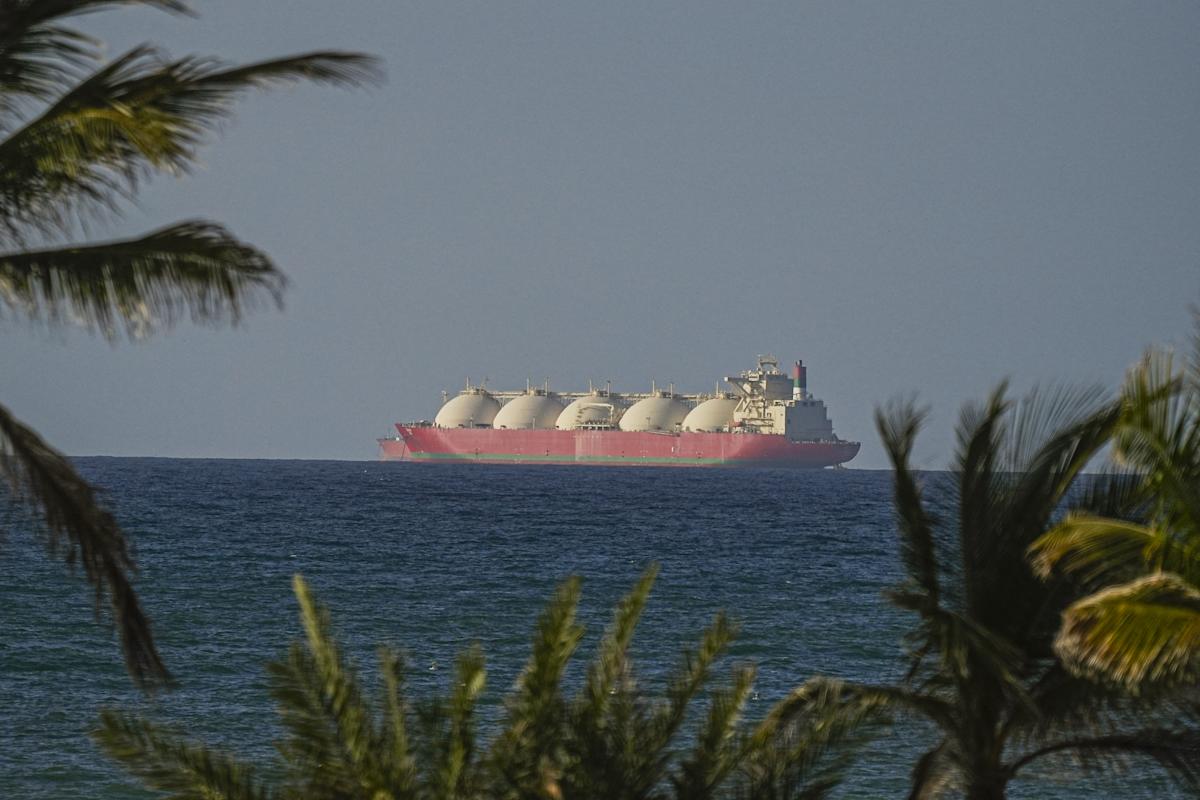
In a recent announcement, President Trump declared a ceasefire between the United States and Iran, calling for a “complete, immediate, and safe opening” of the strategically vital Strait of Hormuz. However, as negotiations between the two nations are set to commence on Saturday amidst this two-week ceasefire, actual traffic through the strait remains alarmingly minimal, highlighting significant operational challenges.
Despite assurances from Tehran shortly after the ceasefire about the safety of vessel transits, the Iranian government appears to have tightened its control over the strait, threatening to retaliate against vessels attempting unauthorised passage. The already critical situation has resulted in a drastic fall in maritime traffic, with only eight vessels reportedly transiting the strait since the ceasefire announcement on April 8, many of which carried non-oil products. Prior to the conflict, the waterway saw more than 100 vessels daily, which dwindled to about ten daily crossings in the days leading up to Trump’s announcement.
Industry experts, such as Jorge León from Rystad Energy, indicate that while the strait is technically “open,” considerable operational hurdles must be addressed to facilitate trade safely. Iranian officials have stated that only 15 vessels will be permitted to transit per day during the ceasefire, and the Iranian Navy has explicitly warned that any unauthorised vessels would face destruction.
In an effort to navigate these challenges and ensure the safety of their ships, many captains have altered their transmission identities to indicate Chinese ownership or flags, reflecting their trepidation about transit risks in the strait. This atmosphere of uncertainty has severely limited maritime activity; shipping expert Arsenio Longo noted that despite a brief reprieve, overall traffic remains dramatically reduced and far from returning to pre-conflict conditions.
For traffic to resume credibly through the Strait of Hormuz, a clear framework outlining agreements between the US and Iran, including potential tolling systems, will be essential. Iran aspires to leverage control over the strait as it seeks increased regional prominence, enforcing new toll fees reportedly set at $1 per barrel, payable in cryptocurrency for vessels crossing.
These developments in maritime traffic have kept oil prices elevated despite a recent decline. As of Thursday, Brent crude was trading below $95 per barrel, while West Texas Intermediate was over $96. Analysts at Goldman Sachs suggest that if the ceasefire falters and the reopening of the strait continues to be delayed, Brent prices could average around $100 per barrel in the forthcoming quarter, exacerbated by potential production losses.
The situation in the maritime corridor remains precarious, with experts cautioning that while oil prices have seen a notable decline, the overall market sentiment is still rife with uncertainty. This dynamic underscores the vital importance of stabilising shipping routes through the Strait of Hormuz, a critical artery for global energy supplies.