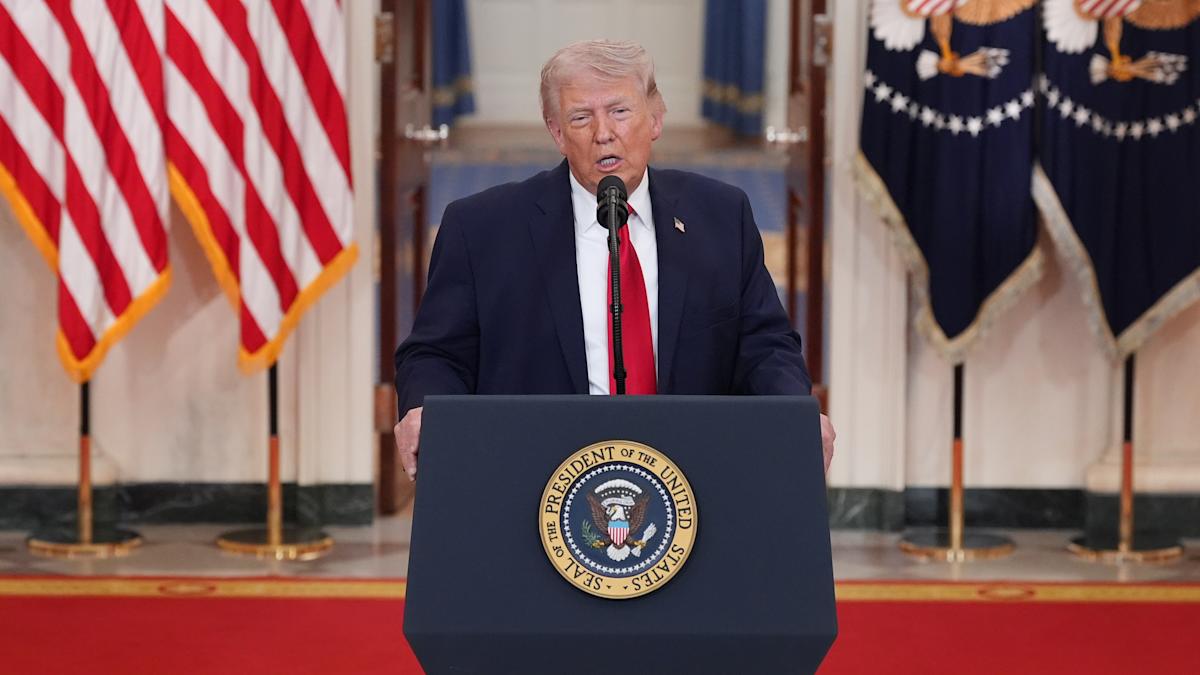
In a recent address from the White House, President Trump emphasised that other nations should take responsibility for ensuring the safety of the Strait of Hormuz, a key shipping channel through which 20% of global oil flows. He reiterated plans for the U.S. to withdraw from Iran in a few weeks, but did not clarify how he would manage the situation regarding the strait, which is crucial for international trade.
Trump stated, “We will be helpful, but they should take the lead,” urging other countries to safeguard this vital passageway. This resonates with his prior comments suggesting that the U.S. would not intervene in the strait’s operations, encouraging other nations to “fend for themselves.”
His recent assertions raise significant concerns for global energy markets. Analysts warn that if Iran were allowed to exert control over the strait indefinitely, it could severely disrupt oil transit, potentially leading to steep price increases and a destabilised economic environment. Jim Bianco, president of Bianco Research, described the potential ramifications as “incalculable,” suggesting that such a scenario could elevate Iran to a superpower status regarding oil delivery, with adverse effects on Western economies.
Despite Trump’s declarations of a forthcoming end to U.S. involvement in the region, he concurrently maintains options for escalation, indicating military readiness to escalate bombings if necessary. This duality adds to uncertainty surrounding U.S. policy, leading to apprehension among global economic observers about the future of oil prices and market stability.
Market analysts from Signum Global Advisors expressed doubt that Trump would accept leaving the strait under Iranian control without at least trying to re-establish open shipping, citing the risk of economic damage and geopolitical disadvantages. Wolfe Research’s Tobin Marcus acknowledged that Trump “might consider withdrawal” if war costs become unbearable, but such a decision could trigger immediate economic repercussions.
Recent economic commentary has suggested that without a resolution in the Strait of Hormuz, oil prices could skyrocket to $150 per barrel, driving the world into a recession. Experts like Larry Fink, CEO of BlackRock, noted that Iran’s continued threat to the passage could result in enduring economic shockwaves.
As Trump juggles conflicting messages about the Strait—sometimes insisting on its immediate opening while at other times downplaying its importance—the global community remains tense. For instance, one day he threatened severe retaliatory measures should Iran fail to allow free passage, while the next, he dismissed the U.S. responsibility, suggesting that other countries should secure their own oil.
Compounding this complexity is the idea that Trump’s statements often shift quickly, leading observers to speculate on the actual U.S. position regarding the strait. His varying rhetoric continues to foster uncertainty about America’s plans for ongoing engagement in the region and the broader implications for the global economy.
In summary, as Trump navigates the contentious issue of the Strait of Hormuz, experts warn that failing to secure passage could usher in a period of economic volatility. The path forward remains uncertain as Trump balances the need to conclude U.S. military involvement with the pressing challenges of global energy security.