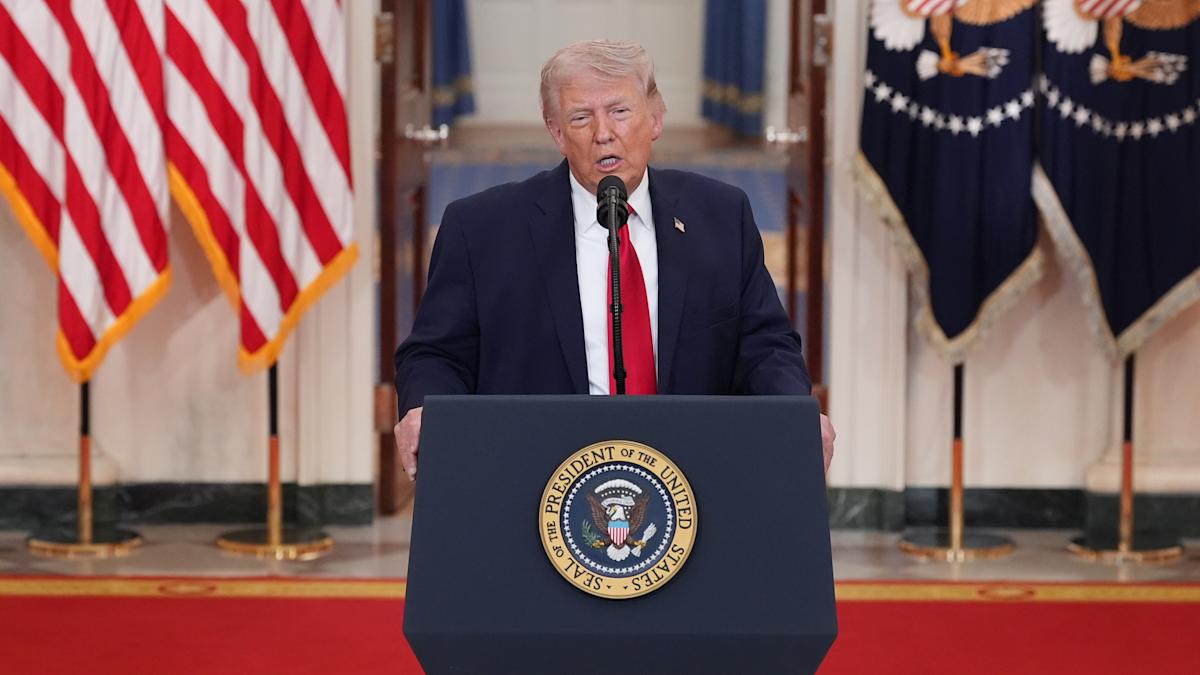
In a recent address from the White House, President Donald Trump suggested that other nations should take responsibility for shipping security in the vital Strait of Hormuz, a strategic choke point for global oil supply. This declaration raises questions about the United States’ future engagement in Iran and its willingness to leave the region without resolving tensions regarding this critical maritime passage.
During the speech, which was labelled an important update on the ongoing conflict in Iran, Trump reiterated his intention to withdraw US forces within a timeframe of two to three weeks, although he did not clarify how he planned to bring an end to military operations. “We will be helpful, but they should take the lead,” he stated, encouraging other countries to ensure the safety of shipping lanes. The Strait of Hormuz, through which approximately 20% of the world’s oil flows, could potentially “open up naturally,” he claimed.
This commentary raises significant concerns regarding the potential fallout for the global economy, particularly if Iran asserts control over the Strait and possibly enforces tolls on oil traffic. Analysts, including Jim Bianco from Bianco Research, warned that allowing Iran to dominate this vital shipping route could elevate its status to a regional superpower, and could have severe repercussions for Western nations reliant on oil imports.
Despite Trump’s intentions to end US military involvement in the region, he has not ruled out escalating military actions, echoing sentiments in his recent remarks about the possibility of increasing bombing efforts. “We have the right to bring them back to the stone age,” he warned, signalling an openness to stronger military responses if deemed necessary.
Energy market analysts predict that the repercussions of an unresolved conflict could lead to skyrocketing oil prices, with some forecasting figures reaching $150 per barrel. Patrick De Haan from GasBuddy cautioned that leaving the Strait closed would not merely represent a peace settlement but would constitute a concession that could destabilise global energy markets, leading to significant economic shocks.
The conundrum faced by the White House remains evident: balancing the importance of reopening the shipping lanes against the need to withdraw from a protracted conflict. Observers have expressed doubt regarding Trump’s commitment to exiting without first addressing shipping security, believing that doing so could jeopardise both the US economy and its relationships with Gulf allies.
Moreover, Trump’s messaging has been notably inconsistent, oscillating between threats to retaliate against Iran for non-compliance and downplaying the significance of the Strait. This unpredictability raises further concerns among market watchers and political analysts regarding US foreign policy coherence.
Overall, the situation in the Strait of Hormuz represents a challenging diplomatic landscape, with implications for global energy supply and geopolitical stability. As tensions continue, the international community remains watchful of how the US will navigate its departure from Iran amidst unresolved issues concerning this critical maritime conduit.