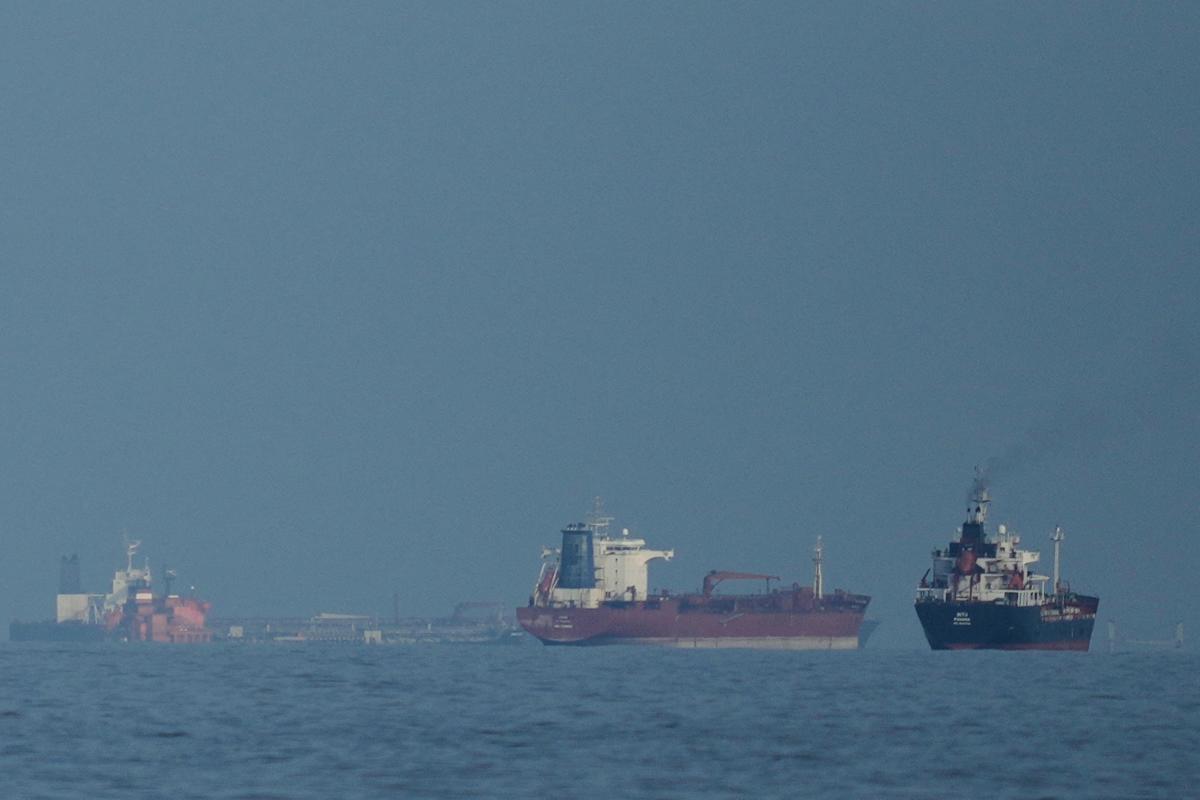
In a bold assertion, former President Donald Trump declared on Monday that Iranian naval vessels would face destruction should they approach the newly initiated US blockade in the strategically vital Strait of Hormuz. This announcement coincided with the commencement of the blockade aimed at curtailing Iran’s oil exports and diminishing its influence over the passage.
Trump detailed the situation in a social media statement, claiming that the Iranian navy has been severely incapacitated, with "158 ships" reportedly lying destroyed at the bottom of the sea. He mentioned that the US has refrained from targeting a limited number of so-called "fast attack ships," as they were not viewed as a significant threat.
He warned: "If any of these ships come anywhere close to our BLOCKADE, they will be immediately ELIMINATED, using the same system of kill that we use against the drug dealers on boats at Sea." This threat comes as the blockade is highlighted as a measure to prevent Iran from exporting oil and to restrain its control over this critical maritime route.
The announcement led to a spike in oil prices, with West Texas Intermediate crude futures soaring over 5% to exceed $102 per barrel, while Brent crude rose about 6%, reaching around $101. Following the outbreak of the Iran conflict on February 28, competition for fuel among importing nations has intensified, with the Strait of Hormuz facing significant operational challenges.
JPMorgan’s energy team, led by Natasha Kaneva, noted that a dearth of supplies has resulted in inventory reductions and "involuntary demand destruction," making fuel increasingly hard to obtain. She stated that indications suggest the oil market is reaching a critical threshold.
Despite dated Brent hitting $126 per barrel on Friday, with a peak of $144 earlier this month, Tom Kloza, chief energy adviser at Gulf Oil, cautioned that futures prices do not accurately reflect the higher prices seen in immediate markets. Typically, the gap between physical market rates and Brent futures is minimal—around $1-$2 per barrel—yet current conditions suggest that those needing immediate crude access are paying considerably more.
This chain of events illustrates the volatility of global oil markets, where geopolitical tensions and supply chain issues are driving prices higher and reshaping the landscape for oil importers and exporters alike. As the situation evolves, stakeholders across the industry are keeping a close eye on both prices and political developments in this crucial region.
Ines Ferre is a senior business reporter for Yahoo Finance. Follow her on X at @ines_ferre.