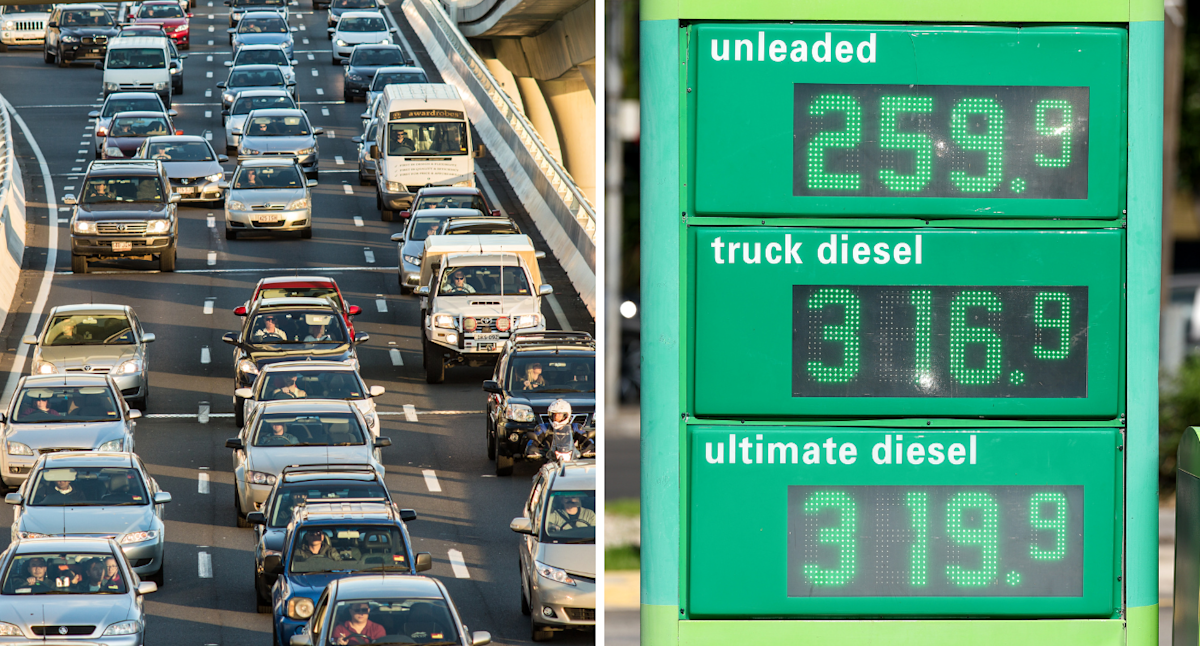
Australia has unveiled its most fuel-efficient vehicles, revealing that larger cars can outperform smaller ones in fuel economy. This comes as motorists grapple with soaring petrol and diesel prices stemming from the ongoing global fuel crisis linked to the Middle East conflict.
The 2022 Audi Q5 has been designated as the most fuel-efficient non-hybrid car out of a field of 152 popular models assessed by RACQ and the Australian Automobile Association, achieving an impressive 5.6 litres per 100km consumption.
Following close behind is the 2023 Kia Sorento, a large SUV that proves economical with a fuel usage of 6 litres per 100 kilometres in practical driving conditions.
Other notable mentions include the 2025 Hyundai Santa Fe, 2022 Hyundai Tucson, and several compact cars, such as the 2024 Hyundai i30, 2022 Toyota Corolla, and 2021 Mazda 3.
According to RACQ principal technician Andrew Kirk, with petrol prices consistently high, opting for a fuel-efficient vehicle can lead to substantial savings over the lifetime of the car. “What surprises many is that the most efficient vehicle isn’t always the smallest. Our real-world testing illustrates genuine performance beyond lab results,” Kirk noted.

In the hybrid category, Toyota dominated rankings, taking the top five positions. The 2024 Toyota Yaris Hybrid led the pack with a notable fuel efficiency of just 3.6 litres per 100 kilometres.
Among electric vehicles, the 2025 Kia EV3 has distinguished itself with the highest range, achieving 537 kilometres based on extensive road testing.
As of the week ending February 22, the average unleaded petrol price surged by 82.4 cents per litre, while diesel prices rose by 129.8 cents per litre, as reported by the Australian Institute of Petroleum.
Although the federal government recently halved the fuel excise by 26.3 cents per litre, prices remain elevated compared to pre-war levels.
Here’s a summary of the most fuel-efficient non-hybrid cars currently available in Australia:
- 2022 Audi Q5 – 5.6L/100km
- 2023 Kia Sorento – 6L/100km
- 2025 Hyundai Santa Fe – 6.2L/100km
- 2022 Hyundai Tucson – 6.2L/100km
- 2024 Hyundai i30 – 6.2L/100km
- 2022 Toyota Corolla – 6.2L/100km
- 2021 Mazda 3 – 6.2L/100km