Table of Contents
Whirlpool Faces Decline Amid Low Consumer Confidence
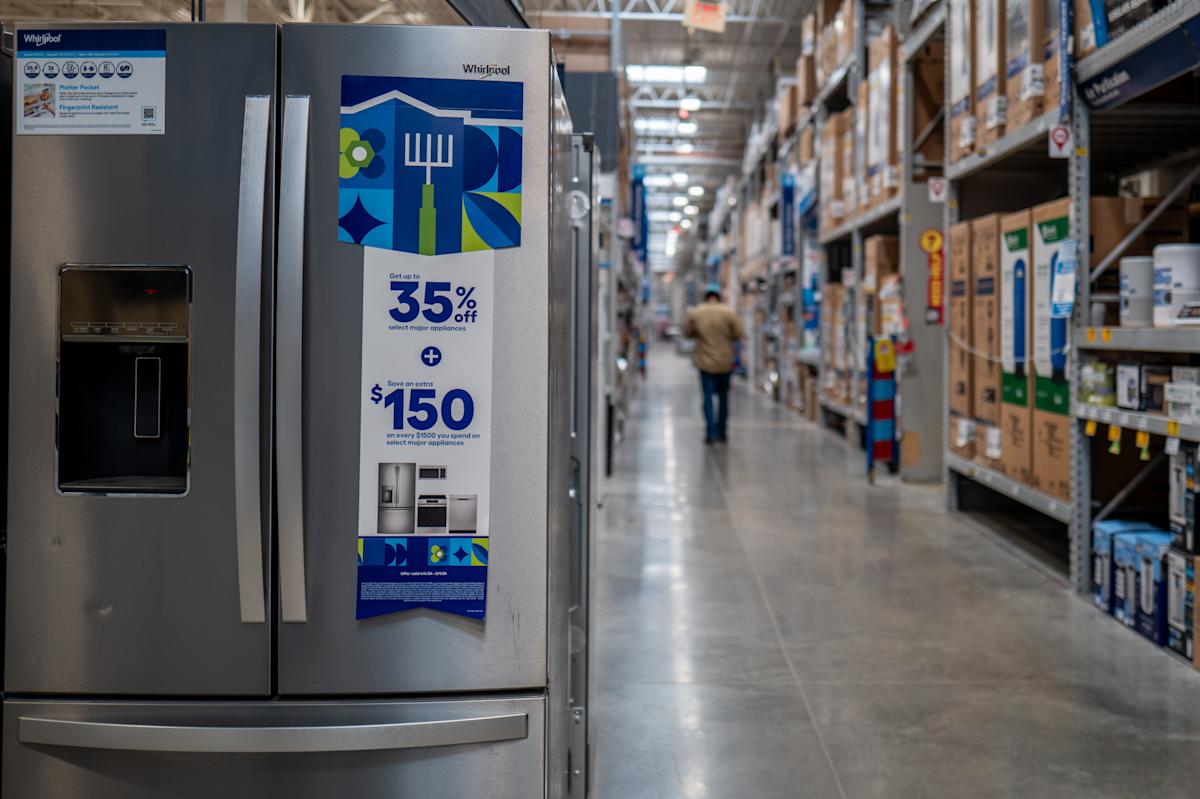
Whirlpool Corporation (WHR), known for its major appliances including brands like Maytag and KitchenAid, has reported a significant drop in demand for its products in North America, with first-quarter revenues reflecting levels akin to those experienced during the financial crisis. The company noted that demand for large appliances, such as dishwashers and refrigerators, reached “recession-level lows” due to a combination of low consumer confidence and external factors.
Factors Impacting Performance
Whirlpool’s CFO, Roxanne Warner, indicated that a “perfect storm” has beset the company, citing low consumer sentiment exacerbated by the ongoing conflict in Iran and adverse winter weather conditions that affected their North American business in March. According to Warner, the overall appliance industry contracted by approximately 7.4% during this period, a stark comparison to healthier market conditions of previous years.
In its latest earnings report, Whirlpool disclosed a nearly 10% decline in year-on-year revenue, bringing it down to $3.27 billion, significantly under Wall Street’s anticipated $3.42 billion. The company’s adjusted loss per share was reported at $1.43, sharply diverging from analyst predictions of a $0.36 loss.
Following the disappointing results, Whirlpool’s stock saw a drastic 16% decline in after-hours trading.
Regional Revenue Breakdown
The North American segment of Whirlpool’s business reported a revenue drop of 7.5%, totalling $2.24 billion, while its Latin American operations somewhat bucked the trend, posting a 5% rise to $774 million. However, both figures still fell below market expectations.
Despite challenges in the major appliances segment, Whirlpool did experience growth in its small domestic appliances division, with a notable 13.4% increase in revenue to $222 million, surpassing the expected $214 million. Warner noted that while there is hesitancy in making large purchases, consumers continue to buy smaller, feel-good items such as automatic espresso machines and KitchenAid stand mixers.
Strategic Recovery Measures
To counteract the declines, Warner commented on the company’s adoption of its most aggressive measures in a decade to bolster profitability in North America. Whirlpool announced a price increase of 10% in April and indicated plans for an additional 4% hike in July. Warner stated that these price adjustments align with actions taken by competitors and are essential in light of prolonged inflationary pressures.
Despite the current climate, Warner expressed confidence in Whirlpool’s pricing power, emphasising that the appliance market is largely driven by replacement demand.
Challenges and Future Outlook
Further complicating the landscape was the Supreme Court ruling regarding President Trump’s blanket tariffs, which instigated a competitive pricing environment as companies adjusted their pricing strategies following tariff refunds. Warner noted that, despite this, the remaining Section 232 tariffs render Whirlpool a “net tariff winner” due to its robust domestic manufacturing base, with approximately 80% of its products produced in the United States.
The company has lowered its full-year sales forecast to approximately $15 billion, slightly below the expected $15.2 billion. Adjusted earnings per share are now anticipated to fall between $2.45 and $2.95, compared to the previous market expectation of $4.84.
Looking forward, Warner remains optimistic about the second to fourth quarters, citing cost management actions and early signs of price stabilisation from May onwards as encouraging indicators. “Q1 was tough… but it’s behind us, and it’s now upward,” she asserted.
Whirlpool faces a challenging market environment, but with strategic pricing initiatives and product innovations, it aims to navigate these turbulent waters and restore profitability in the coming months.
Sources:
- Yahoo Finance
- Whirlpool Corporation Statements