Table of Contents
Bitcoin’s Future: Aiming for $1 Million Amidst Geopolitical Turmoil
Bitwise’s Chief Investment Officer, Matt Hougan, posits that the ongoing geopolitical tensions, notably stemming from the Ukraine conflict and the US-Israel confrontation with Iran, may catalyse a significant shift in the global financial landscape, potentially propelling Bitcoin’s price to an ambitious $1 million per coin.
In a recent article published on the Bitwise website on April 13, Hougan underscored a notable phenomenon: since the onset of heightened tensions due to the Iranian conflict beginning on February 28, Bitcoin’s value has surged by approximately 12%. This contrasts sharply with the performance of traditional assets, where the S&P 500 has declined by 1%, and gold has suffered a significant 10% drop.
The Driving Force Behind Bitcoin’s Resilience
According to Hougan, the conflict itself has invigorated Bitcoin’s market performance, suggesting that its rise is directly correlated to the geopolitical tensions rather than just the repercussions of increased money supply. He stated, “When nations feud, the incentive to deal with apolitical money like Bitcoin goes up.”
In drawing parallels with financial options, he described Bitcoin’s response to the Iranian conflict as akin to an out-of-the-money call option, suggesting that the tumultuous state of global currencies enhances Bitcoin’s appeal as a prospective global currency. As various national currencies face instability, Bitcoin, perceived as a stable and apolitical alternative, becomes increasingly attractive.
Declining US Dollar Dominance
Hougan notes that the dominance of the US dollar has been on a downward spiral since 2022, exacerbated by the conflict in Ukraine which prompted Russia to pivot towards China for economic support. The proportion of Russian trade settled in yuan has skyrocketed from a mere 2% to an astonishing 99%. This shift represents a significant weakening of the dollar’s central role in international trade.
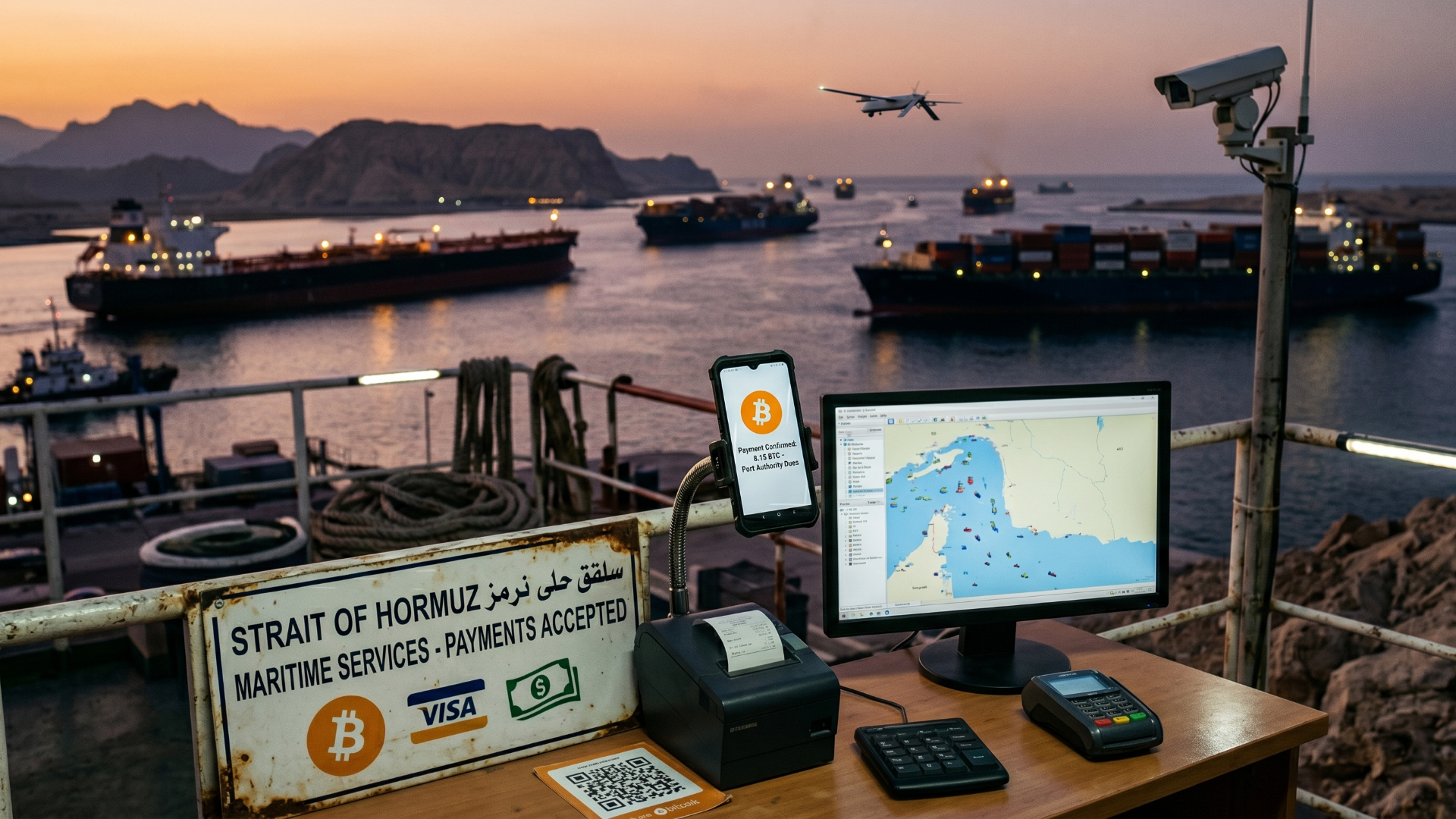
Moreover, amid this backdrop, Iran has indicated a demand that tolls for passage through the crucial Strait of Hormuz be paid in Bitcoin—a development that Hougan claims could substantially alter the framework of international commerce. While it remains uncertain whether Iran will opt for Bitcoin or revert to the yuan, the interest signals a growing trend of nations seeking to integrate Bitcoin into their monetary systems.
Potential Implications of Bitcoin’s Rising Status
The implications of Iran’s potential use of Bitcoin for maritime tolls could be monumental. Hougan anticipates that Bitcoin could increasingly function as a hedge against geopolitical uncertainties, further enhancing its value. He asserts, “Challenging international developments that shake up global alliances increase the volatility of the world’s financial order, which raises the value of Bitcoin as a call option.”
For investors in cryptocurrencies, the prospect of Bitcoin soaring in price becomes more plausible if it begins to fulfil a dual role as both a store of value—similar to gold—and a currency akin to the dollar. As Hougan aptly summarises, “If Bitcoin takes on a dual role… then $1 million per Bitcoin begins to look like a starting point.”
In conclusion, as geopolitical tensions continue to mount and alternative payment systems emerge, Bitcoin’s potential position as a mainstay in international finance appears not just feasible but perhaps inevitable. With its ability to function independently of political influences, Bitcoin is well-placed to become a cornerstone of modern financial transactions, potentially redefining value in an evolving economic order.