Table of Contents
Bitcoin’s Future: Insights from Bitwise CIO Matt Hougan
Matt Hougan, Chief Investment Officer at Bitwise, has ignited discussions about Bitcoin’s potential price surge amidst growing geopolitical tensions. He asserts that ongoing challenges to the US dollar’s dominance due to global instability could make a price target of US$1 million for Bitcoin attainable.
Geopolitical Tensions Amplifying Bitcoin’s Role
In an insightful piece on the Bitwise website, Hougan reveals that since the onset of the Ukraine war, interest in alternatives to the US dollar has increased, with Bitcoin witnessing a rise in usage as a legitimate currency. He notes that Bitcoin’s value surged by 12% during this turbulent period, contrasting with declines in the S&P 500 and gold, which fell by 1% and 10% respectively.
As Hougan eloquently puts it, “When nations feud, the incentive to deal with apolitical money like Bitcoin goes up.” This perspective paints Bitcoin as not just a fintech innovation, but also as a stabilising asset in times of conflict.
A Direct Response to Conflict
Hougan makes a compelling case that Bitcoin’s strong performance is directly correlated to the ongoing Iranian conflict, stating it is not merely a byproduct of monetary policy reactions, such as inflation from war-induced money printing. He suggests that the conflict inflates the likelihood of Bitcoin becoming a global currency, enhancing its value akin to an out-of-the-money call option.
With the US dollar’s stature as the preeminent global transaction currency being challenged, especially by the rise of the Chinese yuan during the Ukraine crisis, Hougan points to the significant alteration in international trade dynamics. He references a dramatic shift in Russian trade where the yuan’s share rose from 2% to an astounding 99%, highlighting the dollar’s diminishing influence.
Iran’s Shift Towards Bitcoin
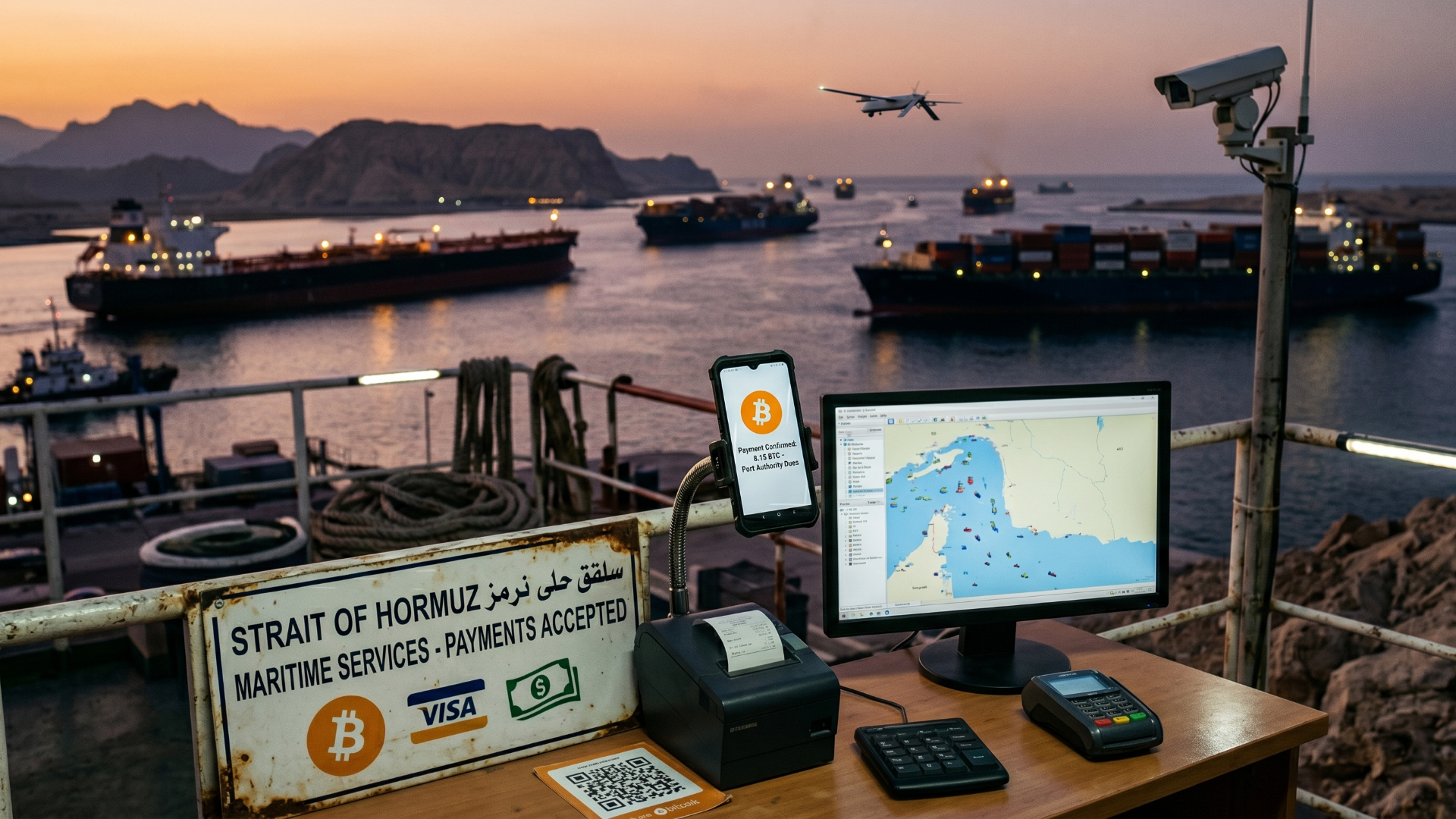
A notable development came when the Iranian government expressed intentions to require toll payments for transit through the Strait of Hormuz to be made in Bitcoin. Although it remains uncertain whether Iran will fully commit to this shift or revert to the yuan, Hougan argues that this signals a broader trend where nations are seeking to incorporate Bitcoin—a currency devoid of political affiliations—into their economic frameworks as the dollar’s dominance recedes.
Implications of Bitcoin Acceptance
Hougan outlines several significant implications for Bitcoin’s inclusion in Iran’s toll collection.
-
Hedging Against Geopolitical Risks: The utilisation of Bitcoin is likely to escalate as a hedge against emerging geopolitical challenges, which could, in turn, enhance its value as global financial dynamics shift.
- Potential Price Surge: With international transactions representing a massive market, the stimulation of Bitcoin’s use in these contexts could propel its price upwards. Hougan speculates that if Bitcoin successfully occupies dual roles—as a store of value, similar to gold, and as a transactional currency, akin to the dollar—then a price of US$1 million per Bitcoin could be viewed as a baseline target.
Conclusion
In conclusion, Matt Hougan’s insights into the evolving role of Bitcoin amidst geopolitical turbulence portray a bullish outlook for the cryptocurrency. As nations explore alternative currencies, especially in light of waning US dollar supremacy, Bitcoin could solidify its place in the global financial system. As Hougan suggests, this scenario not only reinforces Bitcoin’s potential as a hedge against instability but also hints at its capacity for significant price appreciation in the coming years.
The increasing inclination toward apolitical currencies in tumultuous times reinforces the idea that Bitcoin might be on the cusp of a major breakthrough, possibly making the once-unthinkable price target of US$1 million, a reality.