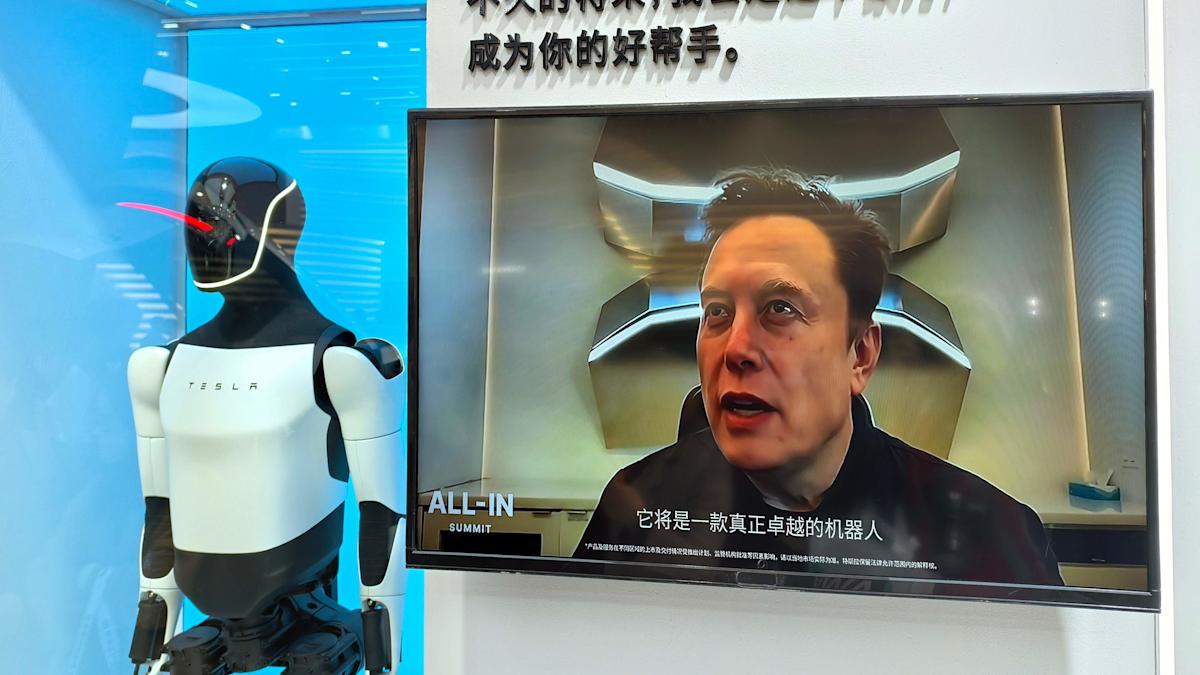
Tesla’s Ambitious Optimus Robot Plans Take Shape
Tesla (TSLA) is on the verge of turning its visionary plans for the Optimus robot into a tangible reality, as outlined in its recent Q1 earnings report. The company announced that it will soon initiate preparations for its first large-scale Optimus factory in the second quarter of this year.
The production line for the initial generation of Optimus robots will be set up at Tesla’s Fremont facility, where assembly lines currently dedicated to the Model S and Model X will be repurposed. Tesla projects this line has the potential to manufacture up to 1 million robots annually—a target that aligns with CEO Elon Musk’s reputation for ambitious goals.
In addition to the Fremont plant, a second-generation Optimus line is planned for Gigafactory Texas, with an even more audacious objective of producing 10 million robots each year.

Site for Tesla’s Optimus factory near Gigafactory Texas. Tesla says this site, when complete, will have an annual run rate of 10 million robots. (Tesla Q1 Shareholder Deck)
Musk’s vision for the Optimus robot extends beyond mere production lines. He anticipates utilising Optimus in various capacities within Tesla’s operations, such as battery construction. Musk hinted that Optimus could be operational outside of Tesla as early as next year, although details remain vague.
As Tesla seeks to carve out its niche in the burgeoning robotics sector, fierce competition looms on the horizon. Companies such as Figure, Boston Dynamics, and numerous Chinese manufacturers are accelerating their developments, making it crucial for Tesla to establish a commanding presence swiftly.
Tesla has spent years developing the underlying technology for embodied AI, which encompasses physical AI for robotics as well as advanced software for autonomous vehicles. This initiative includes creating AI data centres and training infrastructure, with the goal of integrating in-house-designed chips into its robots.
The company describes Optimus as an integrated AI framework that powers both its vehicles and robots. However, scepticism persists within the industry. While Tesla has demonstrated Optimus at public events, these robots are yet to be deployed for actual work on factory floors. The highly anticipated next generation of Optimus, dubbed V3, was expected to be unveiled in April but has now been postponed to late July or August to align with production preparations. Musk expressed his desire to keep critical design aspects under wraps to maintain a competitive edge.
Musk envisions a vast market potential for Optimus, declaring it could represent a multi-trillion-dollar opportunity. He has speculated that there may be one or two robots for every person on Earth when fully realised.
While Wall Street analysts view the move into robotics as promising, their enthusiasm does not quite match Musk’s boundless optimism. According to Bank of America’s Alexander Perry, the immediate impact from Optimus is unlikely to be significant, although longer-term projections indicate a potential for global humanoid robot shipments to reach 1.2 million by 2030 and 10 million by 2035.
In summary, as Tesla embarks on its ambitious mission to redefine robotics with the Optimus project, the interplay of innovation, market dynamics, and competitive pressures will shape the trajectory of this venture. Musk’s bold claims and the company’s extensive preparations underline a commitment to harnessing AI and robotics in ways that could impact various industries in the near future.
For ongoing updates and detailed insights into the stock market, business developments, and the latest financial news, make sure to follow relevant sources for comprehensive reporting.