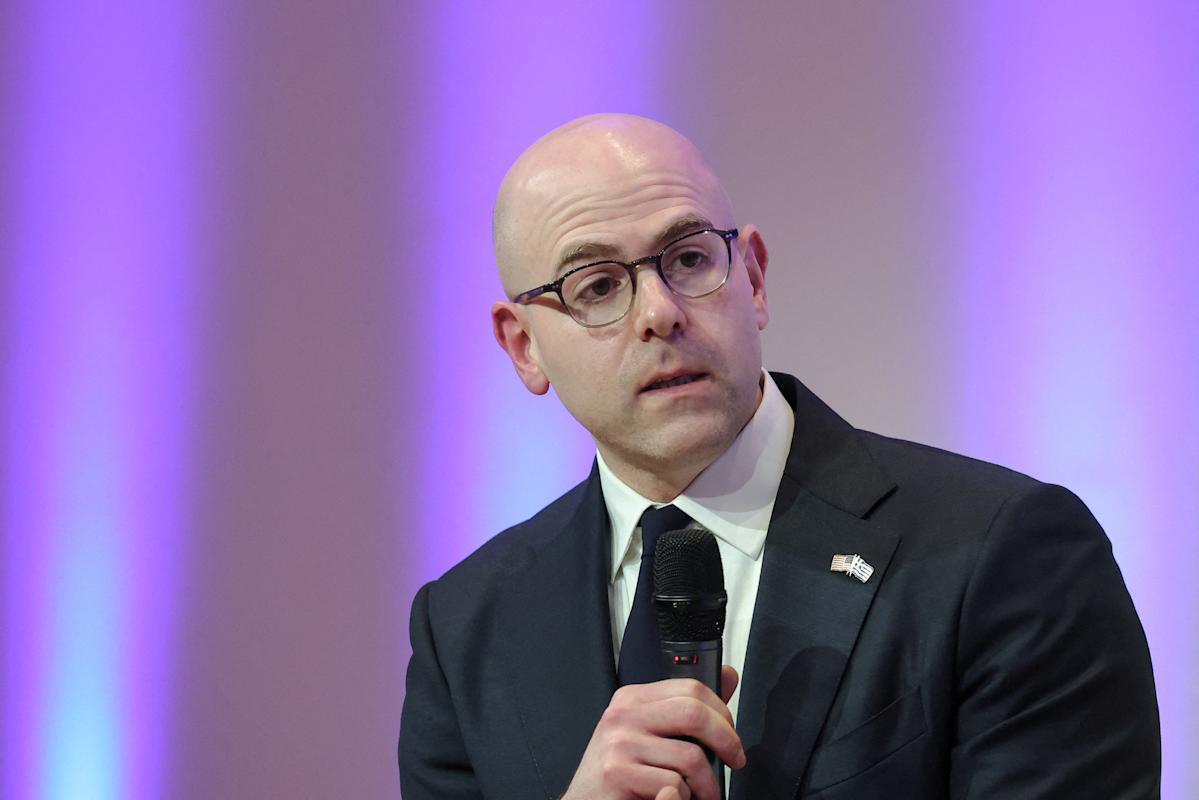
Federal Reserve Governor Stephen Miran indicated a slight shift towards a more hawkish stance during a speech at the Washington Economic Festival, citing persistent inflation trends as a key concern. He noted that the inflation landscape has deteriorated since December, not primarily due to the recent war in Iran but owing to trends observed beforehand. Miran remarked, “Some other sectors started contributing more, and so that makes it a little bit more problematic than it was just at the beginning of the year.”
Since being appointed to the Federal Reserve by President Trump in September, Miran has often stood apart from his colleagues, advocating for significant and frequent interest rate cuts. Currently, while traders forecast no rate cuts for 2026 and the Federal Reserve’s consensus leans toward a single cut, Miran has revised his own prediction from four cuts to three for this year.
Accompanying the unfavourable inflation data, Miran acknowledged some improvements in the job market but maintained that overall job growth is expected to cool. This shift has prompted him to reassess his previous recommendations for interest rates from below neutral to a neutral stance—an equilibrium aimed at neither stimulating nor suppressing economic growth.
Miran believes that the Fed’s current benchmark interest rate, set at 3.5%-3.75%, is already in excess of what is deemed neutral by around one percentage point. The geopolitical instability stemming from the conflict in Iran adds a layer of uncertainty to the economic forecast, leading Miran to express “a little bit less confidence” in predicting future trends. He highlighted that the surge in energy prices due to the conflict could disrupt the gradual cooling of the job market that was previously anticipated.
Notably, Miran does not foresee any long-term inflation effects stemming from the higher energy prices. He elaborated, “If you thought that price levels were going to be moving higher, not now, not next month, not in June, but 12 to 18 months from now… then you have a reason for responding to the energy.” Thus far, he hasn’t perceived signs that the war has altered the inflation outlook for the next 12 to 18 months.
Despite these fluctuations, Miran anticipates a decline in core goods prices, although not returning to pre-pandemic levels, and foresees ongoing reductions in housing services inflation as rent prices decrease. For him to react to rising energy prices, there would need to be emerging expectations for longer-term inflation or a notable uptick in wages, neither of which he anticipates due to current job market trends. He did, however, mention that higher energy prices might impact supply chains, a concern he hasn’t yet observed.
Conversely, New York Fed President John Williams noted that indications of rising energy costs affecting consumer goods are starting to manifest, affecting costs like airfare and groceries. Miran acknowledged the potential risks that persistent energy crises pose for inflation forecasts.
Miran continues to advocate for a forward-looking approach to interest rates, estimating inflation will align with the Federal Reserve’s target of 2% within the next year. He maintains that, given the current economic context, the case for lowering interest rates now remains compelling.
In conclusion, Miran’s recent remarks highlight the delicate balance the Federal Reserve must tread as it navigates growth concerns against the backdrop of persistent inflation pressures and geopolitical uncertainties.