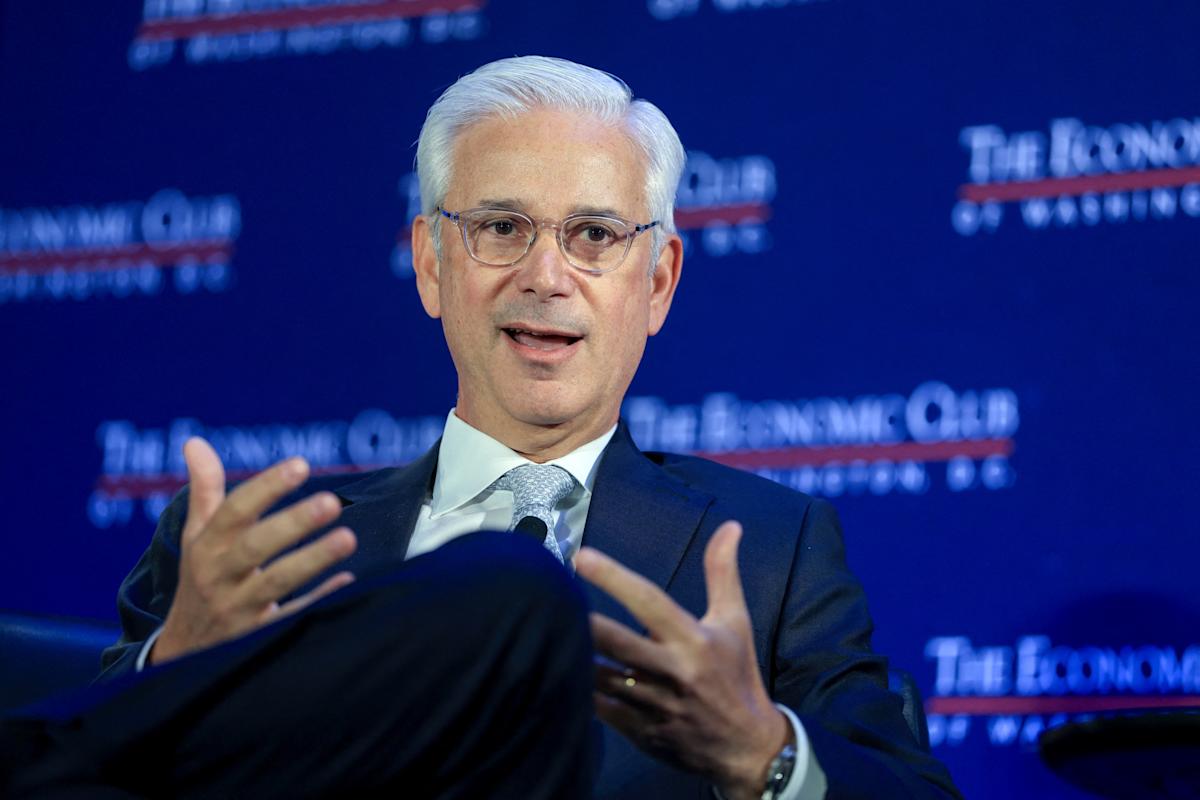
Wells Fargo CEO Charles Scharf expressed optimism about the resilience of the US economy during a recent interview with David Rubenstein at the Economic Club of Washington, D.C. While he acknowledged this economic strength, Scharf also highlighted a significant disparity between the economic indicators and consumer sentiment, which remains notably negative.
Scharf described the current economic landscape as “extremely strong,” noting that businesses entered this period in robust financial condition. However, the mood among consumers and businesses is anxious. “They’re getting through it… But then when you ask them how they feel, everyone’s nervous,” he remarked. Increased costs, particularly rising petrol prices, have led consumers to modify their spending habits, contributing to a complex economic dynamic that Scharf characterised as “neutral to just beginning to see some potential for some negative impacts.”
In a related discussion, former President Trump indicated in a Bloomberg interview that he is unlikely to extend a ceasefire with Iran that is set to expire soon, raising concerns about the ongoing conflict’s influence on global oil supply. He stated that unless a deal is reached, the blockade affecting the Strait of Hormuz will persist. Trump acknowledged that if the conflict were to resolve and normal production resumes, consumer spending could stabilise; however, prolonged tensions could have detrimental effects.
Strong first-quarter profits from Wells Fargo and other major banks underscore an ongoing trend of healthy consumer spending growth, estimated between 5% and 9%. Scharf and his fellow executives at these banks remain optimistic, viewing consumers and the broader US economy as resilient.
However, there is a noticeable disconnect between the positive reports from banks and consumer feelings. According to the University of Michigan’s Consumer Sentiment Index, US consumer confidence recently hit its lowest point in the survey’s 74-year history.
During the interview, Scharf also voiced support for an independent Federal Reserve, emphasising that its autonomy is crucial for economic stability. He attempted to downplay concerns about the private credit sector, arguing it does not pose a systemic risk.
Overall, while the macroeconomic indicators and bank profits reflect strength, the prevailing consumer sentiment paints a more uncertain picture, exacerbated by geopolitical tensions and rising costs of living.