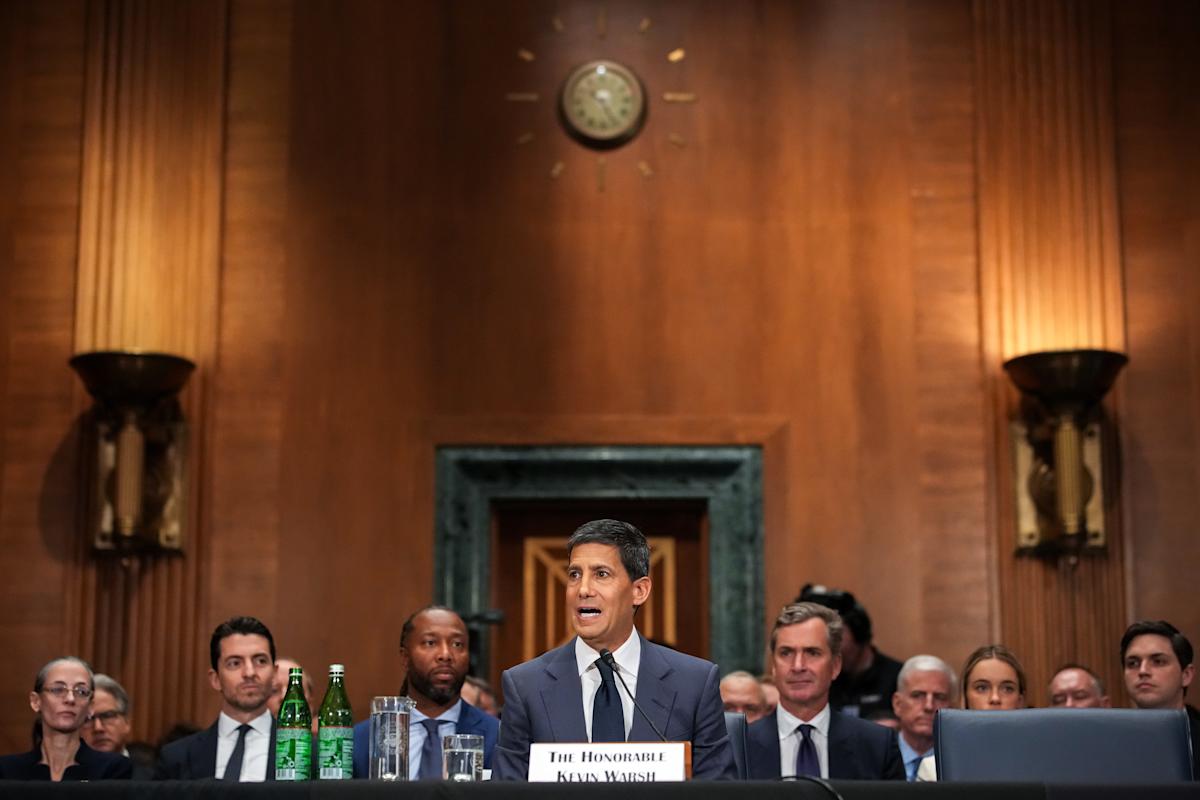
Kevin Warsh and the Federal Reserve’s Energy Crisis Challenge
If confirmed as the Chair of the Federal Reserve, Kevin Warsh will assume a critical role amidst an escalating energy crisis that complicates the central bank’s policy decisions regarding interest rates. With a dual mandate to promote stable prices and maximum employment, the Fed faces a particularly challenging scenario due to the rising energy costs linked to global conflicts, notably the recent turmoil involving Iran.
Warsh, who previously served on the Federal Reserve during the financial crisis of 2008, steps into a role where high fuel prices are intensifying inflationary pressures. The surge in energy costs often leads to higher overall inflation rates, impacting both households and businesses. This situation usually calls for elevated interest rates to counteract inflation, yet it simultaneously risks slowing economic growth by squeezing disposable incomes and increasing operational costs for businesses.
James Egelhof, chief US economist at BNP Paribas, highlighted the unpredictable economic landscape, warning that the energy price shock resulting from geopolitical conflicts could sharply increase inflation while posing significant risks to growth and employment levels. For instance, consumer prices experienced their most substantial monthly increase since early 2022, spurred by rising gasoline prices that recently surpassed $4 per gallon. The Consumer Price Index data revealed a 3.3% annual increase in March, with a 0.9% monthly jump, indicating a rapid upward trajectory compared to February.
Despite these inflationary pressures, American retail sales reported a positive trend, suggesting that consumers are still willing to spend. Economists from JPMorgan Chase noted persistent positive momentum that could stabilise growth despite the negative impact of rising oil prices. However, the International Monetary Fund (IMF) has revised its global growth forecast downwards for 2026, now predicting a deceleration to 3.1%, with pessimistic scenarios suggesting growth could slow to even 2%, which is often associated with recessionary conditions.
The current energy crisis stems from significant supply disruptions and logistical challenges, primarily due to geopolitical tensions that the Fed cannot influence directly. In recent weeks, military actions have severely restricted oil transport through the Strait of Hormuz, resulting in a loss of approximately 500 million barrels of crude oil, exacerbating the situation. Additionally, production interruptions and damage to vital infrastructure within the LNG supply chain have further disturbed the global economy.
As the Federal Reserve has opted to maintain interest rates within the 3.5% to 3.75% target range during recent meetings, Warsh will face the difficult task of balancing the conflicting pressures of rising inflation and potential economic stagnation. Previous comments by Fed Chair Jerome Powell acknowledged that the net effects of an oil shock could exert downward pressure on economic activity while simultaneously pushing inflation higher.
Traders currently foresee a 69% probability that rates will stay at their current levels through the end of 2026. Warsh, in his prior roles, has shown support for lowering rates, despite being more hawkish relative to peers within the Fed. Deutsche Bank economists emphasised that Warsh’s challenge will be to navigate his desire for lower rates in a prevailing economic climate that does not support immediate cuts.
In addition to the energy crisis, Warsh will contend with the implications of recent trade policies. Significant tariffs imposed by the previous administration have contributed to increasing import costs, thereby fueling inflation. While some economists assert that the Fed bears responsibility for any inflationary missteps, they also suggest that it should overlook the impact of tariffs. Nonetheless, the ongoing crisis driven by international conflicts presents ongoing inflationary threats.
As Kevin Warsh prepares for a potential appointment to lead the Federal Reserve, he must strategically outline his policy vision to manage these formidable challenges effectively. The delicate balancing act will necessitate a nuanced understanding of the economic indicators and external pressures shaping the current landscape.
This summary outlines the critical economic challenges facing Warsh if he assumes the role of Chair of the Federal Reserve, particularly in relation to energy prices and geopolitical events.