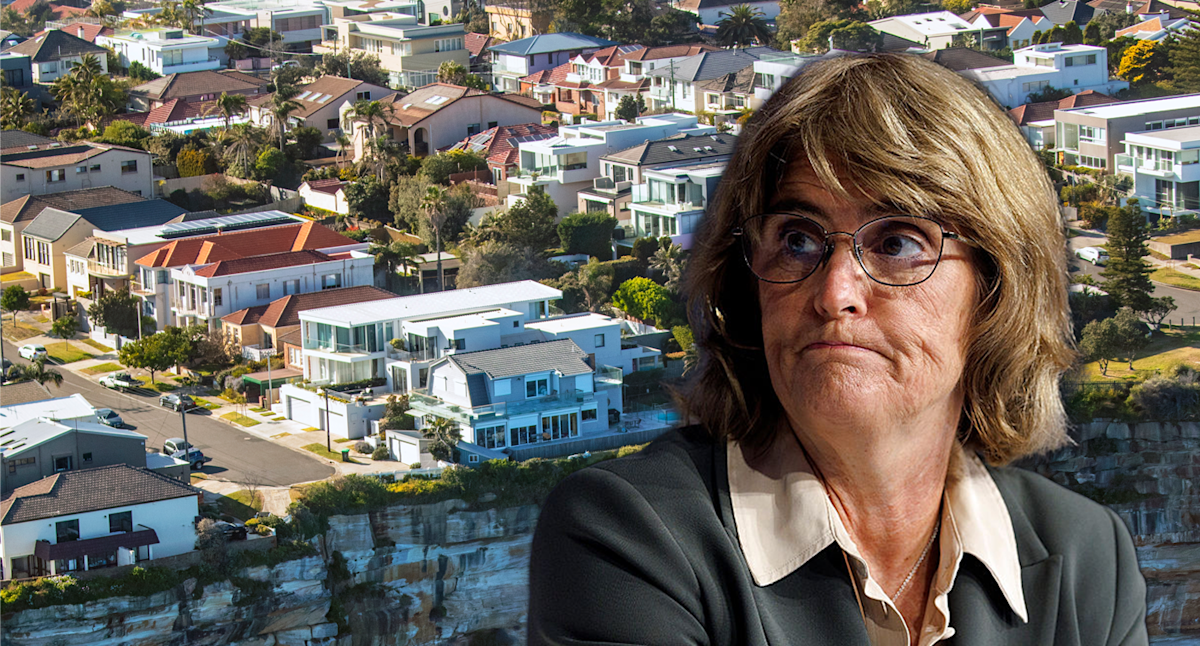
Impending Monetary Policy Decision Amid Economic Turbulence
As the Reserve Bank of Australia (RBA) prepares for its crucial meeting next week, it faces a complex scenario driven by the ongoing conflict in the Middle East and an imminent Federal Budget laden with potential changes. Analysts anticipate the RBA may respond to these uncertainties by raising the official cash rate—this would represent a significant burden for mortgage holders and businesses already grappling with economic strain.
Despite the consensus leaning towards a rate hike, some experts predict that the RBA might hold off. As housing prices begin to stabilise in major urban areas, there are suggestions that the RBA should adopt a wait-and-see approach. David Koch, a prominent commentator, describes the potential interest rate increase as redundant, arguing that inflation has already manifested through soaring petrol prices.
The Economic Director at Compare the Market, who frequently contributes to Yahoo Finance, suggests that the RBA may prefer to maintain its current stance until the implications of the upcoming Federal Budget become clearer on May 12. According to him, the RBA will be monitoring the stability of oil prices; a decrease in oil prices—should the conflict in the Middle East ease—could significantly alleviate inflationary pressures.
Deteriorating economic conditions and a notable decline in consumer sentiment are also central considerations. Declining consumer and business confidence indicates reduced spending, which could harm small businesses and deter investment and hiring—critical elements for economic health. Such circumstances make another rate hike particularly contentious.
Recent auction clearance rates from major housing markets, with Sydney and Melbourne showing disappointing results (49% and 56%, respectively), further suggest a cooling housing market. Economist Stephen Koukoulas points out the relevance of these trends, noting that the decline in house prices could compel the RBA to reconsider its position on rate hikes.
Koukoulas argues that the erosion of household wealth linked to falling housing prices could influence the RBA’s decision-making process. He warns against further monetary tightening in what he terms "already tough conditions for households," reflecting concerns over consumer spending and overall economic activity.
The RBA’s decision may hinge on upcoming inflation data, particularly in light of recent geopolitical tensions that have driven oil prices up. Economists anticipate a sharp inflation increase for March, as the rise in petrol and diesel costs ripples through the economy. Commonwealth Bank economists project inflation could soar from 3.7% to 4.6%, with the trimmed mean inflation rate also expected to rise.
The economic environment leading to the RBA’s rate decision is precarious, with money markets indicating a 72% likelihood of a 25 basis point hike. As the central bank typically favours trimmed mean inflation as a more stable metric, policymakers will weigh these figures carefully, especially given that current rates have already surpassed the RBA’s long-term target range of 2-3%.
In summary, as the RBA approaches its pivotal May meeting, it must navigate a fraught economic landscape marked by conflicting signals: rising inflation pressures from fuel prices, wavering consumer confidence, and a softening housing market. Whether it opts for a rate increase or maintains the status quo could significantly impact the Australian economy amid existing challenges.