Table of Contents
The Rise of AI Agents in Payment Systems: A Future Driven by Stablecoins
Recent developments in payment technology are paving the way for AI agents to make autonomous online purchases, with projections indicating that stablecoin networks could facilitate trillions of dollars in transactions by the end of this decade. Major players including Visa, Stripe, Google, and Coinbase are actively developing infrastructure tailored for machine-to-machine commerce, highlighting the potential shift in how payments are processed.
According to a report by Keyrock, as AI technologies advance, they will increasingly handle transactions without the need for continuous human oversight. This evolution is driving the demand for reliable payment systems that can support microtransactions and other high-frequency transactions that traditional credit card networks struggle to accommodate.
Agent Payments: A New Paradigm
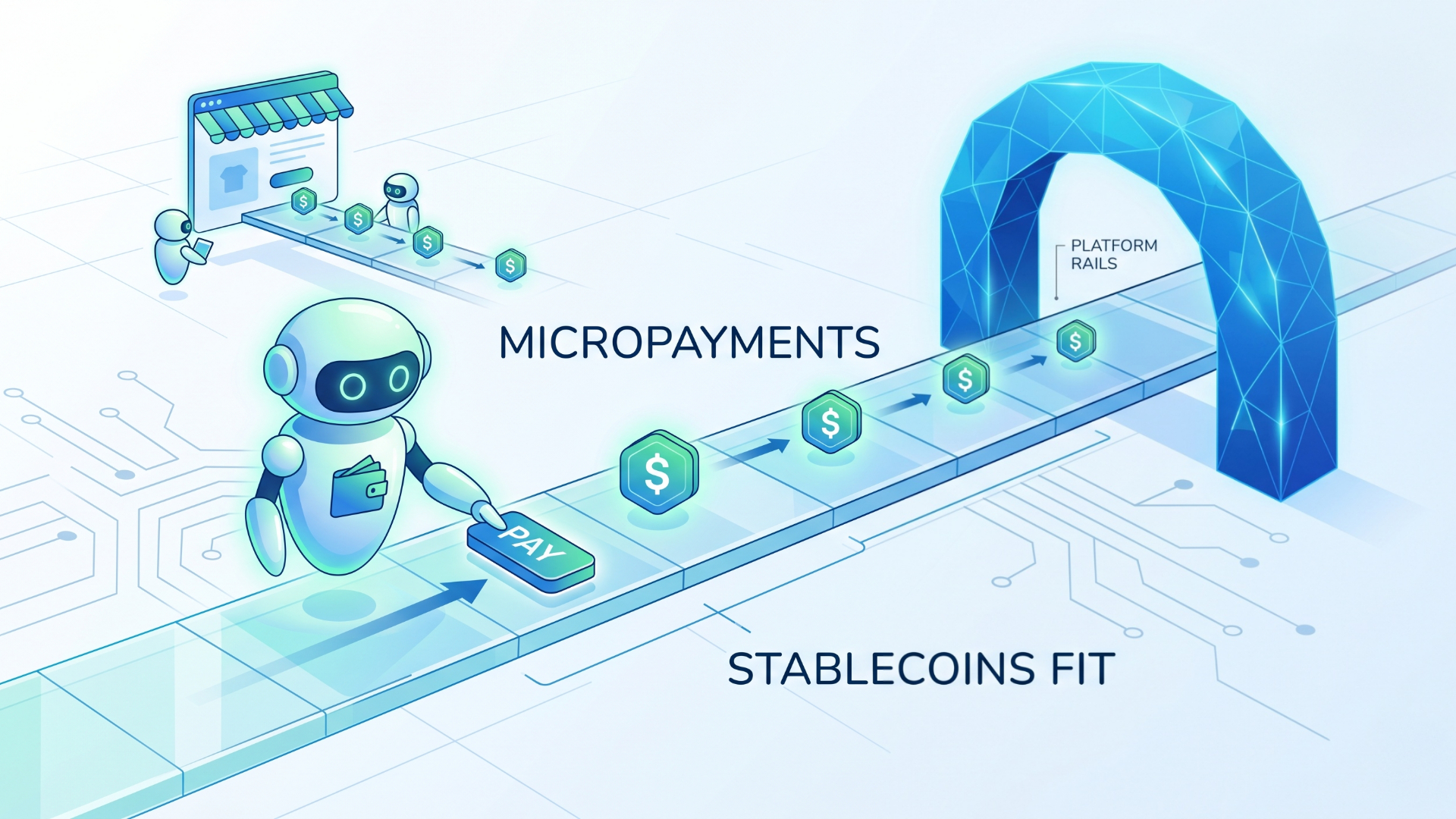
The activity surrounding agent payments is currently modest, with the USD Coin (USDC) dominating the landscape of initial cryptocurrency transactions. As AI agents find utility in purchasing access to APIs, data, computing resources, or digital goods, they require a payment system that can manage numerous small-value transactions efficiently. Standard card processing methods are often ill-suited for this type of micro-payment, leading to friction where the software acts as the buyer.
Micropayments and Programmable Transactions
Keyrock’s insights emphasise that stablecoins are particularly well-suited for facilitating these micropayments due to their programmable nature, low transaction costs, and ability to operate on a global scale. The majority of current agent payments are processed using USDC, demonstrating its early adoption in this niche market.
An illustrative example is Coinbase’s recently introduced x402 protocol, which adopts payment flows reminiscent of HTTP status codes. This enables AI agents to access paywalled content by making payments in USDC without the complications of establishing a billing account or entering into separate contracts. Such automation turns payment processing into a seamless part of the service request, making it more efficient for both developers and end-users.
Industry Innovations
In a proactive step, Visa recently launched the Agentic Ready programme in regions including Latin America and the Caribbean, furthering its commitment to equip issuers and payment partners for the upcoming surge in AI-driven commerce. The initiative is part of a broader strategy to adapt to the changing landscape of digital transactions.
The regulatory framework surrounding stablecoins and AI governance is expected to emerge around mid-2026, yet critical questions remain unanswered, particularly regarding accountability when things go awry. For instance, who assumes liability if an autonomous agent spends beyond its means, procures an incorrect service, or falls victim to malicious transactions? These governance issues must be addressed as the technology evolves.
Conclusion
As we move towards an era where AI agents take on more significant roles in commerce, the shift to stablecoin-driven microtransactions will likely redefine the landscape of payment systems. With major companies investing in the necessary infrastructure, the potential for automation in purchasing processes presents both opportunities and challenges.
Ultimately, the growth of AI in financial transactions heralds a transformative change that could reshape our understanding of commerce in the digital age. By harnessing the capabilities of blockchain technology and stablecoins, we stand on the brink of a new epoch in economic interactions, one where machines can transact independently and seamlessly.