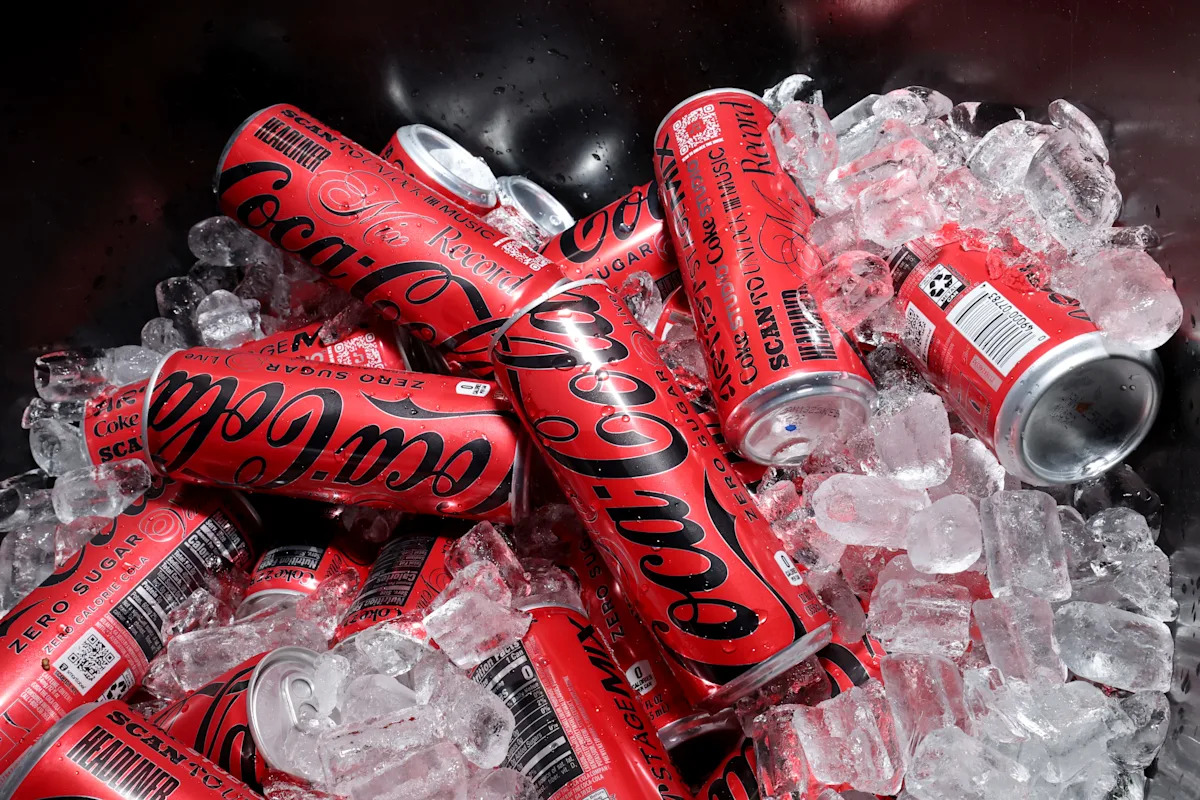
Coca-Cola (KO) shares surged by 6% on Tuesday, following a strong earnings report that exceeded Wall Street’s forecasts. This positive performance was primarily driven by consumer preferences shifting towards low-calorie beverages and mini can options, reflecting a growing trend among health and budget-conscious shoppers.
The beverage powerhouse reported a global unit case volume increase of 3%, surpassing the 1% anticipated by analysts, with North America’s volume rising by 4%. A significant contributor to this growth was Coca-Cola Zero Sugar, which saw a remarkable volume increase of 13%. Other notable categories included trademark Coca-Cola, up by 2%, sparkling soft drinks, which also rose by 2%, and sparkling flavours, which gained 3%.
Coca-Cola’s Chief Financial Officer (CFO), John Murphy, highlighted the surge in demand for low and zero-calorie options, stating that Coke Zero has proven to be a standout innovation — arguably the company’s best in the past 25 years. He also noted the impact of GLP-1 weight-loss medications as a factor fueling consumer interest in lower-calorie products, suggesting a compelling pipeline of products is in development to meet this demand.
Despite the positive figures, Murphy acknowledged that the economic landscape remains uneven, indicating that some consumers may be feeling financial pressure. To adapt to changing consumer needs, Coca-Cola recently launched single-serve mini cans at convenience stores and petrol stations across North America, which achieved high single-digit volume growth.
Murphy pointed out that value is more critical for consumers now than in the past, leading to Coca-Cola’s strategy of innovating around packaging sizes and pricing structures tailored to different markets and channels. He expressed confidence in the company’s execution of this strategy over time.
Interestingly, there remains a segment of consumers willing to pay more for premium products, such as Fairlife. Murphy regarded the company’s acquisition of Fairlife in 2020 as a significant success but acknowledged that meeting consumer demand for these higher-priced items is a considerable challenge.
To support this growth, Coca-Cola plans to open a new Fairlife production facility later this year in Webster, New York, and has announced a substantial $650 million investment to establish another facility in Coopersville, Michigan, with a target completion date of 2028.
Additionally, Coca-Cola has revised its outlook for adjusted earnings growth for 2026, now forecasting an increase of 8% to 9%, up from a previous expectation of 7% to 8% growth, attributing this adjustment to changes in the tax rate.
Regarding operational costs, particularly concerning transport, Murphy downplayed significant impacts from rising energy prices associated with the ongoing war in Iran, stating that they did not substantially affect the first quarter. He mentioned that the company is monitoring the situation closely to make necessary adjustments throughout the year.
In summary, Coca-Cola’s adaptability to consumer trends toward healthier beverage options, alongside its commitment to expanding its product offerings, positions it well for continued growth despite economic challenges.