Table of Contents
Challenges Facing the CLARITY Act in 2026
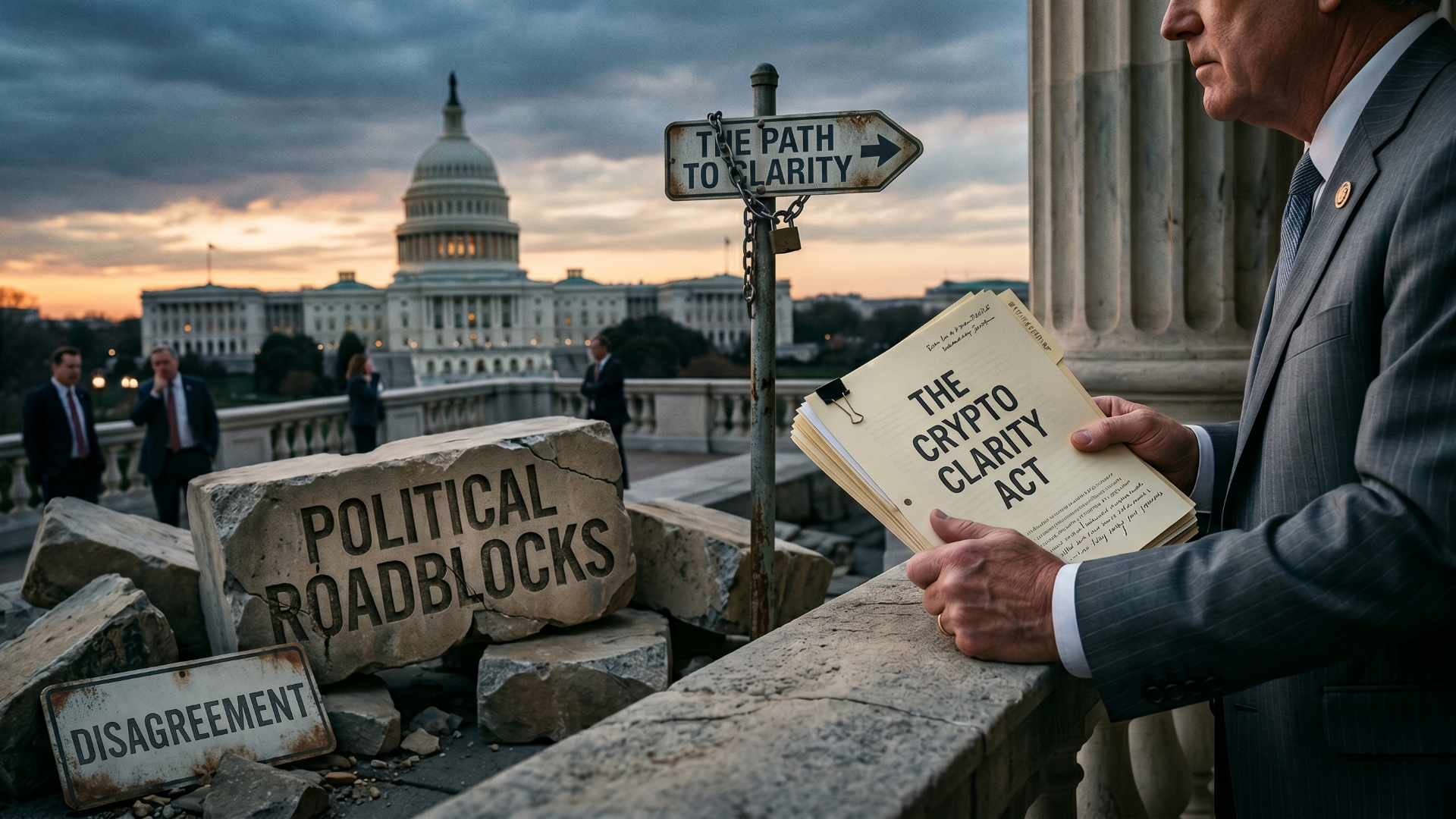
Legislation concerning cryptocurrency market structures, particularly the CLARITY Act, is navigating a congested Senate schedule, with TD Cowen assessing the probability of its passage in 2026 at approximately 30%. Although the House of Representatives approved the Digital Asset Market Clarity Act with a significant margin of 294-134 in July 2025, progress in the Senate has stalled due to numerous political and regulatory hurdles.
Overview of Current Legislative Climate
According to TD Cowen’s latest report, the obstacles to the CLARITY Act encompass more than just the debates surrounding stablecoin yields. Key concerns now include staffing issues at the Commodity Futures Trading Commission (CFTC), disputes over prediction markets, scrutiny surrounding World Liberty Financial—a crypto venture linked to the Trump family—concerns related to Iranian crypto activities, and competition with the Credit Card Competition Act.
Galaxy Research has a slightly more optimistic view, estimating the chance of the bill’s passage at around 50%. They caution, however, that if the bill does not succeed this year, comprehensive market-structure legislation could be postponed until 2030 or later.
Staffing and Regulatory Authority
The successful passage of the Digital Asset Market Clarity Act in the House was a significant victory for the cryptocurrency sector. However, the Senate Banking Committee has struggled to advance, as lawmakers continue to debate crucial topics such as regulatory authority and liabilities for software developers.
TD Cowen has pointed out that the CFTC faces significant understaffing issues, which is particularly concerning given that the agency would be expected to manage a more extensive oversight role over digital assets should the bill be enacted. Galaxy Research also notes that any Senate Banking markup extending beyond mid-May would significantly diminish the chances of the legislation passing this year. Senator Cynthia Lummis has voiced that failure in 2026 could result in a delay of market-structure legislation until at least 2030.
Political Sensitivities and Delays
The prolonged delay—over 270 days since the House vote—hinders Washington’s capacity to establish clear regulations for trading environments, token issuers, and decentralised software developers. This uncertainty complicates the operational landscape for the cryptocurrency sector.
Additionally, the political implications surrounding World Liberty Financial, following its decision to lock investors into a multi-year wait for token access, may foster opposition from Democratic lawmakers. Concerns linked to Iranian cryptocurrency activities could lead to the inclusion of anti-money-laundering amendments to the bill. Furthermore, the ongoing discussions about the Credit Card Competition Act could introduce unrelated elements that complicate the legislative package.
Summary
In summary, while the Digital Asset Market Clarity Act received robust support in the House, its future in the Senate remains precarious due to various political, regulatory, and operational barriers. As Washington grapples with the implications of digital asset governance, the outcome of the CLARITY Act may set the stage for the regulatory environment governing cryptocurrencies for years to come. Whether lawmakers can collaboratively overcome these challenges remains to be seen, with critical deadlines approaching that could prove pivotal for the industry.