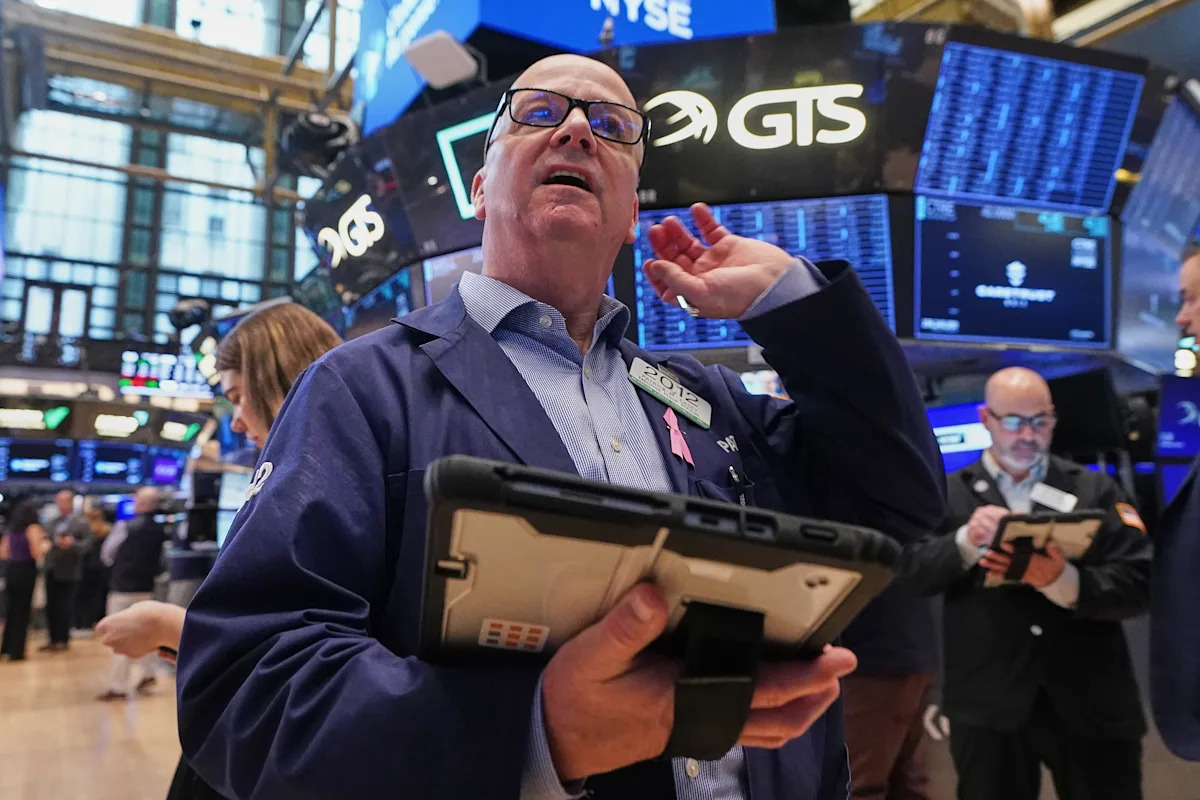
US stock futures demonstrated positive movement on Thursday as President Trump and Chinese President Xi Jinping engaged in critical discussions, focusing on trade and artificial intelligence (AI).
The Dow Jones Industrial Average experienced an increase of 0.3%, while the broader S&P 500 saw a slight rise of 0.2%. Meanwhile, futures for the Nasdaq 100 were up 0.5%, building on the record highs reached on Wall Street the previous day.
In the backdrop of this financial uptick, the two-day summit opened with a call for improved US-China relations, covering a range of topics including Taiwan and technology. Notable American CEOs attending the summit include Nvidia’s Jensen Huang, Tesla’s Elon Musk, and Apple’s Tim Cook, with AI expected to be a major topic alongside trade negotiations. Market participants are attentively monitoring the proceedings.
Additionally, there are hopes that China’s influence might help mediate the ongoing tensions between Iran and the US, with the situation in the Middle East driving oil prices higher and increasing inflationary concerns. However, Trump has downplayed the likelihood of extensive discussions on Iran during his time in Beijing.
On the corporate side, shares of Cisco soared following a robust earnings report that exceeded expectations. The networking giant also announced an AI-focused restructuring plan that includes cutting approximately 4,000 jobs. Thursday will also see earnings results from Applied Materials and Klarna Group, among others.
In more detail, oil prices have remained steady just ahead of the Trump-Xi meeting, despite the ongoing unrest in the Middle East. West Texas Intermediate crude hovered near $101 per barrel following a 1.1% decline the previous session, while Brent crude finished below $106. Trump reiterated this week that trade talks would be prioritised over discussions concerning the Middle East.
The protracted conflict in Iran has caused global oil inventories to shrink at an unprecedented rate, with the International Energy Agency projecting that the market will remain substantially undersupplied until October, even if hostilities cease. The US has cautioned banks and imposed sanctions over the sale of Iranian oil to China, which is the primary importer of Iranian crude.
Notably, the amount of crude oil and fuels passing through the vital Strait of Hormuz fell by nearly 6 million barrels per day during the first quarter, following the outbreak of conflict late February. The Energy Information Administration noted that very few tankers have managed to exit the Persian Gulf amid the turmoil.
In summary, as the Trump-Xi summit unfolds, market participants remain vigilant about the implications for trade, AI, and geopolitical tensions, particularly in the context of rising oil prices and inflation concerns.